



28GHz, only possible with 5G? What's next for the fourth mobile carrier?
 Published2023.11.29 12:20
Mobile carriers to utilize 28GHz for subway Wi-Fi only
The Ministry of Science and ICT stated, "There is a possibility of additional frequency allocation for the fourth mobile carrier."
Mobile carriers will be able to offer subway Wi-Fi services utilizing the 28GHz band as part of the I-Eum 5G (5G-specific network). Meanwhile, the potential for commercial networks to utilize the 28GHz band remains uncertain.
'Eum5G (5G specialized network)' is a communication network that utilizes 5G frequencies in specific areas so that general companies, not mobile carriers, can implement their own networks.
The Ministry of Science and ICT announced that it will revise the E-5G frequency allocation notice as of December 1, 2023, to allow mobile carriers to provide subway Wi-Fi services using the E-5G frequency band, which utilizes 28 GHz as a backhaul.
Even if this allocation announcement is revised, it does not mean that mobile carriers will be able to enter the entire E-5G market by using all of the E-5G bands (4.7 GHz, 28 GHz). Telecommunication companies can only use the 28GHz band frequency for subway Wi-Fi service.
The three mobile carriers have been providing Wi-Fi services using backhaul on the Seongsu Branch of Seoul Subway Line 2 since June 2021, and on Lines 2, 5, and 8 since November. However, KT and LGU+ had their 28GHz band frequency allocations canceled in December 2022, and SKT in May 2023, respectively.
The Ministry of Science and ICT initially allowed the three mobile carriers to use their previously allocated frequencies in subway sections only until the end of the allocation period in November 2023. However, the three carriers expressed interest in continuing subway Wi-Fi services, and the Ministry explained that it revised the announcement for the allocation of 5G frequencies this time, stating, "We have confirmed the potential for improving subway Wi-Fi conditions by utilizing the 28GHz band, thereby enhancing public convenience."
Choi Woo-hyuk, director of the Ministry of Science and ICT's Radio Policy Bureau, said, "With this revised allocation announcement, an institutional foundation has been established to improve the subway Wi-Fi environment through the 5G 28GHz band," adding, "We hope that the active investment by mobile carriers in the 28GHz band will lead to improved public convenience."
Meanwhile, it's expected that utilizing the 28GHz 5G frequency for commercial networks other than 5G will remain challenging. The Ministry of Science and ICT's announcement of new 28GHz carrier applications has been slow. The Ministry has prioritized investment in 28GHz and proposed policies such as mandatory base station construction and minimum auction prices to encourage a fourth mobile carrier. However, the industry points out that it will be difficult for new carriers to generate profits based on 28GHz, given that even the three major carriers have failed to do so. An industry expert said, “5G 28GHz is a frequency originally intended for B2B use, so it will be difficult for it to succeed as a commercial network.”
Mirae Mobile is officially challenging the fourth mobile carrier and is continuing its demand for the 2.3GHz frequency. In an interview with this newspaper, Lee Gyeong-su, an advisor at Mirae Mobile, stated, "It will be difficult to generate profits with just the 28GHz frequency when initially entering the market." He added, "Utilizing the 2.3GHz frequency, previously used for WiBro but now an idle resource, will lower investment costs and allow for a more favorable return on investment."
The Ministry of Science and ICT (MSIT) also reiterated its position, stating, "We plan to give priority consideration to new operators requesting frequencies other than 28 GHz." When it last announced allocations for new operators, the MSIT stated that it would prioritize investment in 28 GHz when identifying operators. However, this appears to be a reversal of its previous statement.
However, the bands mentioned are expected to be between 3.7GHz and 4GHz, with the 2.3GHz band remaining unknown. The 3.7GHz band is one for which SKT has consistently requested additional allocation as an adjacent band. Currently, SKT has been allocated the 3.6GHz to 3.7GHz band, KT the 3.5GHz to 3.5GHz band, and LG U+ the 3.43GHz to 3.5GHz band, plus an additional 20MHz.
As the government puts forward proposals for the allocation of the 28GHz spectrum, it seems time to consider the feasibility of a policy that can satisfy both consumers who have only enjoyed a half-baked 5G experience and the profitability of the existing three mobile carriers and new entrants.
Comments
Related news
.jpg)
[Interview] 6G Forum Executive Director Jang Kyung-hee - “6G to expand the entire industry by 2030… Leading global leadership”
6G, expected to be commercialized between 2028 and 2030, is anticipated to serve as a core technology in the hyper-connected era and accelerate the creation of new business markets in autonomous driving, UAM, smart cities, healthcare, VR, and other sectors. Building on its track record of supporting mobile communications industry revitalization, the 6G Forum is targeting the convergence of 5G with heterogeneous industries and securing global competitiveness in B5G/6G going forward. This publication arranged a meeting with Jang Kyung-hee, Executive Chairman of the 6G Forum, to discuss Korea's telecommunications policy and R&D strategy as well as the vision and objectives of the 6G Forum.
2023.07.03by 김예지 기자
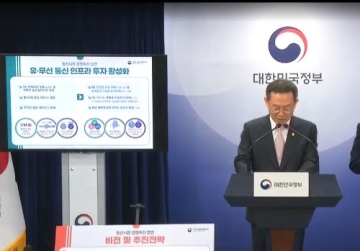
Full-scale expansion of the 4th mobile carrier and budget phone service
The Ministry of Science and Technology announced a "Plan to Promote Competition in the Telecommunications Market" on the 6th to ensure sustained development of the future telecommunications market and to alleviate the financial burden of communication costs on citizens. The government will allocate frequencies in the 28GHz, 700MHz, and 1.8GHz bands to new telecommunications operators and improve barriers to entry. For MVNO operators, the government will establish a permanent wholesale provision obligation system and improve the wholesale pricing calculation method. Ultimately, to benefit users, the government will expand rate plan options, device subsidies, and infrastructure investments.
2023.07.07by 김예지 기자

Final announcement of 5G 28GHz allocation for the fourth mobile carrier... lowest competitive price of 74.2 billion won
The Ministry of Science and ICT finalized a frequency allocation plan allocating the 28GHz band to new business operators on the 20th and announced the allocation plan.
2023.07.20by 김예지 기자
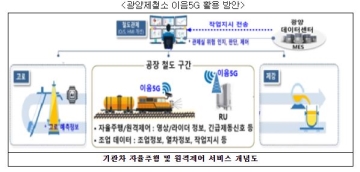
Introduction of 5G steel automation and safety management
The Ministry of Science and ICT announced on the 11th that it has completed the procedures for frequency allocation and registration as a basic telecommunications business operator for POSCO DX in the 5G Leap (Eum) program. The requested frequency is 4.7GHz with a bandwidth of 100MHz, and the usage period is 2 years.
2023.09.12by 김예지 기자
LG U+ to pay according to data usage... "Communication cost burden↓"
The Ministry of Science and ICT announced that it has filed a notice of terms and conditions for LG U+ to establish a new online-exclusive 5G plan that allows customers to select their monthly data allowance (1-24GB) and prepay charges (on a 30-day basis) before usage.
2023.10.06by 김예지 기자











