



Applied Materials Receives SBTi Carbon Emissions Reduction Target Certification
 Published2023.12.11 12:15
Applied Materials announced today that its science-based Scopes 1, 2, and 3 carbon emissions reduction targets have received certification from the Science Based Targets Initiative (SBTi).
The SBTi is an international initiative that sets and monitors carbon reduction targets for corporations and financial institutions to achieve the Paris Agreement's goal of limiting global temperature rise to 1.5 degrees Celsius. To achieve this, Applied Materials announced plans to align its carbon emissions reduction program with the latest climate science, undergo external verification, and report its progress annually.
Applied Materials' Scope 1 and Scope 2 greenhouse gas emissions refer to greenhouse gases emitted directly by the company and greenhouse gases emitted through purchased energy. Scope 3, which accounts for more than 99% of Applied's carbon emissions, consists of upstream emissions from the company's entire supply chain and downstream emissions from customers' use of Applied products.
Applied's science-based short-term goals, which are SBTi certified, are: 1) reduce Scope 1 and 2 greenhouse gas emissions by 50% by fiscal year 2030 compared to fiscal year 2019; 2) achieve 100% renewable electricity procurement by fiscal year 2030, up from 36% in fiscal year 2019; and 3) reduce Scope 3 greenhouse gas emissions from the use of Applied products by 55% per million dollars of incremental value added by fiscal year 2030, compared to fiscal year 2019.
Applied Materials is committed to working closely with customers, suppliers, and industry partners to achieve carbon emission reduction targets, including Scope 3, particularly in line with the NetZero 2040 Playbook announced earlier this year.
Key areas of focus include: △ Improving energy efficiency and reducing the chemical impact of semiconductor production equipment through improvements to Applied's '3x30 Program'; △ Supporting and collaborating with customers to transition the power supply of semiconductor production facilities where Applied equipment is used to clean energy; and △ Supporting grid deoxygenation efforts in key markets through industry initiatives.
“Semiconductors are the foundation of technological innovation that is transforming the global economy and improving people’s lives in many ways,” said Gary Dickerson, Applied’s chairman and CEO. “As demand for semiconductors grows, we must collaborate broadly to reduce the semiconductor industry’s environmental impact and grow responsibly.”
He also said, “Achieving Applied SBTi certification demonstrates Applied’s commitment to minimizing our carbon footprint and working closely with suppliers and customers to help them achieve their climate goals.”rdquo; he added.
Meanwhile, in July of this year, Applied Materials joined Intel as the inaugural corporate sponsor of Schneider Electric's new partnership program, Catalyze, which aims to help build a decarbonized system across the global semiconductor value chain. Applied Materials also serves as a founder and board member of the Semiconductor Climate Consortium, an initiative designed to accelerate greenhouse gas reductions in the semiconductor industry.

Comments
Related news
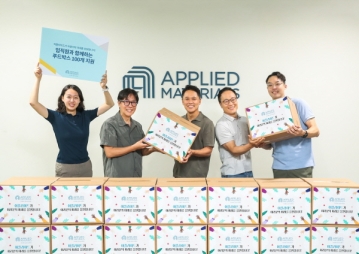
Applied Materials Wins Comprehensive ESG Award at the 2023 K-ESG Management Awards
Applied Materials Korea, a global leader in materials engineering solutions (CEO Park Gwang-sun), has been recognized for its contributions through various activities including domestic ecosystem protection, regional children's education support and talent development, and global carbon emissions reduction.
2023.09.25by 배종인 기자

Applied CTO Om Naramasu Delivers Keynote Speech at 'Invest Korea Summit 2023'
Om Nalamasu, Senior Vice President and Chief Technology Officer (CTO) of Applied Materials, a global leader in materials engineering solutions, will participate as a keynote speaker at the 'Invest KOREA Summit 2023' held in Busan on the 7th.
2023.11.06by 배종인 기자
Applied, large-scale hiring of new engineers and interns
Applied Materials Korea (CEO Park Kwang-seon), a global leader in materials engineering solutions, is announcing large-scale public recruitment for entry-level hardware engineers, entry-level process engineers, and interns.
2023.11.07by 배종인 기자
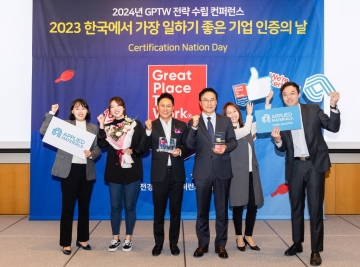
Applied, Proving Good Corporate Culture
Applied Materials Korea (CEO Park Kwang-seon), a global leading company in materials engineering solutions, won the "2023-2024 Best Company for Millennials to Work For" selected by GPTW (Great Place to Work Institute), a global trusted management evaluation organization, officially demonstrating its excellent corporate culture.
2023.11.16by 배종인 기자
Applied Records 34 Trillion Won in Revenue in 2023… Up 3% Year-on-Year
Applied Materials, a global leader in materials engineering solutions, announced on the 17th its fourth quarter and full-year fiscal 2023 results, which closed on the 29th.
2023.11.17by 명세환 기자











