


Intel's ultra-low-power NPUs are powering AI results, and the Core Ultra and 5th-generation Xeons are now available.
 Published2023.12.18 16:08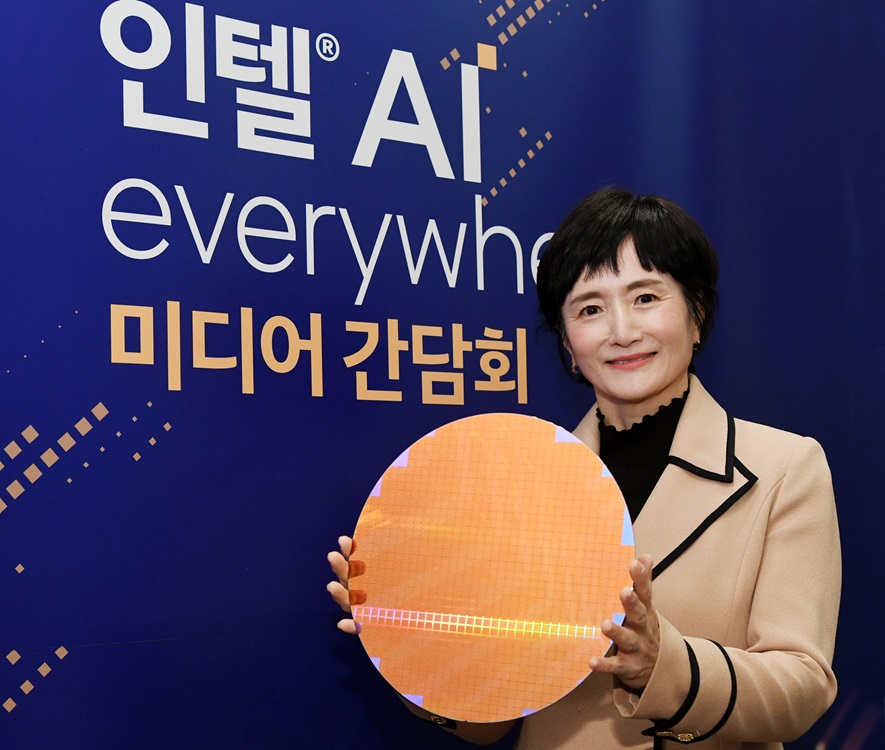
5세대 제온, 64코어·레벨 캐시 이전比 3배·77% TCO 절감

인텔이 NPU를 장착한 초저전력 프로세서로 인공지능(AI) 결과물을 누구나 산출할 수 있는 ‘인텔ⓡ 코어™ Ultra 노트북용 프로세서 제품군’을 출시하며, AI PC 시대를 열었다. 또한 모든 코어에 AI 가속기를 내장해 총소유비용(TCO)을 절감한 5세대 인텔ⓡ 제온ⓡ 프로세서 제품군(The 5th Gen Intelⓡ Xeonⓡ processor family)도 출시하며, 업계 최상의 인텔 AI 포트폴리오를 확장했다.
인텔은 18일 전경련회관에서 기자간담회를 개최하고, 언제 어디서나 AI 솔루션을 구현할 수 있도록 지원하는 △인텔ⓡ 코어™ Ultra 노트북용 프로세서 제품군(The Intelⓡ Core™ Ultra mobile processor family) △5세대 인텔ⓡ 제온ⓡ 프로세서 제품군(The 5th Gen Intelⓡ Xeonⓡ processor family)를 소개했다.
축사에서 인텔코리아 권명숙 사장은 “현재 전 산업의 디지털 전환 수요가 고도화되는 가운데, AI 혁신의 가속화로 인해 현재 GDP의 약 15%를 차지하는 디지털 경제의 비중이 앞으로 10년 안에 약 25%로 증가할 것이며, AI는 이를 가속해 결국엔 GDP의 1/3 규모로 성장할 것”이라며 “인텔은 효율적인 최상의 AI 성능을 제공하는 하드웨어 및 소프트웨어 솔루션을 지원해 고객이 클라우드, 네트워크는 물론 PC와 엣지 인프라까지 AI를 원활하게 구축하고 확장해 나갈 수 있도록 지원할 것”이라고 말했다.
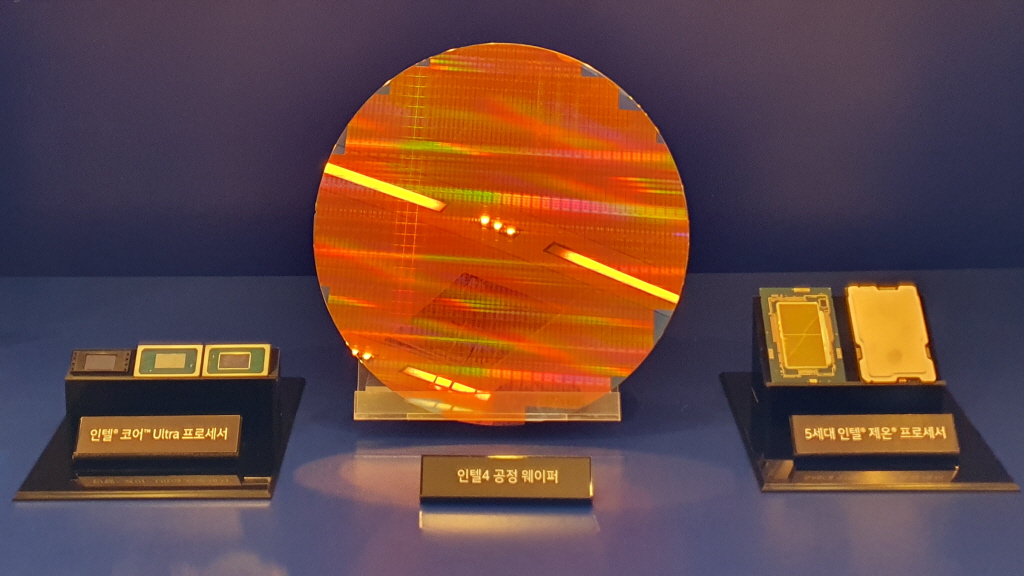
▲(왼쪽부터)인텔Ⓡ 코어™ Ultra 노트북용 프로세서, 인텔4 공정 웨이퍼, 5세대 인텔Ⓡ 제온Ⓡ 프로세서
나승주 상무가 발표한 5세대 인텔 제온 프로세서는 CPU 1개당 지원되는 코어 수가 최대 64개이고, 최대 마지막 레벨 캐시가 이전 세대와 비교 시 거의 3배에 이른다.
또한 CPU 1개당 DDR5 채널을 8개 제공하고, 초당 최대 5,600메가트랜스퍼(MT/s)로 DDR5를 지원하고, 인텔 UPI 2.0을 통해 소켓 간 대역폭을 높여 초당 최대 20기가트랜스퍼(GT/s)까지 제공한다.
모든 코어에서 AI 가속 기능을 지원해 추론 성능을 42%까지 높이고, 파라미터 수가 최대 200억개인 대규모 언어 모델(LLM)에서 지연 시간을 100밀리초 미만으로 유지하는 등 까다로운 엔드-투-엔드 AI 워크로드 문제를 해결하기 때문에 고객이 외장형 가속기를 별도로 추가할 필요가 없다.
이전 제온 세대와 비교하면 광범위한 고객 워크로드에서 범용 컴퓨팅의 평균 성능 이득을 21%까지 개선하고, 와트당 평균 성능을 36%까지 높일 수 있다. 일반적으로 5년 주기로 업그레이드하는 고객 및 심지어 더욱 이전 세대에서 업그레이드하는 고객들도 최대 77% TCO 절감 효과를 경험할 수 있다.
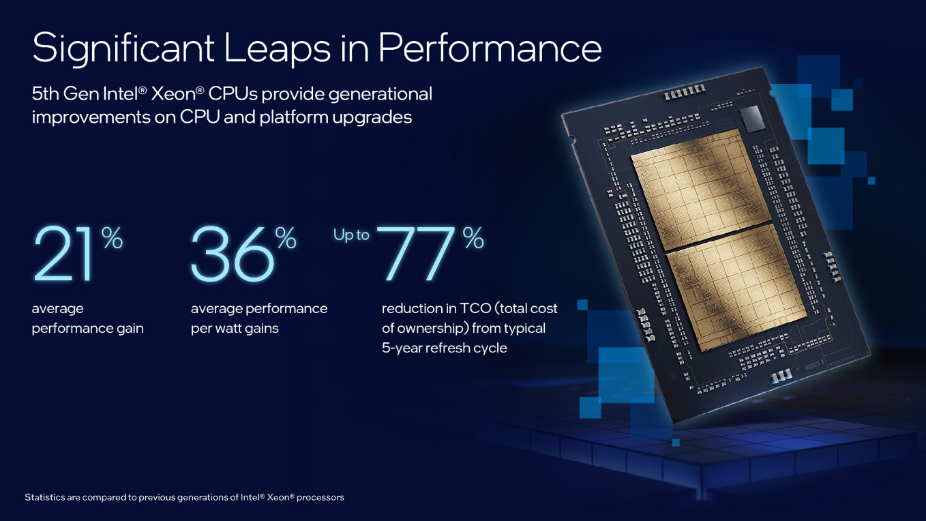
▲5세대 인텔Ⓡ 제온Ⓡ 프로세서
최원혁 상무가 발표한 인텔 코어 울트라는 인텔 4 공정 기술을 기반으로 구축된 최초의 프로세서이자 40여 년 인텔 역사상 아키텍처가 가장 크게 변화한 프로세서다.
최적의 워크로드 스케줄링을 위해 최대 16개 코어(6개 P-코어, 8개 E-코어, 2개 LP E-코어), 22개 스레드 및 차세대 인텔ⓡ 스레드 디렉터(Intelⓡ Thread Director)를 제공한다.
최고 5.1GHz의 최대 터보 클럭과 최대 64GB LP5/x 및 최대 96GB DDR5 최대 메모리 용량을 지원한다.
통합 인텔ⓡ 와이파이 6E(Gig+)와 별도의 인텔ⓡ 와이파이 77(5 Gig) 지원을 비롯해 선도적인 무선 기능을 갖췄고, 게이머 및 크리에이터용 애플리케이션을 위해 지능형으로 연결을 최적화하고 네트워크 트래픽 우선순위를 지정하는 인텔ⓡ 킬러™(Intelⓡ Killer™) 소프트웨어를 제공한다.
인텔ⓡ 블루투스ⓡ LE 오디오(Intelⓡ Bluetoothⓡ LE Audio)는 저전력의, 몰입도 높은, 하이파이(High-fidelity) PC 음향 환경을 구현하고, 방송 오디오 튜닝과 개인 오디오 공유를 쉽게 수행하고 보청기 및 새로운 보조 청취 서비스에 쉽게 접근할 수 있도록 새로운 블루투스ⓡ 오라캐스트(Bluetoothⓡ Auracast™) 기능을 지원한다.
썬더볼트™ 4(Thunderbolt™ 4)로 40Gbps의 놀라운 연결 속도를 통해 PC에서 여러 대의 4K 모니터, 고속 스토리지 및 기타 액세서리에 연결할 수 있다.
코드 변경을 최소화하고 자동으로 장치를 감지하는 오픈비노(OpenVINO™) 툴킷도 지원한다.
CPU는 타일 형식으로 설계됐다.
새로운 P-코어(Performance-core) 아키텍처는 향상된 클럭 사이클 당 명령어 처리 횟수(instructions per cycle, IPC)를 제공하고, 새로운 E-코어(Efficient-core)와 저전력 E-코어(LP E-core)는 경쟁사 대비 최대 11% 높은 확장 가능한 멀티스레드 성능을 제공해 초박형 PC에 최고의 CPU 컴퓨팅 성능을 제공한다.
내장형 인텔ⓡ 아크™ GPU(Intelⓡ Arc™ GPU3)는 최대 8개의 Xe 코어, AI 기반 XeSS(Xe Super Sampling), DX12 얼티밋(DX12 Ultimate) 지원 및 이전 세대보다 최대 2배 향상된 그래픽 성능을 갖췄다. GPU는 하드웨어 가속 레이 트레이싱(hardware-accelerated ray tracing), 메시 셰이딩(mesh shading), AV1 인코딩 및 디코딩, HDMI 2.1 및 디스플레이포트(DisplayPort) 2.1 20G 등 최신 그래픽 기능 지원을 포함한다.
인텔ⓡ AI 부스트(Intelⓡ AI Boost)로 명명한 최신 인텔 NPU는 저전력으로 장시간 실행되는 AI 워크로드를 처리하도록 특별히 설계됐으며, CPU와 GPU 모두에서 처리되는 AI를 보완하고 이전 세대보다 2.5배 향상된 전력 효율성을 제공한다.
한편 이번 행사에서는 인텔의 국내 파트너사가 참석해 자사의 기술과 신제품을 소개하며 많은 관심을 모았다.
삼성전자는 인텔 5세대 제온 프로세서와 인텔 코어 Ultra 프로세서 출시로 메모리 시장에 미칠 영향을 긍정적으로 평가하고, 인텔과의 긴밀한 협력을 지속할 것을 강조하며 내년 시장에 대한 기대를 보였다.
또한 인텔 코어 Ultra 프로세서를 탑재한 세계 최초의 AI PC 제품군으로 삼성전자는 ‘삼성 갤럭시 북4 시리즈’를, LG전자는 ‘LG 그램 16(LG Gram 16)’ 신제품을 소개했다. 인텔은 이 제품으로 AI PC 사용 사례에 대한 데모를 진행했다.

Comments
Related news
Intel Unveils Next-Generation Packaging 'Glass Substrate' Technology
The semiconductor industry is seeking answers in next-generation advanced packaging to achieve Moore's Law. Intel has found a clue in 'glass' materials that can offer greater scalability.
2023.09.19by 명세환 기자
Intel: "AI Development Possible Anywhere"
On the second day of Intel Innovation 2023, Intel's annual developer conference, Greg Lavender, Intel's Chief Technology Officer (CTO), provided a detailed overview of how Intel's developer-centric, open ecosystem philosophy helps ensure that everyone has access to the opportunities that artificial intelligence provides.
2023.09.21by 배종인 기자
Intel Starts Mass Production of EUV-Based Products at New Fab in Ireland
Intel's Fab 34 in Ireland, which received a 17 billion euro investment, has reportedly begun mass production of products based on EUV technology.
2023.10.04by 명세환 기자
Intel Launches World's Fastest 6GHz 14th Generation CPU
Intel has launched the Intel Core 14th generation desktop processor family, led by the Intel® Core™ i9-14900K, delivering maximum desktop performance and exceptional overclocking experience through the world's fastest desktop clock speeds.
2023.10.17by 배종인 기자
.jpg)
Intel Gaudi 2, FP8 applied GPT-3 2x performance
Intel is enhancing computational performance in AI accelerators. Intel Gaudi2 has demonstrated the results of continued innovation by achieving approximately twice the previous benchmark results on the GPT-3 benchmark.
2023.11.10by 명세환 기자











