


Sejong Telecom, StageX, and My Mobile, “Challenge for 4th Mobile Carrier Status at 28GHz”
 Published2023.12.20 08:30
Auction following eligibility review… Selection of allocated entities
No Applications from Major Corporations; Is a Fourth Mobile Carrier Feasible?
Candidates for the fourth mobile carrier have been finalized regarding the nationwide allocation of the 28GHz frequency band.
The Ministry of Science and ICT announced that, as a result of receiving applications for frequency allocation for mobile communication (IMT) from November 20 to December 19, three companies—Sejong Telecom, StageX, and My Mobile Consortium—applied for frequency allocation on a nationwide basis.
The Ministry of Science and ICT announced last July that if two or more corporations apply for the 26.5–27.3 GHz band (800 MHz width, anchor frequency 700 MHz band 20 MHz width), it will allocate the frequency through an auction. Accordingly, the Ministry has commenced a review of whether the applicant corporations are subject to disqualification under the Radio Waves Act and the Telecommunications Business Act, and plans to commence the frequency auction after completing the notification of eligibility for each applicant corporation within one month.
Stage X is a joint venture between Stage Five, a budget mobile phone operator, and Shinhan Investment & Securities. This is Sejong Telecom's second attempt since challenging for the fourth mobile carrier license in 2015. It plans to focus on B2B and operate the business based on its experience in operating budget mobile phones and Eum 5G (a specialized 5G network).
Also, the My Mobile Consortium, established in 2012, is centered around 'Future Mobile'. In a recent interview with e4ds news, Lee Kyung-soo, Senior Advisor at Mirae Mobile (former Head of KT Network Strategy Division), stated, “Although the 28GHz band requires high network construction costs, it is an important resource for business planning,” and argued, “If the highly efficient 2.3GHz is utilized together, investment in 28GHz can also be sustained.”
However, the industry is expressing concern over the lack of applications from large corporations for the 28GHz band, which was cancelled after even the three major mobile carriers failed to monetize it. While the 28GHz band offers a wider bandwidth and faster speeds than the existing 3.5GHz band, it has the disadvantages of a shorter signal range and the inability to penetrate walls. Consequently, it requires a larger number of nationwide base stations. Although the government drastically reduced the minimum competitive allocation price to 74 billion won and the required number of base stations from 15,000 to 6,000 to lower market entry barriers, it still demands astronomical costs.
It is predicted that the reason large corporations previously mentioned, such as Kakao, have given up is that fear regarding monetization still remains. Questions are being raised as to whether mid-sized companies, as potential new operators, can meet the mandatory network deployment quota and proceed to actual operation to establish themselves as a fourth mobile carrier capable of keeping the current three major carriers in check. Consequently, attention is focused on what support measures the Ministry of Science and ICT will propose for companies applying to become the fourth mobile carrier.
Choi Woo-hyeok, Director General of the Radio Policy Bureau at the Ministry of Science and ICT, stated, “All of the corporations applying for allocation this time are operators with limited experience in frequency auctions. The Ministry of Science and ICT plans to provide sufficient time for explanations to ensure smooth participation in the auction, and we will devote ourselves to fair auction management to enable good-natured competition among new operators.”
Comments
Related news
“Must Promote Competition in Telecom Market and Foster Budget Phones… 5G Wholesale Price Reduction is Essential”
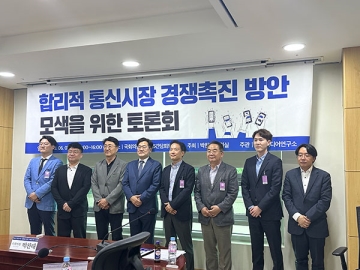
A forum titled "Seeking Measures to Promote Rational Telecommunications Market Competition" was held on the 7th at Conference Room 5 of the National Assembly Members' Building, hosted by Rep. Park Chan-dae and organized by the Public Media Research Institute. Experts from various sectors explored ways to promote competition in the domestic telecommunications market, which is monopolized by the three major telecom carriers. Park Sang-ho, Director of Research at the Public Media Research Institute, stated, "MVNOs were launched with the aim of reducing household telecommunications costs and activating competition in the telecommunications market, but have yet to move beyond a supplier-focused policy framework." He argued that "rather than introducing a fourth telecom operator, measures should be established to enable MVNO operators to secure competitiveness, and in the long term, institutional improvements centered on consumer choice through Full MVNO development are urgently needed."
2023.06.08by 김예지 기자
Full-scale expansion of the 4th mobile carrier and budget phone service
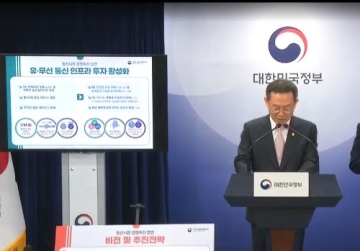
The Ministry of Science and Technology announced a "Plan to Promote Competition in the Telecommunications Market" on the 6th to ensure sustained development of the future telecommunications market and to alleviate the financial burden of communication costs on citizens. The government will allocate frequencies in the 28GHz, 700MHz, and 1.8GHz bands to new telecommunications operators and improve barriers to entry. For MVNO operators, the government will establish a permanent wholesale provision obligation system and improve the wholesale pricing calculation method. Ultimately, to benefit users, the government will expand rate plan options, device subsidies, and infrastructure investments.
2023.07.07by 김예지 기자
4th 5G 28GHz Carrier Must Find Their Own Revenue Sources
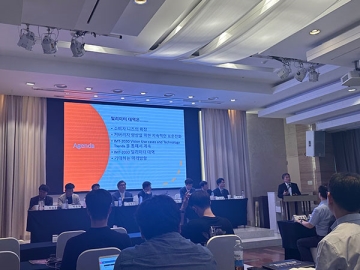
The Ministry of Science and Technology held a forum on the 5G 28GHz new business operator frequency allocation plan at El Tower in Yangjaein on the 11th. As the government introduced incentive measures for discovering new operators based on the 5G 28GHz frequency band, expert opinions were presented that an existing competitive operator would be suitable as the fourth mobile telecommunications business operator.
2023.07.12by 김예지 기자

Final announcement of 5G 28GHz allocation for the fourth mobile carrier... lowest competitive price of 74.2 billion won
The Ministry of Science and ICT finalized a frequency allocation plan allocating the 28GHz band to new business operators on the 20th and announced the allocation plan.
2023.07.20by 김예지 기자
[Interview] Lee Kyung-soo, Advisor at Mirae Mobile: "There are no plans for a fourth mobile carrier, and we will officially request 2.3GHz."
Future Mobile, which had thrown its hat in the ring as a fourth telecom operator, revealed its stance of consistently planning for the fourth carrier's launch. Future Mobile disclosed its plan to demand the 2.3GHz frequency band in order to secure competitiveness compared to the three existing telecom companies. In a written interview with Lee Kyung-soo, permanent advisor at Future Mobile (former head of KT's Network Strategy Division), this publication heard the company's determination regarding the fourth telecom operator's launch.
2023.07.24by 김예지 기자











