



MediaZen and ETRI Develop Voice Recognition System 40% Faster Than Google
 Published2023.12.26 12:15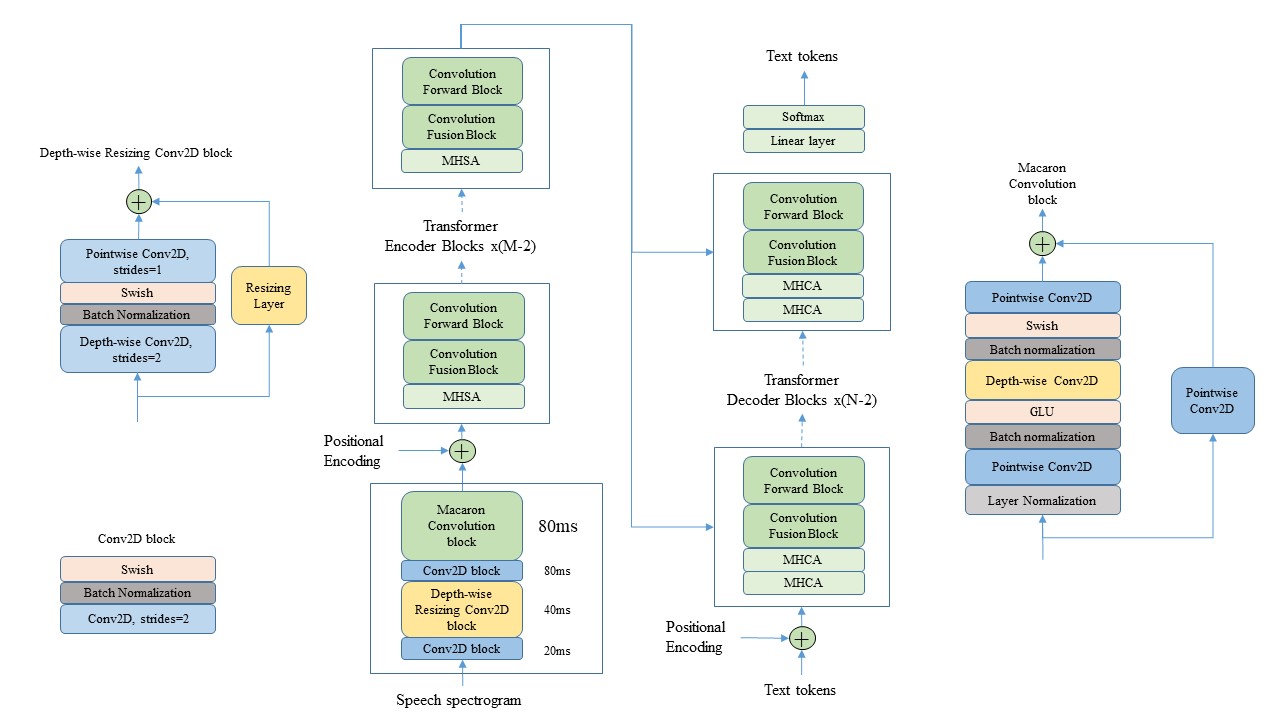
Significant improvement in commercial voice recognition processing speed expected
To provide a latency-free speech recognition solution, a speech recognition system with a convolutional network structure and 40% improved processing speed was developed.
Mediazen announced on the 26th that it has developed an augmented Transformer-based speech recognition system with a new convolutional network structure that benchmarks 'Conformer,' a representative E2E speech recognition system developed by Google, and can improve processing speed by about 40% while maintaining the performance of the existing Conformer.
This technology development was carried out through the Korea Electronics and Telecommunications Research Institute (ETRI)’s field support program for research personnel, with the participation of speech recognition experts including ETRI’s Principal Researcher Lee Seong-ju and Mediazen’s AIMZ Research Director Yoon Jong-seong.
As a result of speech recognition experiments using the LJSpeech dataset, Google’s conformer showed performance of CER 4.8% and WER 19.6%, and the tentatively named ‘AIMZformer’ (Mediazen speech recognition system) showed performance of CER 4.8% and WER 19.2%, respectively.
Based on this, it can be seen that speech recognition performance at the level of Google Conformer is maintained, and the processing speed has been significantly improved to 80ms compared to 40ms with Conformer subsampling. This saves about 40% of study time.
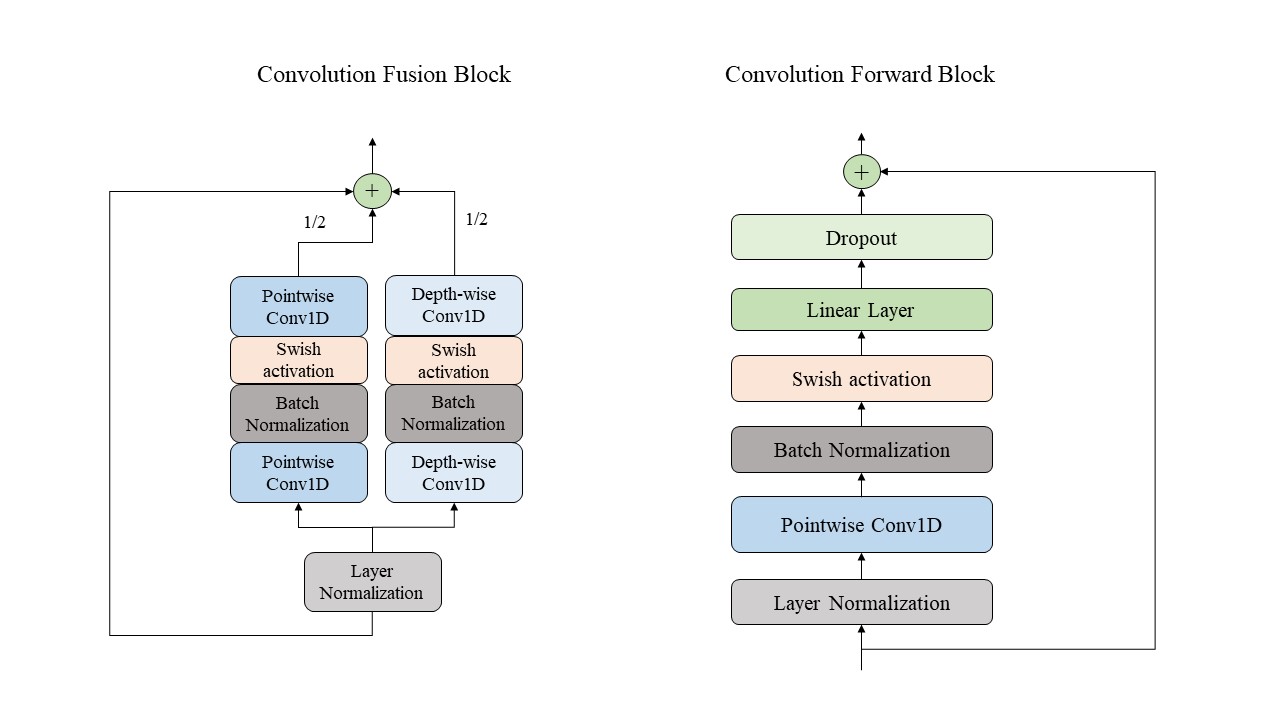
For reference, the baseline Transformer-based speech recognition system showed recognition performance of CER 6.9% and WER 23.0%. In this experiment, to evaluate the performance of the pure neural network, training and evaluation were conducted using only the categorical cross-entropy of the output nodes without performing backend processing such as beam search. In addition, it is known that the recognition difficulty is high because alphabet-based characters are used as the units required for voice recognition.
While Google's conformer focuses on encoder performance, the convolutional structure developed by Mediazen's AIMZ Lab focuses on versatility, offering the advantage of improving the performance of both encoders and decoders.
In particular, to secure competitiveness in embedded solution development, Mediazen is pursuing the supply of high-speed engines that can be installed in non-networked electronic devices, such as AI robots and small electronic devices.
Yoon Jong-sung, Director of Mediazen AIMZ Research Institute, stated, “With the development of this new technology, we have secured proprietary conformer technology that significantly increases processing speed while maintaining voice recognition performance, thereby greatly improving user satisfaction for those dissatisfied with response speeds.” He added, “In the future, speed improvements will be achieved across all businesses where voice recognition technology is utilized.”
Meanwhile, it has been reported that Mediazen’s AIMZ Lab is not only developing various technologies focused on speech recognition speed but also possesses the technology to perform multilingual speech recognition with a single model, and is simultaneously developing a new Large-Length Model (LLM) to achieve international technological competitiveness on par with global platform companies.

Comments
Related news
.jpg)
Edge AI (3) - Active introduction of vision recognition in agricultural industry, spurring the entry of cutting-edge 'farm robots'
At the recent 2023 Agri-Food Tech Startup Expo, numerous advanced agricultural machinery utilizing artificial intelligence vision recognition technology were showcased. Various applications supporting agricultural operations including △crop growth monitoring △pest and disease surveillance △autonomous harvesting were being developed on a vision recognition basis and preparing for market entry. While all shared a common foundation of artificial intelligence technology, each company showed slightly different directions in productization and focus points based on their respective approaches.
2023.07.31by 명세환 기자
AI Talk ④ - Delta X CEO Kim Soo-hoon: "All services begin with 'perception'" - Part 2
[Editor's Note] There are two primary axes driving the advancement of artificial intelligence. The one currently receiving the most spotlight in the market is undoubtedly generative AI. The small spark ignited by ChatGPT has snowballed into fierce competition among major tech companies over the development and leadership of ultra-large language models. The remaining axis is edge AI, or on-device AI. While edge AI has received relatively less public attention compared to the generative AI mentioned earlier, its practical adoption and application in industry and technology sectors are rapidly expanding.
2023.11.14by 명세환 기자
.jpg)
Nokia to Operate Networks with Voice AI
Nokia Bell Labs has announced the results of the industry's first Natural-Language Networks research project. Natural-Language Networks is a technology that enables network operations through natural language commands, such as simple words or phrases. The network gains the intelligence to understand user intent and act autonomously.
2023.11.28by 김예지 기자

Kim Sung-tae, Infineon Vice President - “Expanding the Conversational Recognition Interface Market… Increased Importance of MEMS Microphones”
We will be hosting a webinar on February 20th with Infineon to explore the basic principles of MEMS microphones and methods for selecting high-performance microphones in line with AI trends. Prior to the webinar, we interviewed Kim Sung-tae, Head of the Power & Sensor Systems Division at Infineon Korea, who will be participating as a speaker.
2023.12.22by 성유창 기자

The Form Factor Shift is Coming...AI, Displays Are Taking Over
With advances in deep learning technology, including generative AI, computer sensing technologies such as speech recognition and computer vision have become more sophisticated. As the market entry of AI services and solutions driven by generative AI innovation is gaining momentum, development and launch of related artificial intelligence hardware devices are beginning.
2024.01.18by 명세환 기자











