



Dell: "76% of Korean Companies Struggle with Ransomware Threats"
 Published2024.01.11 16:47
.jpg)
The Rise of Generative AI Requires a Stronger Security Posture
A report found that 76% of domestic companies are having difficulty dealing with ransomware threats with their own data protection measures, requiring continuous security expansion.
Dell Technologies Korea (CEO Kyung-jin Kim) has released the 'Global Data Protection Index (GDPI)' report, which surveys the data protection status and strategies of companies and organizations around the world.
The survey, conducted in September and October last year with approximately 1,500 IT and security decision-makers worldwide, including in Korea, found that cyberattack threats continue to increase and that the rise of generative AI necessitates strengthening security posture.
It was also analyzed that continuous security expansion suitable for a multi-cloud environment is required.
Concerns about cyber threats continue to grow. 43% of respondents in Korea and 55% globally reported experiencing a data-related cyberattack in the past 12 months, making it the leading cause of business disruption and the highest in the past five years. The financial impact on organizations is also significant, with the global average cost reaching $1.4 million, more than double the cost in the previous report.
In fact, 76% of domestic companies and 75% of global companies responded that their existing data protection measures are not enough to deal with ransomware threats.
Additionally, 57% said they were not confident that their company's critical data could be properly recovered in the event of a cyberattack.
Despite this perception, however, most organizations (59%) reported investing more in prevention than in recovery after damage has occurred. Given the increasing success rate of attacks, it suggests that a careful balance between prevention and recovery must be maintained.
The percentage of companies that responded that their attack surface has increased due to continued remote work since the pandemic increased from 70% last year to 73% in Korea and 81% globally.
Dell also surveyed organizations about their use and effectiveness of insurance policies to help mitigate financial risks.
While 96% of domestic companies and 93% of global organizations have signed up for or are considering signing up for ransomware insurance, they said the coverage is limited and the conditions are stringent.
For example, 51% of domestic companies and 57% globally responded that proof of implementation of cyber threat prevention practices is required, 37% of domestic companies and 40% globally responded that insurance may be invalidated in some scenarios, and 47% of domestic companies and 40% globally expressed concern that insurance payment may be restricted by law.
As a result, 75% of domestic companies and 85% of global companies responded that they eventually paid to recover data after being hit by a ransomware attack, showing that while insurance policies can be a tool for cybersecurity strategies, they have clear limitations.
To address these growing threats, companies and public institutions are gearing up to strengthen their cyber resilience. To this end, 59% of domestic companies and 50% of global companies are adopting professional services, 55% of domestic companies and 49% of global companies are conducting regular cyber recovery tests, and 37% of domestic companies and 42% of global companies are building cyber vaults that are physically and logically separated from operational data, taking a more proactive approach.
Meanwhile, Dell, for the first time this year, conducted a GDPI survey to examine the impact of generative AI on the cyber threat landscape and data protection requirements.
While 59% of domestic companies and 52% globally believe that generative AI technology will help their security posture, the majority of respondents (83% of domestic companies and 88% globally) said that generative AI will generate more data volumes, and some of that data will require stronger data protection strategies.
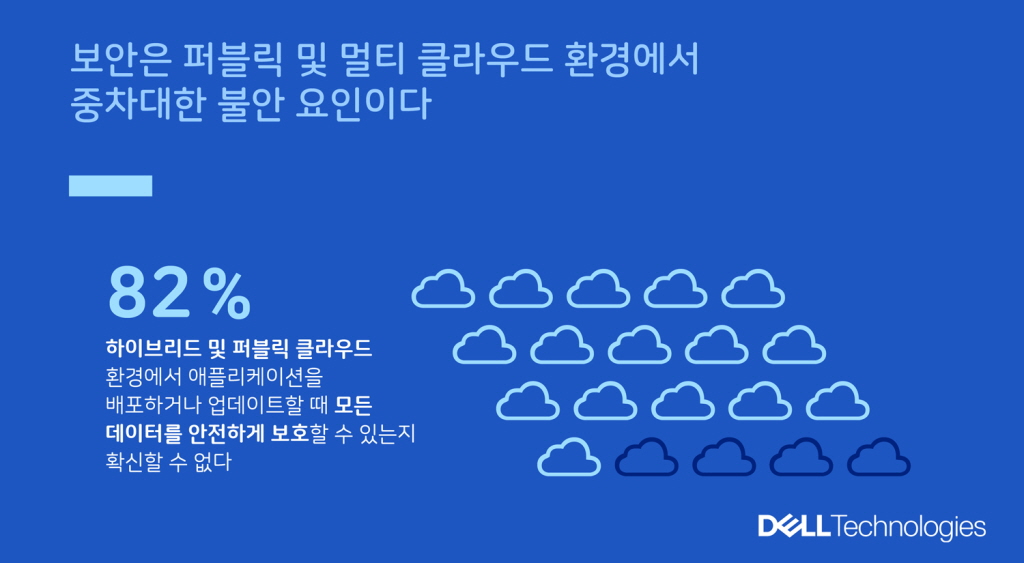
While multi-cloud remains a preferred strategy for organizations deploying or updating applications, concerns about data protection are also growing. Eighty-two percent of IT decision-makers in Korea, compared to a global average of 79%, are not confident that they can protect all data in the public cloud. Specifically, 41% of Korean companies, compared to a global average of 40%, responded that they are struggling with data security in public and multi-cloud environments.
Kim Kyung-jin, President and CEO of Dell Technologies Korea, said, "With the rise of generative AI, the frequency and sophistication of cyberattacks are also increasing. Protecting digital assets is becoming more critical than ever. “We need to set the right direction from the perspective of a marathon, not a sprint, and develop a strategy to expand and sustain it,” he said.

Comments
Related news
Dell, “Supporting Customer Growth as a Total AI Solution Provider”
Dell Technologies held an online press briefing and announced that as an artificial intelligence (AI) total solutions provider, it will actively support customers in enhancing their efficiency and productivity.
2023.10.12by 배종인 기자
Dell Launches Latest Version of PowerFlex and Apex Block Storage
Dell Technologies has released the latest version of Dell PowerFlex, its software-defined infrastructure solution, and has enhanced its Dell APEX Block Storage offering, taking steps to improve efficiency and functionality in multi-cloud environments.
2023.10.17by 배종인 기자

Del-Meta Partners with Rama 2 on-premise generative AI solution
Dell Technologies announced on the 1st that it is collaborating with Meta to enable customers to easily build the large language model Llama 2 on-premises through Dell's generative AI (GenAI) portfolio, which consists of IT infrastructure, client devices, and professional services.
2023.11.02by 김예지 기자
Dell, “Generative AI, Edge, and Zero Trust in IT Will Be Real-World Implemented in 2024”
Dell Technologies has announced its technology trend outlook for next year, stating that generative AI, edge platforms, and zero trust—technologies that have undergone extensive discussion over the past year—are expected to realize substantial opportunities in actual industry applications in 2024.
2023.12.05by 배종인 기자
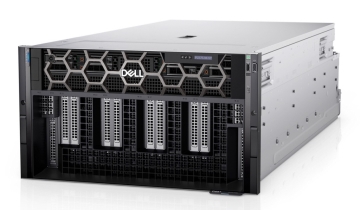
Dell Launches Servers Equipped with AMD Instinct Accelerators
Dell Technologies is stepping up efforts to expand an open ecosystem for generative AI through the PowerEdge server XE9680, which is equipped with eight AMD Instinct MI300X accelerators.
2023.12.07by 배종인 기자











