


The industrial sensor market is expected to grow at an annual rate of 8.5%, reaching a market value of KRW 56 trillion by 2029.
 Published2024.02.16 15:04
Korea's Industrial Intelligent Sensor Research and Development Roadmap to 2025
As the foundation of the digital age, sensors are undoubtedly the most crucial and core IT component. As cutting-edge industries advance, demand for high-performance, high-precision industrial sensors increases, leading to their emergence as a high-value-added industry.
According to a recent report by global market research firm Markets and Markets, the industrial sensor market size is expected to grow at an average annual rate of 8.5% from $27.9 billion (approximately KRW 37 trillion) in 2024 to $42.1 billion (approximately KRW 56 trillion) in 2029.
Industrial sensors are sensors that collect data in real time from various points in the manufacturing process, such as image, level, power, pressure, temperature, vibration, and flow sensors, and are used for monitoring and analysis. They are mainly adopted in predictive maintenance and process management programs.
With the rise of the Fourth Industrial Revolution and IIoT demand, adoption is actively underway for precision control and measurement in manufacturing processes, including automation and smart factories.
The report projects that the level sensor market will hold the largest market share during the forecast period. A level sensor is a type of flow sensor used to measure and control the level of materials such as liquids and solids inside containers such as tanks and reactors.
On the other hand, despite the increasing market demand, there is also significant downward pressure on unit prices due to fierce competition among suppliers. The report noted that the chicken game between new, low-cost entrants to the sensor market and suppliers of established product lines could limit R&D and innovation.
Major suppliers include ST Microelectronics, Rockwell Automation, Texas Instruments, Honeywell International, Siemens, Panasonic, and Bosch Sensortec.
Industrial sensors are evolving into intelligent sensors and, through convergence with AI, edge computing systems that analyze and classify data, predict errors, and perform maintenance interventions based on machine learning and deep learning modeling.
As modern industrial processes become increasingly complex, the industrial sensor market is demanding requirements such as higher accuracy, wider operating range, and higher sensitivity.
Industrial intelligent sensors cover the following industries: semiconductor design and manufacturing, nano, bio design, materials, and embedded software, while the forward industries include healthcare, automotive electronics, games/mobile, smart manufacturing, and security.
Existing sensor manufacturers also see no market potential in the low-cost sensor chicken game and are focusing on developing and manufacturing high value-added sensors such as MEMS sensors, convergence sensors, and nano sensors.
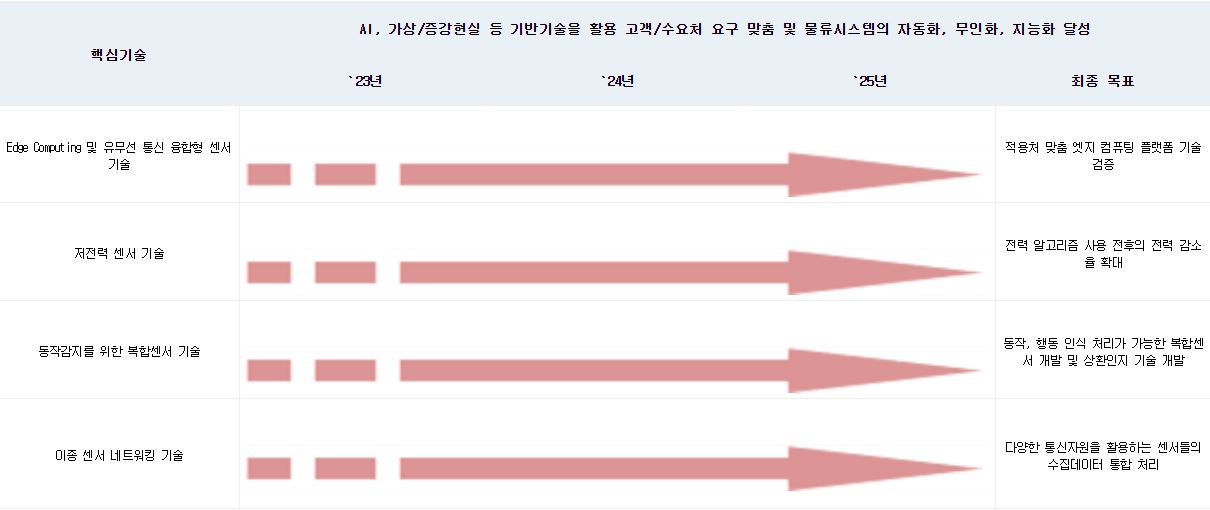
▲Industrial Intelligent Sensor Technology Development Roadmap (Source: TIPA)
In Korea, industry, academia, and research are also cooperating to develop industrial intelligent sensors. The Ministry of SMEs and Startups, together with the Technology Information Promotion Agency for Small and Medium Businesses (TIPA), is establishing a roadmap for the development of industrial intelligent sensor technology and is carrying out related projects.
By 2025, we plan to complete the development of edge computing and wired/wireless communication convergence sensor technology, low-power sensor technology, complex sensor technology for motion detection, and heterogeneous sensor networking technology.
As China rises to a 10% global share of the smart sensor market, attention is focused on whether the domestic sensor industry can achieve the tasks of innovation and ecosystem creation among existing global manufacturers.
Comments
Related news
Smart Sensor Market to Double in 4 Years
With the advancement of the IoT industry and the increasing adoption of smart appliances equipped with various intelligent services, the implementation of smart sensors continues to grow steadily.
2023.12.06by 명세환 기자
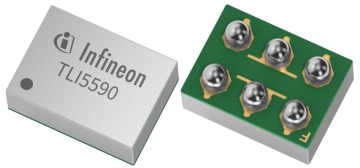
Infineon Launches XENSIV™ TMR Sensor for Precise Length Measurement
Infineon Technologies (Korea CEO Lee Seung-soo) has launched the XENSIV™ TLI5590-A6W magnetic position sensor, which combines proven magnetic position sensing expertise with linearized TMR (tunneling magnetoresistance) technology.
2024.01.22by 배종인 기자
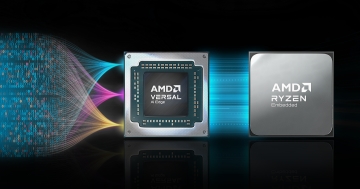
AMD Embedded+ Launch, “Background for Rapid Increase in Edge AI Chips and Sensor Data Analysis”
Growing supply of AI inference chipsets is expected at the edge. Machine vision and sensor data analytics are projected to drive edge AI-related shipments, while AI semiconductors for edge AI devices are emerging in SoC form factors.
2024.02.06by 명세환 기자
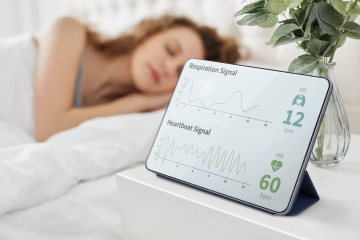
Infineon Technologies - Non-contact biosignal measurement: Medical innovation with radar sensors
We hear from Infineon Technologies' technical team about the development of medical IoT devices utilizing radar sensors.
2024.02.14by 편집부
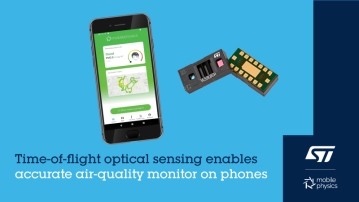
ST Mobile Physics Develops Smartphone Air Quality Monitoring ‘Envirometer’
ST and Mobile Physics jointly developed a solution that can measure indoor and ambient air quality using ToF optical sensors embedded in smartphones and other devices, the company announced on the 15th.
2024.02.15by 성유창 기자











