


Infineon's high-performance MEMS microphones boost AI voice assistant recognition accuracy.
 Published2024.03.04 15:13
.jpg)
The microphone market is expected to grow at a CAGR of approximately 4% through 2026 .
Voice recognition accuracy ↑, noise ↓, long-distance voice capture
MEMS: Small size, high performance… mass production, cost reduction
As the voice assistant market expands based on conversational AI, experts suggest that high-performance MEMS microphones can enhance the user experience of voice-enabled applications.
On February 20th, at the e4ds webinar, Infineon's Vice President Kim Seong-tae presented on the topic of 'Basic Principles of MEMS Microphones and How to Select High-Performance Microphones for AI Trends.'
Artificial intelligence (AI) naturally understands and processes human language to perform its functions. Recently, generative AI capable of natural language conversation, such as LLM (Large Language Model), has rapidly increased, and voice input is increasingly being incorporated into products as a core interface. For example, Samsung Electronics' S24 series and Galaxy Book Pro incorporate generative AI using on-device AI technology. Apple also announced plans to strengthen hardware and software functions by integrating a conversational AI model into Siri.
The principles of sensing are similar to the human auditory and visual functions. Just as humans perceive their environment through their senses, such as their eyes and ears, devices similarly perceive situations through sensors. Sensors can collect more accurate and extensive information than human perception. Furthermore, for even more accurate perception, they integrate input from multiple sensors through fusion algorithms.
"MEMS high-performance microphones" are attracting attention as tools for accurate voice detection. According to market research firms, the overall microphone market is expected to grow at an average annual rate of approximately 4.2% from 2022 to 2026.
Microphones are used in a wide range of applications, from consumer applications like smartphones, True Wireless Stereo (TWS) devices like AirPods, headphones, video call equipment, and AI speakers, to cameras, surveillance monitoring equipment, VR devices, medical devices, and industrial equipment. Microphones are increasingly preferred for their high-quality, clear audio quality. Communication via video calls, video conferencing, and speakers demands high-quality recording.
The two most widely used technologies for microphone construction are MEMS and ECM (Electronic Condenser Microphone). MEMS, which implements the sensing element using semiconductor processes, enables high performance despite its small size. Thanks to its low cost and mass production capabilities, it is rapidly replacing ECM.
'MEMS (Micro Electronic Mechanical system)' refers to a device that converts external physical signals into electrical signals within an ultra-small semiconductor structure. A MEMS microphone includes a MEMS part that senses sound, an ASIC that extracts the difference in capacitance caused by the generated sound into an electrical signal, and a PCB.
A MEMS microphone consists of two components: a membrane, which moves in response to air vibrations, and a fixed diaphragm. As the membrane moves in response to air vibrations, it moves up and down at a certain distance, changing its distance from the fixed diaphragm. This difference is then recognized as an electrical characteristic and output.
Infineon produces 'SBP MEMS (single)' and 'SDM MEMS (dual)'. The SBP structure is simple, allowing for compact size and relatively low cost, while SDM is a method for reducing noise and obtaining a clean signal.
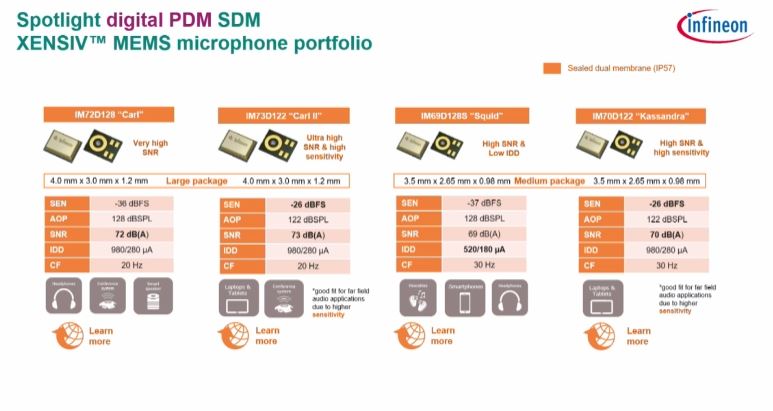
Infineon's XENSIV™ MEMS microphone is a SDM MEMS sensor that improves speech recognition accuracy, reduces noise, enables long-distance voice capture, enables contextual understanding, and enables multimodal interaction.
It boasts a high signal-to-noise ratio (SNR) while consuming low power. A high SNR means clear and abundant capture of desired signals. Its IP57 rating ensures water and dust resistance, making it environmentally friendly. Its low noise characteristics also make it suitable for applications such as transparent mode and active noise cancellation.
Thanks to its wide dynamic range, it can receive audio from low noise levels to high volumes without distortion. The clock input allows for switching between various power modes to optimize power consumption. All products are calibrated and tested to meet key specifications and are easily distributed, ensuring the highest quality standards.
In Infineon's MEMS microphone portfolio, the new product 'IM70D122' is an SDM MEMS product. In tests, the recognition rate of the existing product dropped from about 98% to about 24% when the sound became smaller and the distance increased from 2m to 16m, but under the same conditions, the IM70D122 showed about 78% recognition accuracy even at a distance of 39m. It also showed a significantly higher recognition rate than the existing product in noise tests.
Infineon claims that the microphone, with a 75dB SNR, “captures audio 40 percent better than standard microphones, such as those used in commercial voice assistants.”
Kim Sung-tae, Vice President, stated, "Based on high performance and high SNR, Infineon holds over 50% market share in the silicon microphone business," and "It also ranks among the top three global players in the overall MEMS sensor market." He added, "Infineon has been developing groundbreaking MEMS microphone products based on 15 years of expertise across all stages of production, from wafer to finished product."
Comments
Related news
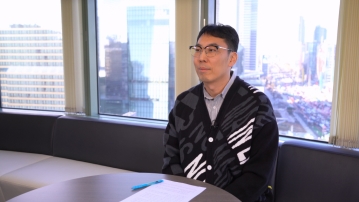
Kim Sung-tae, Infineon Vice President - “Expanding the Conversational Recognition Interface Market… Increased Importance of MEMS Microphones”
We will be hosting a webinar on February 20th with Infineon to explore the basic principles of MEMS microphones and methods for selecting high-performance microphones in line with AI trends. Prior to the webinar, we interviewed Kim Sung-tae, Head of the Power & Sensor Systems Division at Infineon Korea, who will be participating as a speaker.
2023.12.22by 성유창 기자
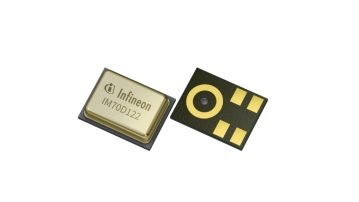
[Technical contribution] Infineon Technologies - High-performance MEMS microphone ideal for conversational AI
As the conversational AI market experiences rapid growth, Infineon Technologies engineers discuss the technologies necessary for humans and machines to interact effectively.
2024.01.04by 편집부
.jpg)
Infineon Launches Hybrid ToF Solution for Next-Generation Smart Robots
Infineon Technologies (hereinafter Infineon) has unveiled a new hybrid Time-of-Flight (hToF) solution that significantly reduces maintenance efforts and costs for smart robots by combining two depth sensing concepts.
2024.02.01by 성유창 기자
.jpg)
Infineon and Honda Join Forces for Automotive Semiconductor Development
Infineon Technologies (Korea CEO Lee Seung-su) has signed a Memorandum of Understanding (MoU) with Honda Motor to establish strategic cooperation.
2024.02.02by 배종인 기자
.jpg)
Infineon sells Cheonan, Korea and Cavite, Philippines plants to ASE
Infineon Technologies (CEO Korea: Lee Seung-soo) is divesting its major backend manufacturing facilities—the Cheonan plant in Korea and the Cavite plant in the Philippines—as it pursues profitability improvements through a combination of in-house production and outsourced manufacturing.
2024.02.23by 배종인 기자











