



Generating VHDL using ChatGPT...Using FPGA-based instrumentation
 Published2024.03.06 15:45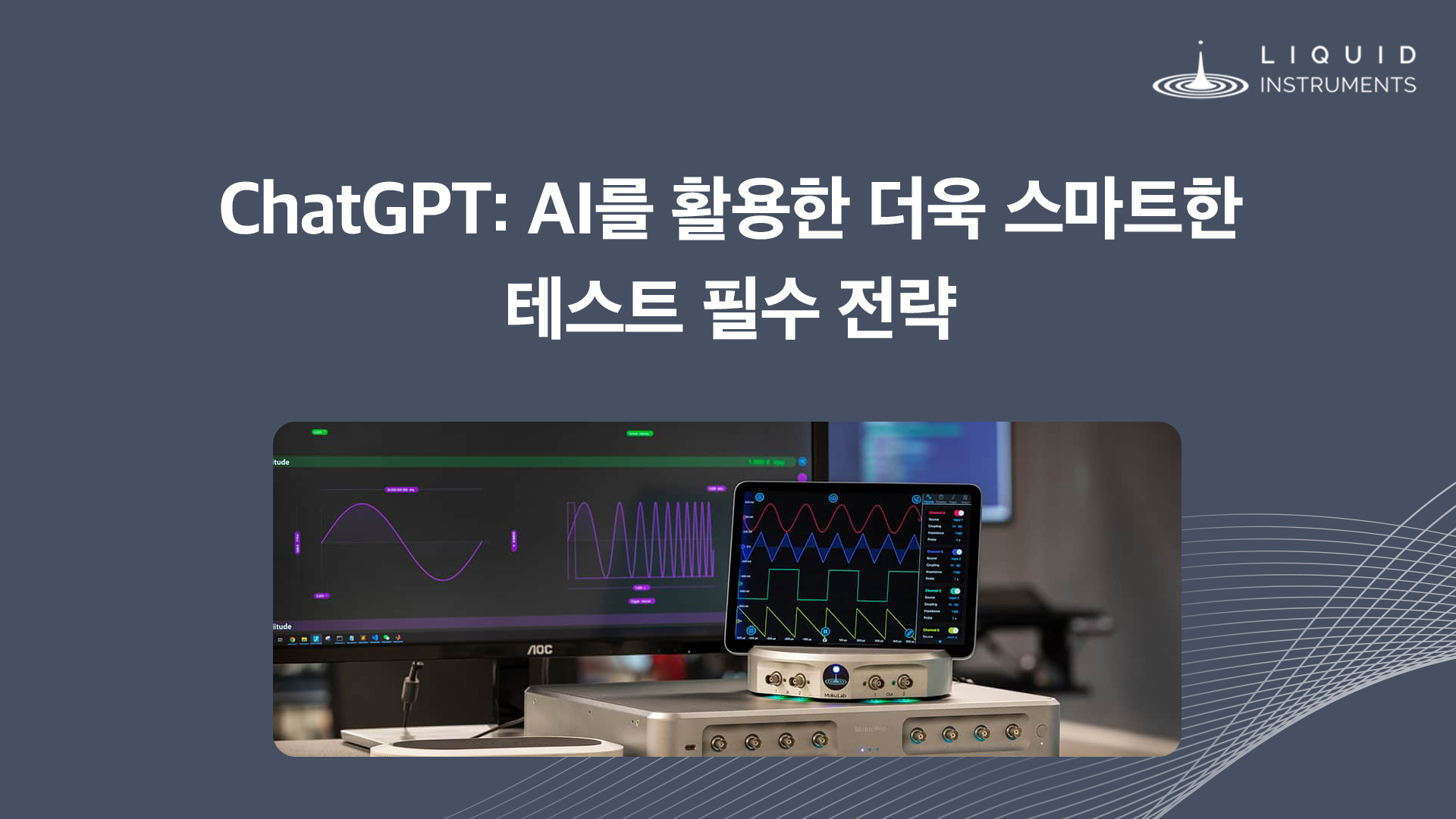
▲ A recent webinar presentation titled "ChatGPT: Essential Strategies for Smarter Testing Using AI" presented at e4ds EEWebinar.
Accelerate project timelines and simplify programming
Hardware Description Languages (HDLs) such as VHDL are very difficult to master. On the other hand, there was a demand in the market for a simplified solution for developers as it is essential to utilize the computing power of FPGAs in digital designs.
In this webinar, a methodology and examples for creating necessary specifications or defining functions using AI language models such as ChatGPT and generating VHDL code that meets the requirements were revealed.
Liquid Instruments (hereinafter referred to as Liquid) recently hosted a webinar titled 'ChatGPT: Essential Strategies for Smarter Testing Using AI' at e4ds EEWebinar.
FPGAs used in test and measurement are widely used because of their advantages in high-speed processing, custom design, flexibility, and reliability.
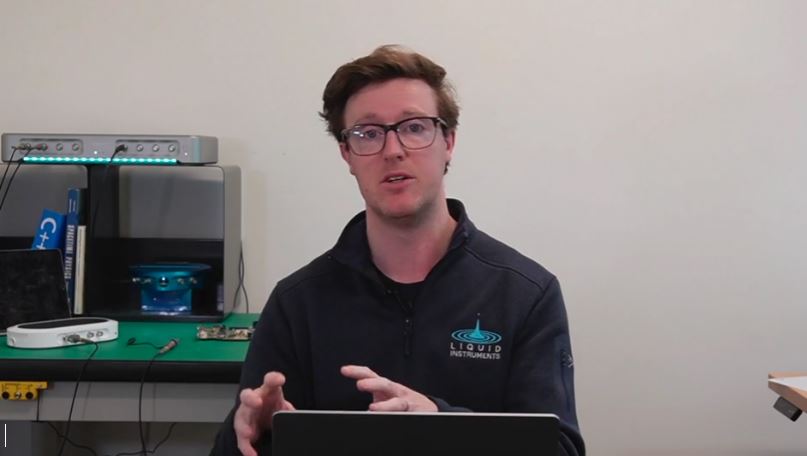
▲Ben Nizette, Product Director at Liquid Instruments, giving a presentation (Capture: e4ds EEWebinar)
Ben Nizette, Product Director at Liquid Instruments, demonstrated how to build a custom hardware solution that dramatically simplifies the design of desired features by combining the capabilities of ChatGPT and Moku Cloud Compile.
We shared examples of how to generate VHDL using ChatGPT, implementing a signal limiter, implementing an event counter, and converting Python to VHDL: sqrt(x).
Each step is explained in the process of 'Prompt → Adjust → Copy → Build', and all you have to do is copy the code written by ChatGPT to Moku Cloud Compile. You can build your bitstream into Moku Cloud Compile, where you can edit the VHDL and improve your program.
Even if you're not a VHDL expert, you can freely utilize Moku's 13 software-defined instruments. This expands the instrumentation's capabilities, allowing you to expand test capabilities with FPGAs, high-precision embedded instruments, and portable hardware.
Liquid points out that these examples are just a few, and that there's plenty of room for creation, from simple, time-saving programs to complex prototypes and iterations on your own designs, all with different prompts and methodologies.
“I’m confident that future versions of ChatGPT will allow you to upload screenshots and even report where errors occurred,” said Ben Nijit, director of Moku Cloud Compile and ChatGPT. “This will make Moku Cloud Compile and ChatGPT a useful tool for everyday testing scenarios.”
Comments
Related news
AI Era Radio Convergence Prospects… “Utilizing ‘ChatGPT’ EMI Design and Analysis”
As the emergence of convergent radio frequency technologies accelerates and the trend replacement cycle accelerates, concerns about strengthening the capabilities of personnel in the radio frequency field are deepening. In this context, the Radio and Broadcasting Communication Training Institute is taking the lead in convergent radio frequency education, while the changes in electromagnetic field design and analysis methods that generative AI technology will bring have been presented and drawn attention.
2023.11.15by 명세환 기자
.jpg)
Electromagnetic Waves and AI (1) - "AI Leading Innovation in Electromagnetic Wave Design and Analysis"
Artificial intelligence (AI) is driving innovation by converging and integrating with science and technology across various fields. In the electromagnetic field sector, attempts to apply AI are actively underway. In response, experts from the Korean Institute of Electromagnetic Engineering and Science have gathered together to prepare for the future of electromagnetic and AI convergence.
2024.02.02by 권신혁 기자
AMD Embedded+ Launch, “Background for Rapid Increase in Edge AI Chips and Sensor Data Analysis”
Growing supply of AI inference chipsets is expected at the edge. Machine vision and sensor data analytics are projected to drive edge AI-related shipments, while AI semiconductors for edge AI devices are emerging in SoC form factors.
2024.02.06by 명세환 기자
.jpg)
SK Hynix Announces Achievements in Semiconductor Measurement AI Technology
AI technology is playing an active role across various industries. As semiconductor metrology technology converges with AI, it is bringing about productivity improvements to manufacturing sites.
2024.02.29by 명세환 기자
ESP32 Development Environment Selection and GPS Application Implementation
The ESP32 is a microcontroller that integrates Wi-Fi, Bluetooth, 12-bit ADC, capacitive touch, PWM, DAC, and UART in a single SoC. However, the abundance of features does not by itself solve the designer's problems. The real challenges lie in selecting the appropriate development environment, determining which pins can be used and which must be avoided, and converting raw data from modules into usable information. This document addresses ESP32 peripheral constraints (ADC2 and Wi-Fi coexistence limitation, UART1 occupancy, ADC non-linear regions), the trade-offs between Arduino IDE and ESP-IDF, and the process from connecting NEO-6M/NEO-M8N GPS modules to UART2, parsing NMEA sentences, and visualizing routes in Google Earth, all organized based on documented references.
2026.10.12by 편집부











