



NVIDIA and 14 Robots, Humanoid Robot Development Intensifies (China)
 Published2025.01.20 15:32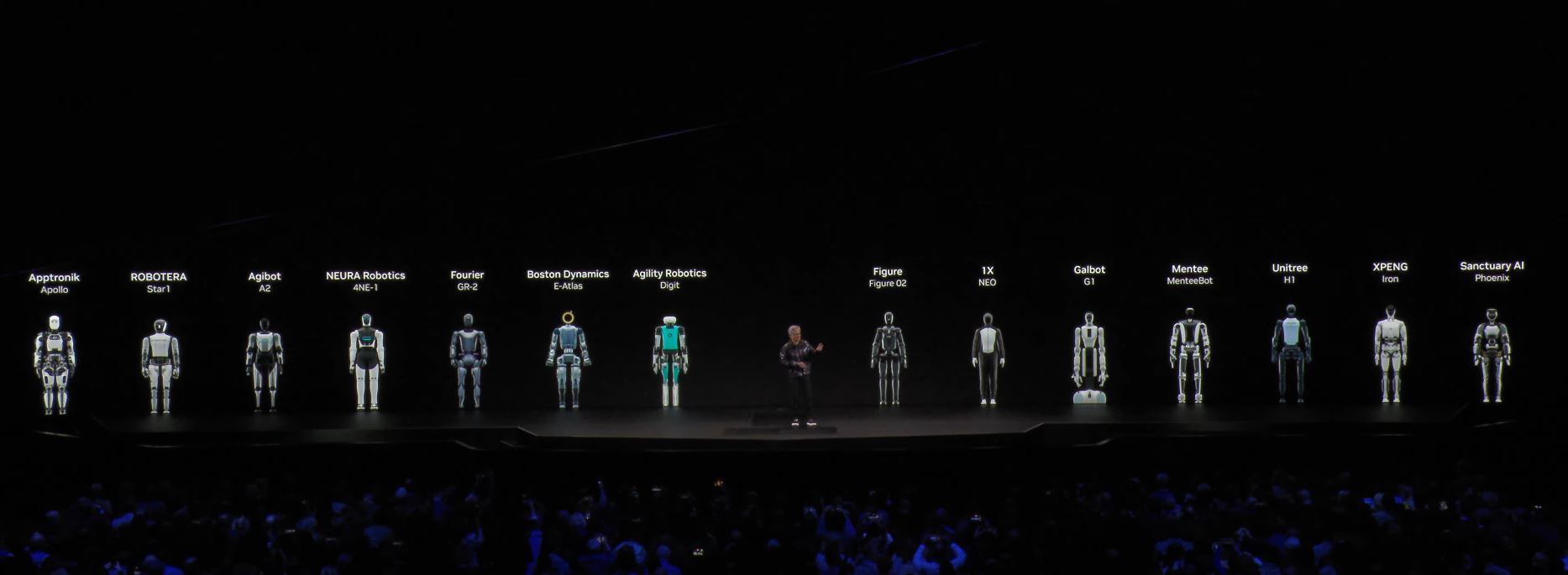
▲엔비디아 플랫폼을 활용하는 14개 로봇 개발사
로봇에라·유니트리·애지봇·푸리에·갤봇·샤오펑
로보틱스 개발의 선두국가는 미국으로 테슬라, 보스턴다이내믹스 등 진보된 휴머노이드 로봇 시제품과 출시품들의 성능 시연이 대중들에게 놀라움을 주고 있으며, 이에 질세라 중국 기업들이 다수 엔비디아와 협업하며 로보틱스 제품 개발에 박차를 가하고 있다.
엔비디아가 소개한 휴머노이드 로보틱스 기업 14개사 가운데 앞선 미국편 4개 로보틱스 기업에 이어 중국 6개 휴머노이드 로보틱스 기업들의 제품을 소개한다. (이전 시리즈 보기-미국편)
■ 칭화대 스타트업 로봇에라 ‘스타1’
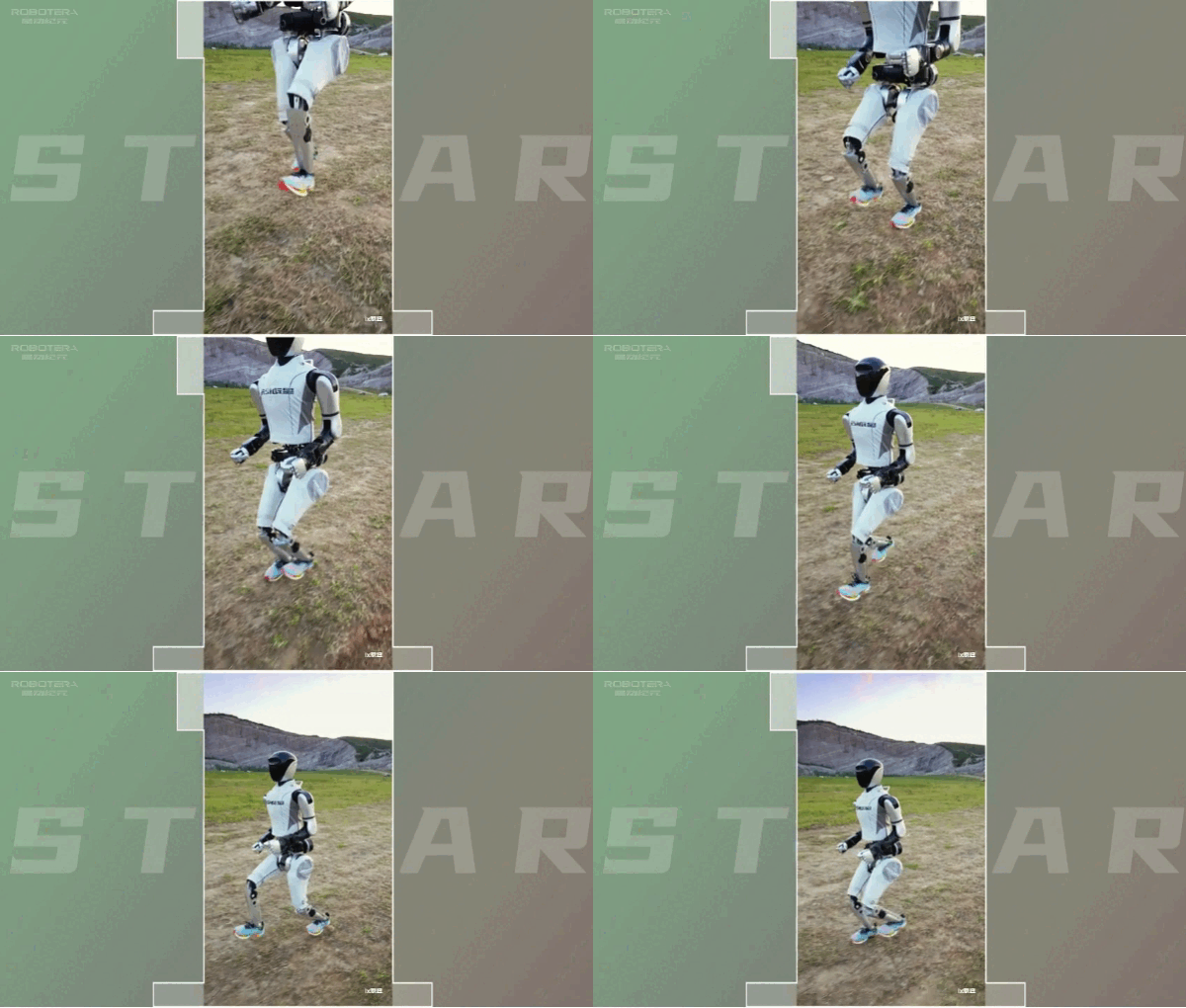
▲로봇에라 스타1이 야외에서 뛰는 모습 / (영상:로봇에라 홈페이지)
중국 칭화대 연구진이 설립한 로봇에라(Robot Era)는 총 55축 자유도를 특징으로 하는 첫번째 휴머노이드 로봇 ‘스타1(Star1)’을 개발했다. 실제 실외 주행 테스트를 실시해서 최대 3.6m/s 속도를 구현해냈다. 3 자유도 허리를 통해 자연스러운 보행과 달리기, 점프 등의 동작 수행이 가능하다고 업체는 설명했다.
스타1은 171cm에 63kg으로 최대 20kg의 중량 작업이 가능하다. 로봇에라는 엑스핸드1을 개발해 로봇손의 디테일을 최대한 살렸다. △12개 자체 구동 조인트 △12 자유도 △고해상도 촉각 센서 등을 갖췄다.
두뇌가 되는 메인 프로세서는 인텔 및 엔비디아 오린 플랫폼을 통합해 △강화학습 △모방학습 △엔드투엔드 거대모델 등에 최대 275TOPS 처리 능력을 바탕으로 연산을 수행한다. 손가락 촉각센서와 비전 카메라, 상호작용 화면 등 엣지단 하드웨어와 주변 장치가 탑재돼 있다.
STAR1은 지난해 10월 고비 사막을 달리는 영상을 공개하며 자사 휴머로이드 로봇이 ‘유니트리 H1’ 대비 빠르게 달린다고 강조했다.
■ 차이나 머니 수백억 투자 유니트리 ‘G1·H1’
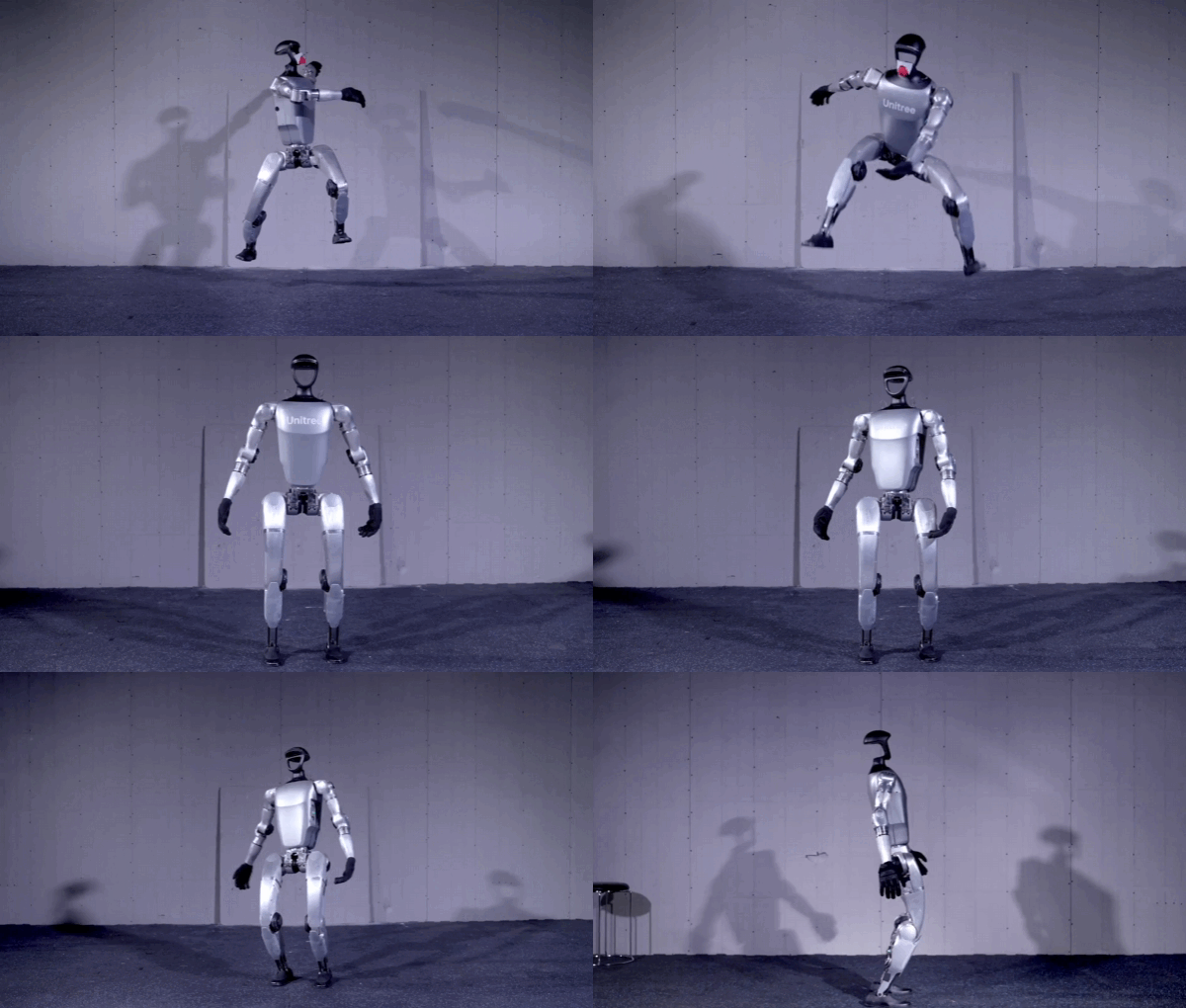
▲점프하는 유니트리 G1의 모습 / (영상:유니트리 홈페이지)
유니트리(Unitree)는 기존 H1에 이어 신규 로봇 G1을 지난해 선보였다. 130cm에 35kg 무게로 △3D 라이다 및 뎁스 카메라 △배터리 지속 시간 2시간 △최대 조인트 토크 120N·m △최대 43 자유도 △8코어 CPU △이동속도 3.3m/s 등이 특징이다. 배터리 지속시간이 짧은 반면 교체가 가능한 것으로 전해진다.
유니트리 신규 G1은 짧은 신장과 간소화된 부품 수로 인해 초기 제품 가격이 1만6,000달러로 현재 환율 기준 2,300만원 수준이다. 반면 H1 제품은 180cm 키에 47kg 무게로, 산업용 설비에 적합한 사이즈를 갖췄다. H1의 가격은 9만달러로 G1 대비 5배 이상 비싸다.
현재까지 시리즈C 라운드 투자까지 유치하며 수백억원 규모의 투자를 받은 것으로 알려져 있다. 유니트리는 이번 CES 2025에 참여해 신규 G1을 선보이며 중국 휴머노이드 시장 확장을 견인했다.
■ 휴머노이드 1,000대 양산 애지봇 ‘A2’
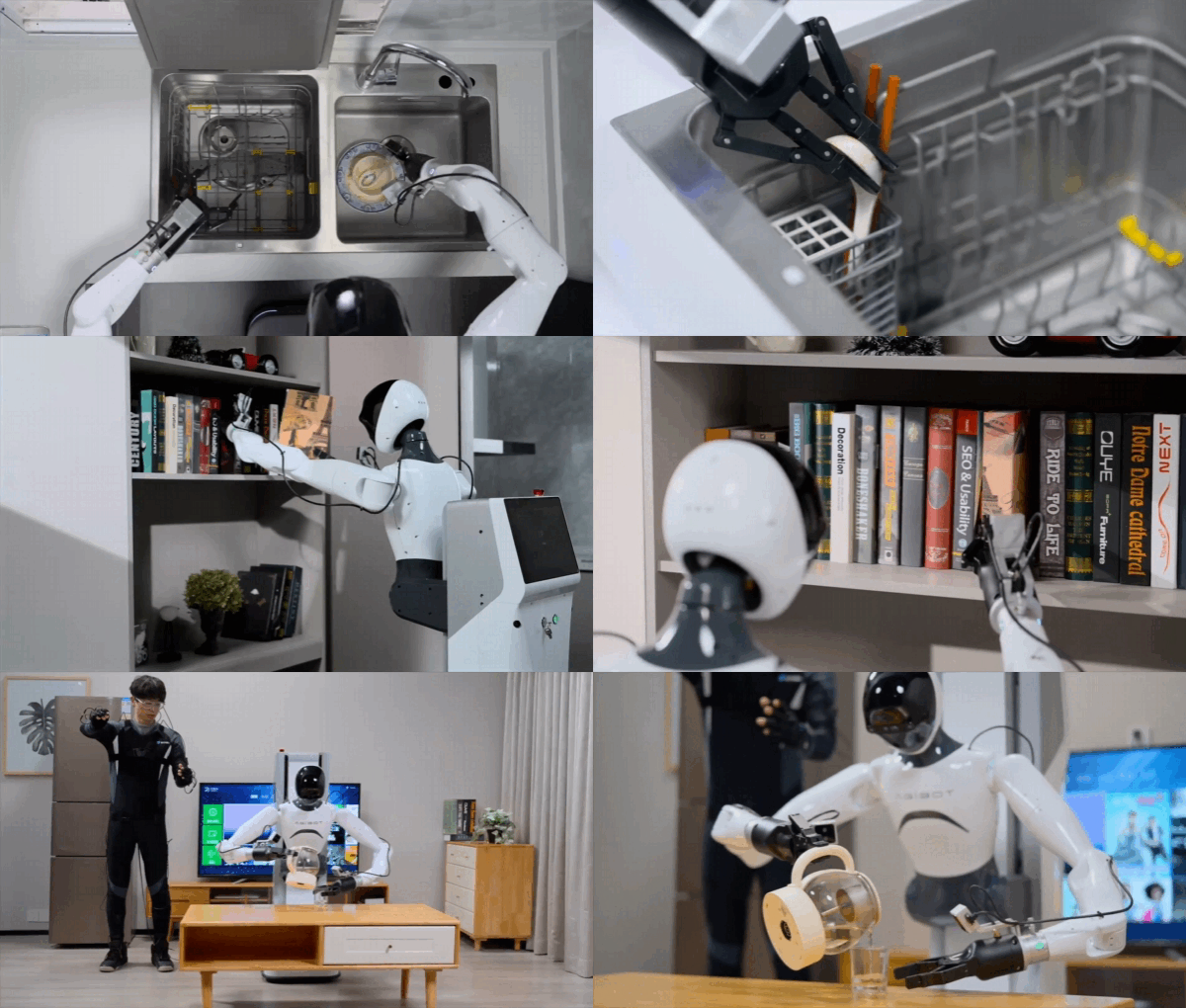
▲애지봇 제품 시연 / (영상:애지봇)
중국 상하이 기반 애지봇(Agibot)의 휴머노이드 로봇 A2는 169cm에 69kg 중량으로 △교체 가능한 배터리 지속시간 2시간 △40 자유도 이상 △대규모 언어 모델과 RAG 결합 △멀티모달 매핑 시스템 △3D 라이다 및 6대 카메라 등이 특징이다.
애지봇은 지난해 10월 대화형 서비스 및 마케팅 서비스용 휴머노이드 로봇 300대 연내 생산을 밝힌 바 있으며, 최근 상하이 공장에서 약 1,000대의 범용 인바디드 로봇이 출하됐다고 발표했다. 주로 마케팅 및 대화형 서비스 로봇인 것으로 전해지며 가정용 휴머노이드는 아직은 양산단계에 이르지 못한 것으로 전해진다.
지난달 애지봇은 AI 로봇 훈련 발전에 필요한 대규모 휴머노이드 훈련 데이터 세트를 오픈소스화했다. 애지봇 월드 알파(AgiBot World Alpha)는 5개 도메인에 100개 이상의 실제 시나리오를 기반으로 △정밀 조작 △도구 사용 △다중 로봇 협업 등을 지원한다.
■ 재활 의료 영역 시장 공략 푸리에 ‘GR-2’
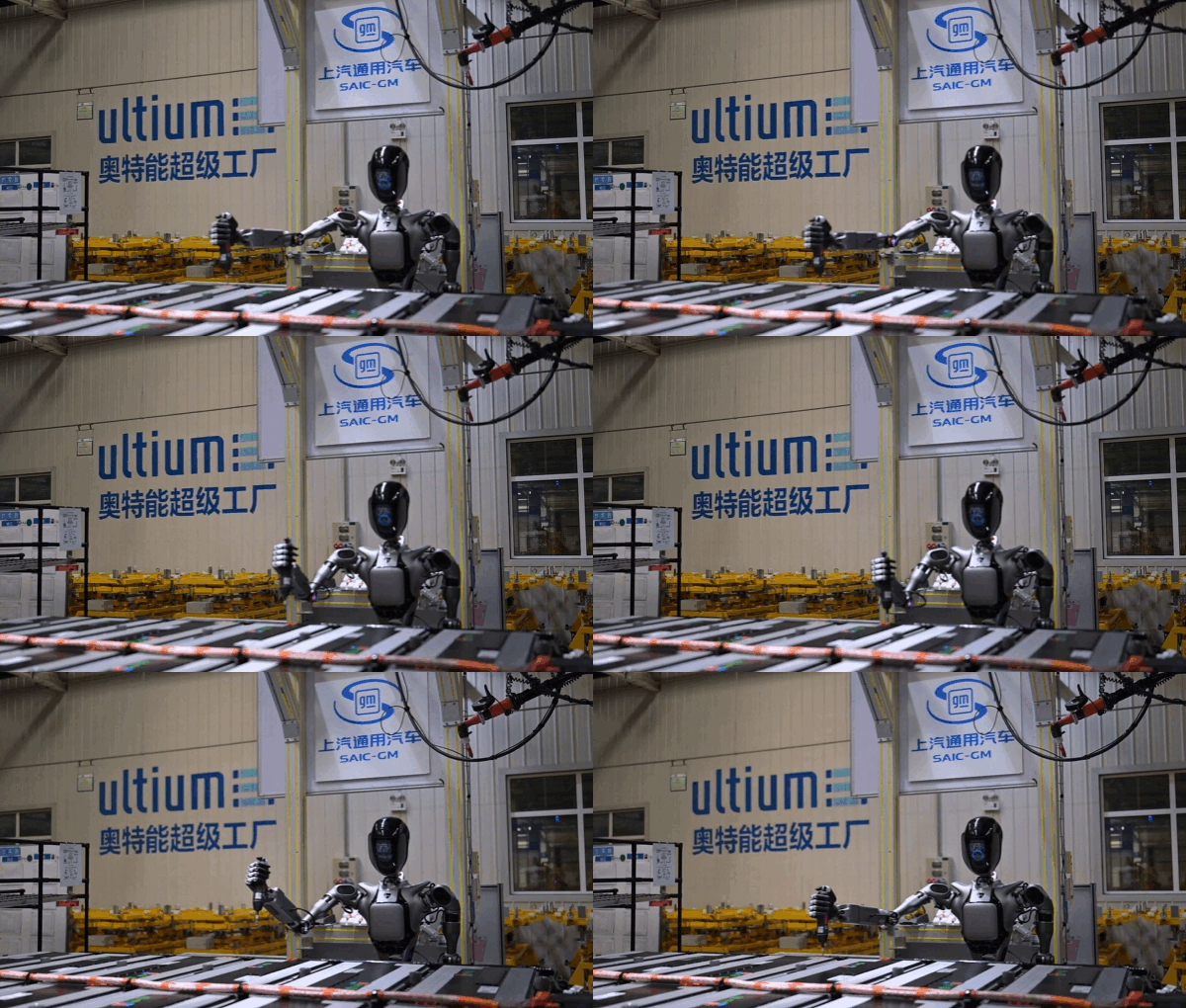
▲푸리에 GR-2 시연 장면 / (영상:푸리에 홈페이지)
푸리에(Fourier) GR-2는 1세대 휴머노이드 로봇 ‘GR-1’에 이어 차세대로 개발된 제품으로 175cm에 63kg 중량으로 배터리 지속시간은 앞선 로봇들과 동일한 2시간이다. △6개 배열형 촉각센서 탑재 12 자유도 로봇손 △총 53 자유도 △최대 토크 380N·m FSA 2.0 액츄에이터 △NVIDIA Isaac Lab·ROS·Mujoco 프레임워크 지원 △1.3m/s 등이 특징이다.
로봇팔 1개당 3kg의 하중 용량을 제공하며, 앞선 중국 로봇들과 동일하게 분리형 배터리를 채택해 짧은 배터리 지속시간을 보완했다. 이전 제품과 달리 전선을 내장해 패키징을 강화했으며, 디버깅을 개선해 제조비용 절감하고 AI 시뮬레이션에서 실제 애플리케이션으로의 학습 및 전환 능력을 향상시켰다고 설명했다.
푸리에는 재활 및 보조 기술 분야에서 로봇 기술 활용을 전망하고 있다. 의료 분야에서 재활 문제 해결에 로봇을 활용함으로써 시장 확장을 계획하고 있으며, 최근 말레이시아 말라야 대학교 의료센터 MOU, 독일 의료산업 무역 박람회 Medica 2024 참여 등 관련 분야 진출에 행보를 보이고 있다.
■ 무인약국·점포 솔루션 협업 갤봇 ‘G1’
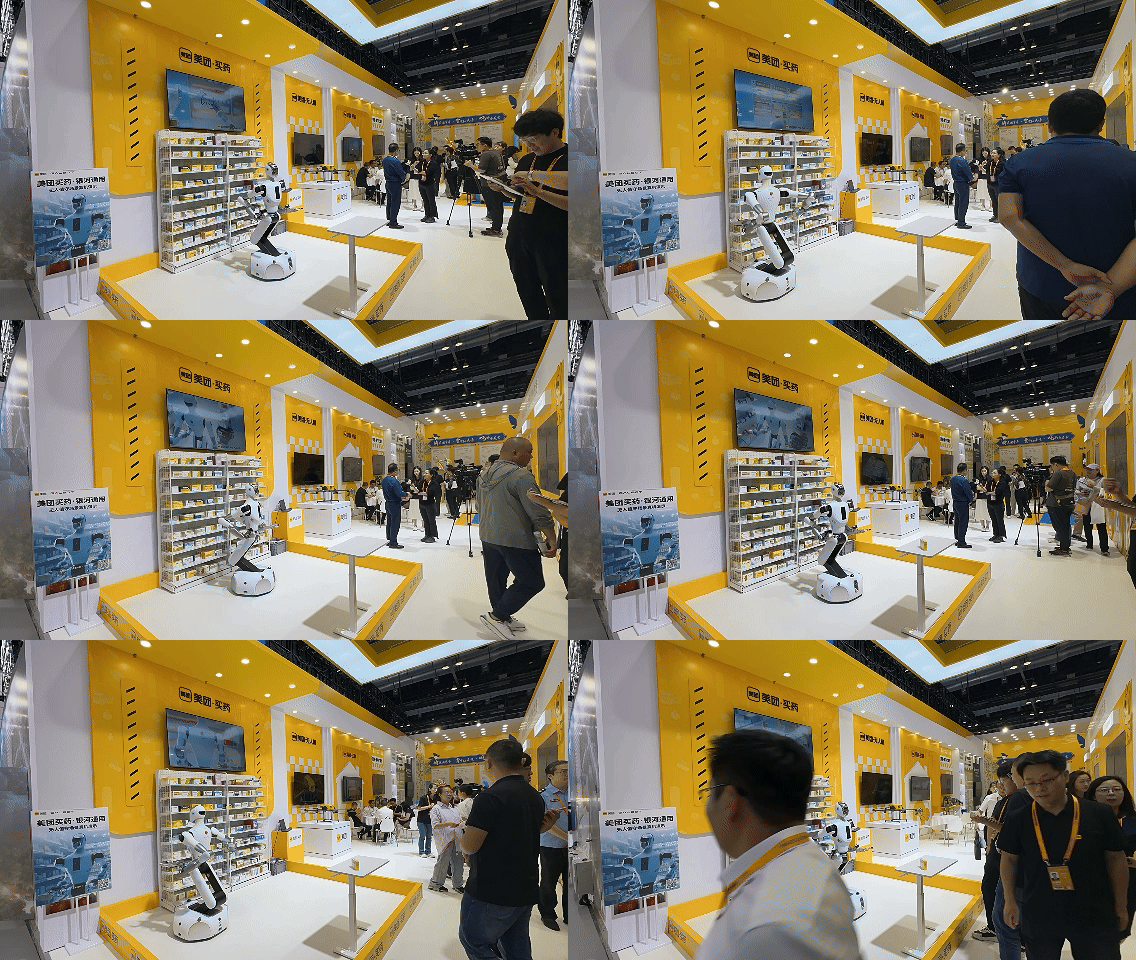
▲갤봇 G1 무인 약국 시연 장면 / (영상:갤봇)
1년 만에 2,000억원 규모의 투자를 유치한 갤봇(Galbot)은 지난해 6월 G1을 선보였다. 173cm 키에 85kg 중량으로 △팔길이 190cm △몸통 리프트 65cm △도달범위 최대 240cm △작업시간 10시간 △탑재량 5kg △시뮬레이션 플랫폼 엔비디아 Isaac Sim·Mujoco 등을 특징으로 한다.
갤봇은 2023년 5월에 설립된 범용로봇 개발 스타트업으로 인공일반지능(AGI)을 갖춘 로봇을 개발하는 데 집중하고 있다. 베이징, 선전, 수저우에 연구개발 센터를 설립해 AI 연구를 진행하고 있으며, 상업용, 산업용, 가정용 휴머노이드 로봇을 2026년부터 양산할 예정이다.
중국 메이투안과의 협력으로 약국 서비스 로봇 출시를 앞두고 있으며, 양손으로 약품을 집어 운반하거나 선반 위에 올려놓을 수 있다. 갤봇은 24시간 무인 약국 구축을 협력할 예정으로, 오프라인 소매, 스마트 창고, 스마트 물류 및 기타 분야에서 로봇 역량 강화 서비스에 관해 포괄적이고 심층적인 협력을 수행할 것으로 보인다.
■ 中 전기차 기업 샤오펑 ‘아이언’
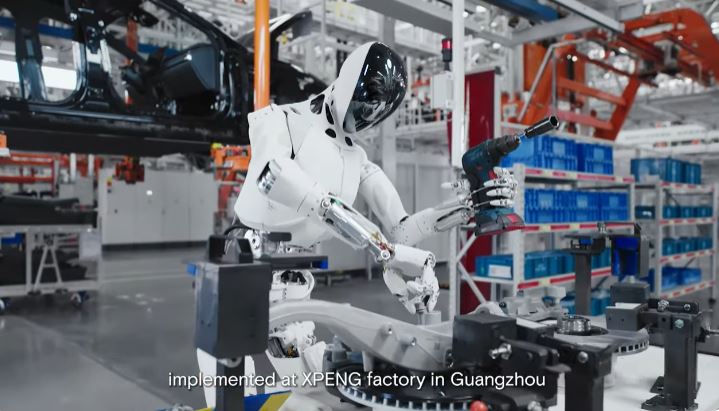
▲11월 공개된 샤오펑 ‘아이언’ / (이미지:샤오펑 유튜브 채널)
중국 전기차 기업 샤오펑(영문명 엑스펑, Xpeng)은 지난해 11월 휴머노이드 로봇 ‘아이언(Iron)’을 대중에서 소개했다. 키 173cm에 70kg 무게로 60개 이상의 다관절과 200 자유도를 갖췄다. 개발기간만 장장 5년에 달하는 엑스펑의 휴머로이드 로봇은 이미 엑스펑 내 일상 업무에 통합됐으며, 공장 및 매장에서 활용되고 있는 것으로 전해진다.
샤오펑 아이언은 자사 P7+ 전기차 조립 라인을 지원하고 있으며, AI 작업에 특화된 40코어 CPU·자체 개발 NPU를 집적한 Turing AI 칩을 자체 개발해 AI 자동차, 로봇, 플라잉카 모두에 적용 가능하도록 만들었다.
Comments
Related news
The era of AI-equipped collaborative robots has begun
Universal Robots, a global leader in collaborative robot specialization, has announced "UR AI Accelerator," a hardware and software toolkit designed to accelerate the development of AI-based collaborative robot applications.
2024.10.22by 배종인 기자
NVIDIA Supports Physical AI Construction… Strengthens Robotics Ecosystem
While ChatGPT's AI innovation is providing benefits across multiple facets of digital tasks such as business operations, customer service, and content creation, many assessments indicate that physical AI—implementing artificial intelligence in humanoids, factories, and devices within other industrial systems—has yet to reach a breakthrough turning point.
2024.10.29by 명세환 기자
NVIDIA Supports Advanced Agricultural Innovation...Introducing Agricultural Startup Cases
In the agricultural sector, trends in automation and digital transformation are also being anticipated, including AI, digital twins, and robotics. As AI technology development and adoption are expanding primarily through advanced technology startups, Nvidia technology is penetrating various areas of the agricultural industry.
2024.11.28by 권신혁 기자
Samsung Electronics Secures Largest Shareholder Status in Rainbow Robotics
Samsung Electronics will exercise its call option on Rainbow Robotics, in which it holds a 17.4% stake through a 86.8 billion won investment made in 2023, increasing its stake to 35.0% and becoming the largest shareholder from the second-largest shareholder position. Rainbow Robotics is expected to be included as a subsidiary in Samsung Electronics' consolidated financial statements.
2025.01.02by 배종인 기자
LG VS Samsung, AI Home Market Clash... Chinese Robots and AI Home Appliances in Fierce Pursuit
In advanced industries, AI remains a key keyword even as 2025 begins. Consumer electronics and IT device manufacturers are upgrading their AI capabilities and positioning specialized identities with AI-centric characteristics such as 'AI Agent', 'AI Home', and 'Personalized AI'. Through CES 2025, LG and Samsung have demonstrated efforts to establish their positions in the AI Home market, and market competition in this sector is anticipated going forward.
2025.01.13by 권신혁 기자











