



“Multi-protocol support motor solution, reducing hardware complexity and maximizing cost”
 Published2025.03.24 16:21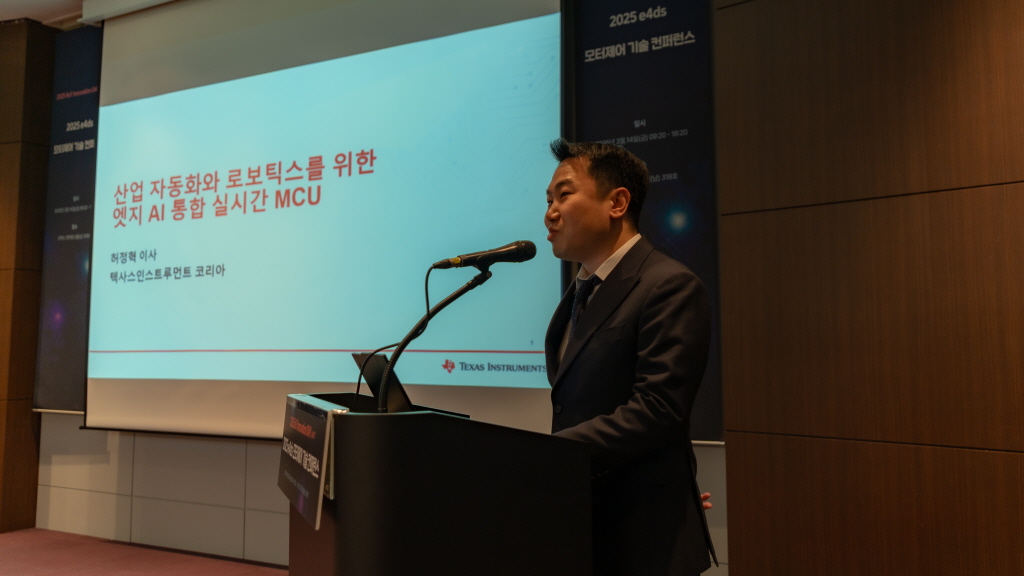
▲TI Director Heo Jeong-hyeok is giving a presentation at the '2025 e4ds Motor Control Technology Conference.'
AM26 multi-axis motor control suitable·Supports F28x major communication protocols
“In industrial environments, there are many cases where a separate MCU for motor control is used, and an MCU for communication protocols is additionally used. Recently, a multi-protocol-supporting motor solution that can be solved with a single chip is gaining attention. TI is solving these industrial needs with a single solution, contributing to the development convenience and shortened development time for developers along with the flexibility of industrial automation solutions.”
On March 14, at the '2025 e4ds Motor Control Technology Conference' held at COEX in Samseong-dong, Seoul, Huh Jeong-hyeok, director of Texas Instruments (TI), presented on the topic of 'Edge AI Real-Time Control MCU Optimized for Motor Drives, Factory Automation, and Robotics', and argued that a multi-protocol supported motor solution that can handle both motor control and communication functions in an MCU can reduce hardware complexity, shorten development time, and maximize costs.
Director Huh Jeong-hyeok said that in industrial environments, a system must support multiple communication protocols to connect with various devices and networks. For example, robots and conveyor systems in manufacturing sites often use EtherCAT, while data centers and other large-scale facilities often adopt Profinet or Ethernet/IP. He said that multi-protocols increase interoperability between heterogeneous systems, ensure data transmission speed and stability, and enable real-time communication and control.
Accordingly, TI has launched an MCU that supports multiple communication protocols. The AM26 series supports EtherCAT, Profinet, Ethernet/IP, IO-Link, etc. with a single chip, enabling complex communication requirements to be addressed with a single solution, it said.
Additionally, the PRU-ICSS module, designed to support Ethernet-based communication protocols, can efficiently handle multiple protocols without additional hardware, it said.
It was also reported that the company is leading the development of motor control technology using AI (artificial intelligence).
herDirector Jeong-hyeok Lee said that MCUs equipped with neural processing units (NPUs) provide innovative solutions such as bearing fault diagnosis and detection of unbalanced load issues, adding that these technologies contribute to increasing the stability and efficiency of motor systems and significantly reducing maintenance costs.
He also mentioned that AI technology learns the real-time operating status of the motor and enables optimized control of data-driven optimization, and through this, the motor control system is evolving into a tool that goes beyond simple control and increases productivity and efficiency.
In particular, the following TI products were introduced as attracting attention.
The F28x series supports communication protocols such as EtherCAT and boasts high performance with a fast control loop (less than 500 nanoseconds). This series is suitable for controlling 1 to 2 axes of motors.
The F29x series utilizes the latest DSP architecture to provide faster and more stable control. It is suitable for high-performance applications and supports various encoder interfaces.
The AM26 series is designed based on the Cortex-R5F core and supports various industrial communication protocols such as EtherCAT, Profinet, Ethernet/IP, and IO-Link. This product is ideal for applications requiring multi-axis motor control and advanced communications capabilities.
The F2800 series is suitable for single-axis motor control at an economical cost and is suitable for small-scale industrial applications.
Director Huh Jeong-hyeok said, “TI’s MCUs help developers easily implement innovative solutions through not only Edge AI capabilities but also multi-protocol support, a user-friendly development environment, and extensive reference materials.” He added, “AI-based fault diagnosis capabilities and real-time data processing technology are the differentiating strengths of TI products, and they can be flexibly utilized in various industrial environments.”

Comments
Related news
TI Unveils MCUs That Maximize Cost-Sensitive Power Management Efficiency
TI has unveiled new products in its C2000 Piccolo microcontroller (MCU) portfolio. The C2000 F28004x MCU family is optimized for power control in cost-sensitive applications such as on-board chargers for electric vehicles (EVs), inverters for motor control, and industrial power supplies. The company has significantly enhanced CPU performance at 100MHz by adding a new family of real-time control devices to the C2000 Piccolo MCU portfolio, integrating a floating-point unit, computational accelerators, and an optional parallel processor.
2018.01.30by 김지혜 기자
.jpg)
Leveraging TI C2000 for Industrial Servo Controller and AC Inverter Design
Automation applications are increasingly integrating more industrial robots and automated machinery. Industrial robots can perform different tasks with the same precision each time, but this is impossible without precise motor drive control. TI's C2000 product family helps motor control system designers implement high-resolution current and voltage sensing feedback. The F28004x products and 37x product family within the C2000 family feature the same generation of peripheral IP, enabling excellent code compatibility. They also integrate high-performance ADCs and function as a single SoC requiring no external logic ICs, allowing for reduced system costs compared to MCU+FPGA architectures.
2018.11.05by 이수민 기자
TI Announces 70W BLDC Motor Driver: No Drive Software Required
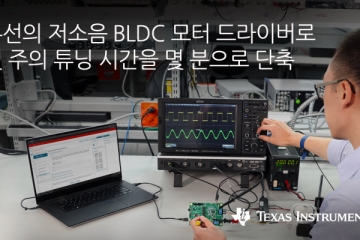
The transition from AC induction motors to BLDC motors is happening rapidly. Now, the development of next-generation devices hinges on faster motor response speeds and shortened design cycles. On the 9th, Texas Instruments announced two 70W BLDC motor driver products using trapezoidal control and field-oriented control (FOC) that do not require motor driving software.
2021.09.09by 이수민 기자
TI Launches First 3D Hall-Effect Position Sensor
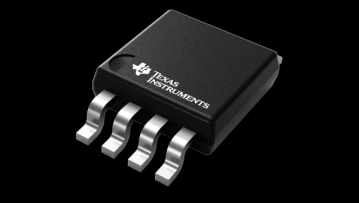
Texas Instruments (TI) has introduced for the first time a 3D Hall effect position sensor that delivers faster real-time control speed and industry-leading accuracy, enabling precise real-time control in factory automation and motor drive applications.
2021.10.13by 배종인 기자
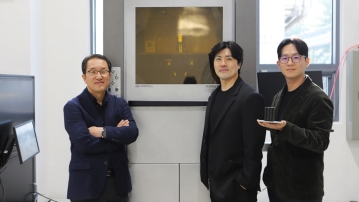
The era of low-cost, multi-variety, small-quantity production of high-performance motors has begun.
A research team led by Ha Tae-ho, senior researcher at the Autonomous Manufacturing Research Institute's 3D Printing Equipment Research Laboratory under the Korea Institute of Machinery and Materials (Director Ryu Seok-hyun), which operates under the Ministry of Science and ICT, has developed comprehensive lifecycle technologies for magnetic material-specialized 3D printing spanning design, materials, processes, and equipment in collaboration with a research team led by Kim Tae-hun, senior researcher at the Korea Institute of Materials Science, and a research team led by Professor Kim Won-ho at Gachon University.
2024.12.03by 배종인 기자











