



Industrial Motors, AIoT-based Maintenance and Management Solutions Competition Intensifies
 Published2025.03.31 16:57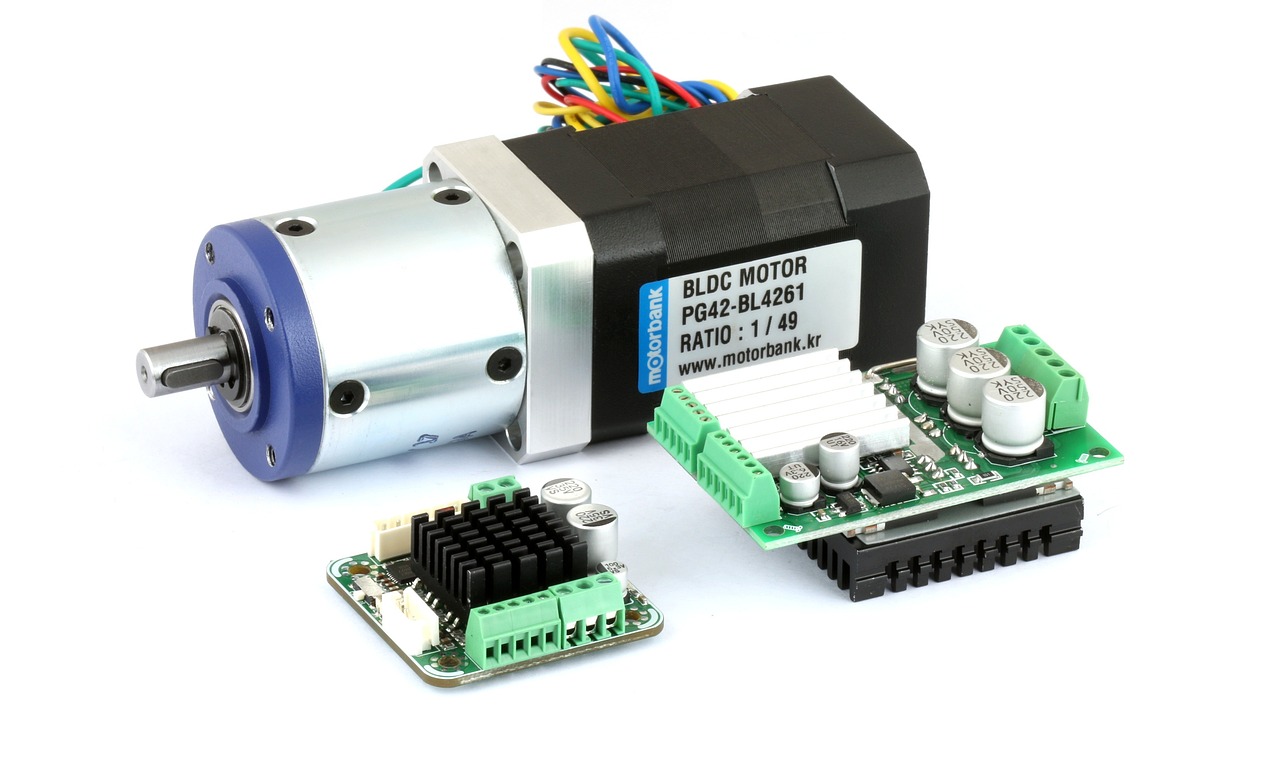
Smart motors, AI-based abnormality detection and predictive maintenance...many competing developers
Even though they are the same electric motors, those used in electric vehicles, industrial facilities, and power generation are considerably expensive and can bring about greater risks in terms of cost loss and ripple effects in the event of a breakdown.
Recently, the development of a safety system that collects and monitors data through sensing of industrial motors and allows AI models to analyze the data in real time to determine abnormal signs has been in the spotlight across the industry.
The trend in motor utilization is moving away from the existing on-off control method and toward a 'smart motor' that actively controls output, implements various and precise functions using control devices, and aims for organic integration between hardware and software.
In relation to this, various companies are developing and servicing AI diagnosis and maintenance solutions for motors, and Siemens recently acquired Altair Engineering, which provides PSIM, a power electronics and motor drive simulation SW, thereby strengthening its AI-based industrial SW portfolio.
In order to become a market leader, it is expected that innovation based on digital twins and simulations will accelerate, including various edge case responses that can widely capture abnormal signs in the future, as well as improved accuracy. It is expected that the fierce competition among companies in terms of technology development and M&A will intensify in the fields of industrial motors and AI.
■ AI-based motor abnormality detection and predictive maintenance solution
Smart motors with sensor fusion can store sensing data in a central system through IoT connection. Real-time data transmission, monitoring, and remote control are performed on the system, and as AI models are installed in these systems, automation and convenience are rapidly improving.
Recently, specialized companies with AI and data analysis capabilities are creating new markets by providing advanced analysis services such as failure prediction, remaining life prediction, and operation optimization by utilizing data collected from smart motors.
Siemens offers a plug-and-play type Connection Module (CM) IOT solution that can immediately build a condition monitoring system for components such as motors and pumps. Equipped with three-axis vibration, temperature, magnetic field, and acoustic sensors, CM IOT provides condition analysis of motors and equipment through a dedicated AI model, realizing predictive maintenance.
Analog Devices (ADI) has improved motor operating efficiency with its OtoSense™ smart motor sensor solution. The solution, which enables condition-based monitoring (CbM) and predictive maintenance (PdM), is an AI-based, fully turnkey hardware-software solution.
Onepredict, a domestic company, is providing an AI-based intelligent integrated industrial asset management platform through GuardiOne PDX. Here, OnePredict is up-to-date and optimizing the detection of facility abnormalities using machine learning technology for large infrastructure facilities such as large turbines, centrifugal pumps, centrifugal compressors, and large fans.
Iresan Industry has also developed and announced an AI-based diagnosis-based dynamo system and service for improving electric motor energy efficiency. It is a diagnosis system in which AI determines abnormal signs by comparing test data with normal data, and is developing and providing a machine learning-based fault detection algorithm that detects alignment, bolt fastening, etc.
■ Motor, sensor integration and IoT connection realization
Smart motors are equipped with built-in sensors that can detect and measure various data and collect motor data in real time. △Vibration sensors △Temperature sensors △Current/voltage sensors △Speed/position sensors △Magnetic field sensors, etc. are used.
Vibration sensors can detect mechanical abnormalities such as motor rotation imbalance, bearing wear, and shaft misalignment, and acceleration sensors and gyro sensors are utilized.
Temperature sensors are used to diagnose motor overload, cooling system problems, and insulation performance degradation by measuring the temperature of motor windings, bearings, etc. There are thermistors (NTC, PTC), PT100, KTY84, bearing RTD, and winding RTD.
Magnetic field sensors are used to detect changes in the magnetic field inside the motor and diagnose abnormalities in the rotor and stator, as well as loss of synchronism.
Also, current/voltage sensors measure the current flowing through the motor and the voltage applied to it to determine the load status, efficiency, potential electrical faults, etc. Speed/position sensors are used to measure the rotation speed and precise position information of the motor in real time through encoders, resolvers, hall sensors, etc. They are essential elements for precise control of the motor.
Comments
Related news
.jpg)
CEO Im Jong-su, Sujin, “Achieving Time to Market through Effective Use of Tools”
[Editor's Note] As motor control technology emerges as a core component in cutting-edge industries such as electric vehicles, smart factories, and robotics, the utilization of Matlab, Simulink, and various MCU tools is being upgraded. At the e4ds Motor Control Technology Conference to be held on the 14th at COEX in Samseong-dong, Seoul, industry and academic experts will be invited to share insights and enhance the latest technical capabilities for engineers and developers.
2025.03.10by 명세환 기자

Professor Lee Taek-gi of Hankyung University, “Training for in-service workers is difficult, but education satisfaction is high”
[Editor's Note] As motor control technology has become essential in advanced industries such as electric vehicles, smart factories, and robotics, the utilization of Matlab, Simulink, and various MCU tools is being upgraded. The e4ds Motor Control Technology Conference will be held on the 14th at COEX in Samseong-dong, Seoul. Industry and academic experts will be brought together to share technical capability enhancement and the latest technology insights for engineers and developers.
2025.03.11by 명세환 기자
.jpg)
ADI's Trinamic™: Precision Motor Control Using Parameter Settings
Hwang Jung-pil, Technical Support Manager at Macnica Korea, which handles domestic distribution and technical support for global semiconductor company Analog Devices Inc. (ADI), introduced ADI's Trinamic solution at the '2025 e4ds Motor Control Technology Conference' held at COEX in Samseong-dong, Seoul on the 14th, stating that ADI is innovatively advancing its motor drive and control technology, which is essential for implementing advanced industrial automation systems and smart factories.
2025.03.19by 권신혁 기자
Motor Control Chip Market of 14 Trillion Won, Strong in Industrial Automation and Electrification
According to global market research firm Market Size and Trends, the global motor control IC market is projected to reach $10.2 billion (approximately 14 trillion Korean won) by 2030. Behind this high growth rate of 7.8% year-over-year are cited strong industrial demand from emerging economies, increased demand for industrial automation, drones and robots, and the integration of artificial intelligence (AI) in motor control systems.
2025.03.24by 권신혁 기자
“Multi-protocol support motor solution, reducing hardware complexity and maximizing cost”
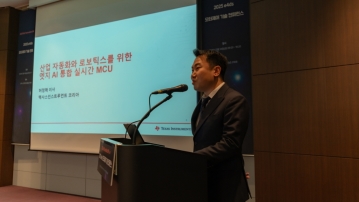
Heo Jeong-hyuk, Director at Texas Instruments (TI), presented on "Edge AI Real-time Control MCU Optimized for Motor Drive, Factory Automation, and Robotics" at the '2025 e4ds Motor Control Technology Conference' held at COEX in Samseong-dong, Seoul on March 14th. He argued that multi-protocol supported motor solutions capable of handling both motor control and communication functions in MCUs can reduce hardware complexity, shorten development time, and maximize cost efficiency.
2025.03.24by 배종인 기자











