


BYD Intensifies Target on Japanese EV Market; Launch of Compact Cars is Key to Success
 Published2025.10.16 16:55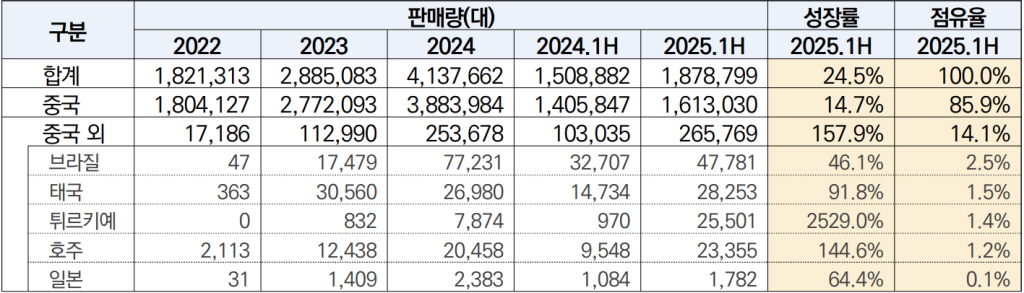
▲ Trends in BYD's new car sales in major countries (BEV and PHEV combined, Source: SNE Research)
An opportunity to leap forward as a global brand beyond short-term profits in the Japanese market
As BYD, China's largest electric vehicle manufacturer, accelerates its strategic moves to expand its presence in the Japanese market, it has been suggested that the launch of a compact car will be the deciding factor.
The Korea Automotive Research Institute recently [published] Industry Analysis Vol. 154 published a report titled 'BYD's Entry into Japan: Progress and Prospects'.
According to this, since its official entry in January 2023, BYD has expanded its model lineup by successively launching the compact SUV 'Atto 3', the hatchback 'Dolphin', the mid-size sedan 'Seal', and the SUV 'Sealion 7'.
With the announcement of the launch of a BEV (battery electric vehicle) that meets Japanese light car standards in the second half of 2026, the company is reaching a turning point in its strategy to conquer the Japanese market.
BYD's sales volume in Japan is still negligible.
With 2,383 units in 2024 and 1,782 units in the first half of 2025, the overall passenger car market share is only 0.08%.
On the other hand, in the electric vehicle market, it is expanding its presence by recording a market share of 8.7% based on BEVs and 4.7% based on BEVs and PHEVs (plug-in hybrids).
It is particularly significant that this achievement was accomplished without a compact car model.
Japan is a 'Galapagosized' market with high demand for light vehicles due to factors such as narrow roads and the parking space certification system.
Light cars account for more than 30% of the total BEV market and are often used as second cars, so there is less burden regarding driving range or charging infrastructure.
Accordingly, if BYD launches a light car model with competitive pricing and electric efficiency, there is a possibility that it could overcome Japanese consumers' preference for domestic brands.
In fact, BYD is rapidly expanding its sales and after-sales service network in Japan.
The number of bases, which was around 10 at the time of the first model launch in January 2023, increased to 64 as of July 2025, and will reach 100 by the end of the year.We are aiming to secure points.
However, it has also been pointed out that a network structure centered on major cities may limit its ability to target non-urban areas with high demand for compact cars.
BYD recognizes the Japanese market not merely as a sales channel, but as a strategic base for enhancing brand value.
Japan is a mature market with a slow pace of transition to electric vehicles, but there is growth potential in the BEV and PHEV sectors.
Accordingly, BYD plans to launch PHEV models starting with the mid-size SUV 'Sealion 6'.
The model is scheduled to be unveiled at the Japan Mobility Show in October 2025, and the price is likely to be set at under 5 million yen, which is cheaper than competing models.
Meanwhile, changes in the Japanese government's electric vehicle subsidy policy could work against BYD.
Subsidies for BYD vehicles have been reduced since 2024, when a subsidy calculation method including standards for charger installation and maintenance was introduced.
This could directly impact consumers who prioritize the economic efficiency of compact cars, and is expected to act as a significant variable in determining the success of future compact car models.
BYD's entry into the Japanese market is considered a strategic choice aimed at leaping forward as a global brand beyond short-term profits.
The establishment of local production and R&D centers in Europe, along with aggressive business expansion in Japan, is part of a head-on strategy to enter advanced markets.
While there are concerns regarding intensifying competition in China and the financial burden resulting from overseas expansion, some analysts suggest that the likelihood of a sudden crisis is low, considering the possibility of support from the Chinese government and the brand's symbolic value.
If BYD achieves a certain level of performance in the Japanese kei car market, it goes beyond mere corporate success. This could lead to an improvement in the overall image of Chinese automotive brands.

Comments
Related news
.jpg)
Hanjayeon, Establishment of a Base for Supporting the Full Cycle of Autonomous Driving and Automotive Semiconductors
The Korea Automobile Research Institute (KAERI) has broken ground on a "Comprehensive Support Center for Autonomous Driving and Automotive Semiconductors" at a site near Cheonan-Asan KTX Station in Baebang-eup, Asan-si, Chungcheongnam-do, to establish a hub for technological self-sufficiency and full-cycle support in the autonomous driving and automotive semiconductor industries.
2025.06.09by 배종인 기자
Hanjayeon, presents a solution for future car reliability
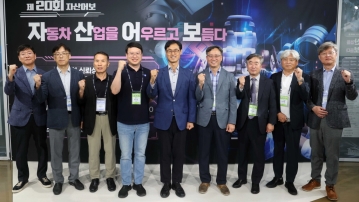
The Korea Automotive Research Institute (Director Jin Jong-wook) held the 20th Jasan Automotive Forum on the 10th at COEX Startup Branch under the theme of "Promise Beyond Future Vehicle Reliability Performance, Future Vehicle Reliability Innovation."
2025.06.11by 배종인 기자
“Autonomous driving and SDV, rapid rise of product differentiation”
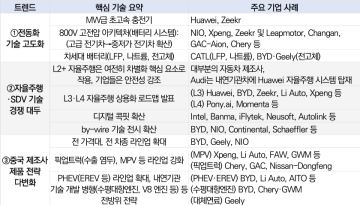
According to the special industrial analysis report "The Current State of China's Automotive Industry as Seen Through the Shanghai Motor Show," released by the Korea Automotive Research Institute on the 7th, the 2025 International Motor Show held in Shanghai, China clearly demonstrated that the global automotive industry is undergoing a paradigm shift beyond mere technology exhibition. In particular, five key trends emerged from this motor show: advanced electrification, competition in autonomous driving and SDV (Software-Defined Vehicle), diversification of product strategies across vehicle types, price segments, and powertrains, the shift of ICT technology companies toward the center of the industry, and global manufacturers' localized strategies tailored to the Chinese market.
2025.07.08by 배종인 기자

Domestic auto parts industry in the midst of global shocks must respond to structural advancement
According to Industry Analysis Vol. 149 titled "Environmental Changes in the Parts Industry and Response Directions," recently published by the Korea Automotive Research Institute (KARI), domestic major automotive parts companies are showing improvement trends in management performance and technology investment, but analysis indicates they still lag behind global competitors. As multiple factors such as industrial paradigm shifts and intensifying protectionism overlap, there is a point that strategic responses from both the private sector and government are urgently needed for structural upgrading.
2025.07.24by 배종인 기자
.jpg)
Hanjayeon undertakes organizational restructuring, laying the foundation for a leap forward as a future mobility research hub.
The Korea Automotive Research Institute (Director General Jin Jong-wook, hereinafter KARI) has undertaken a major organizational restructuring to secure leadership in future mobility technologies including AI, autonomous driving, and carbon neutrality.
2025.08.04by 배종인 기자











