


The challenge of "test margin" in the era of high-speed interfaces: Finding a solution with next-generation oscilloscopes.
 Published2025.11.02 16:34
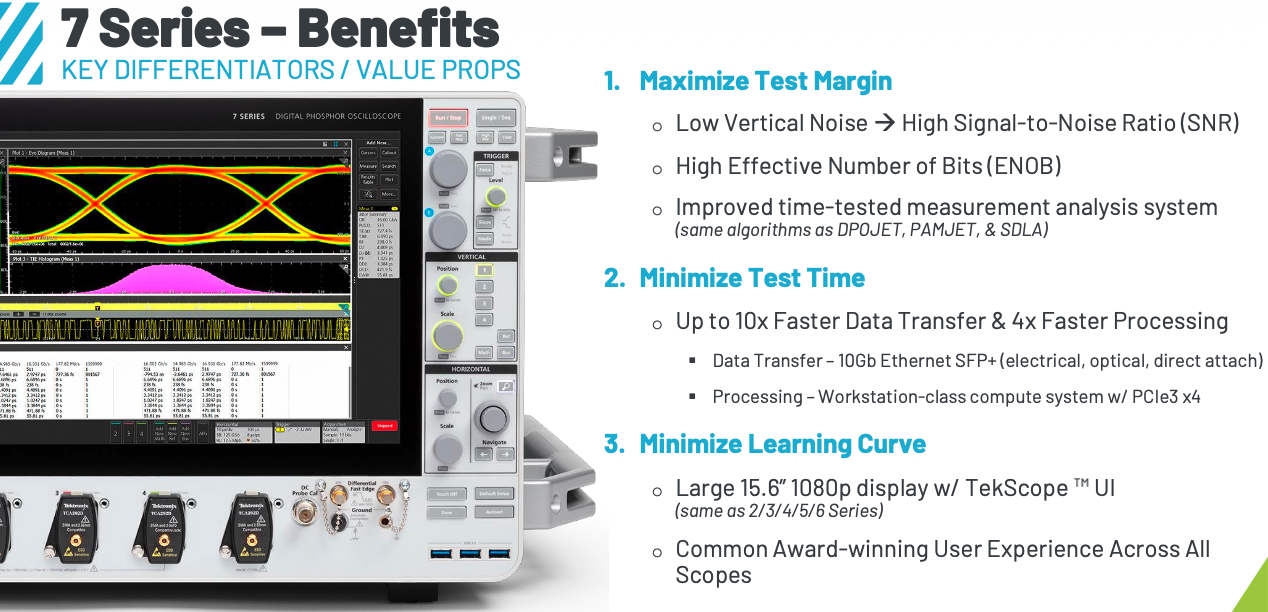
PCI-Express, USB, DDR, MIPI, 이더넷 등 최신 고속 인터페이스의 데이터 전송 속도가 기하급수적으로 증가하며 신호 검증의 복잡성과 중요성이 그 어느 때보다 커지고 있다. 데이터 속도가 두 배로 빨라질 때마다 신호 왜곡과 노이즈 문제는 더욱 심화되어, 엔지니어들이 설계 검증을 위해 확보해야 할 ‘테스트 마진’이 잠식당하는 것이 현실이다. 이러한 기술적 난제를 해결하기 위해 측정 장비의 근본적인 성능 혁신이 절실히 요구되는 상황이다. 이에 계측 솔루션 분야의 글로벌 리더인 텍트로닉스(Tektronix)가 업계 최고 수준의 신호 충실도를 제공하는 차세대 오실로스코프 '7 시리즈 DPO'를 통해 엔지니어의 테스트 마진을 지켜낼 새로운 해법을 제시한다. 텍트로닉스는 이 혁신적인 솔루션의 핵심 기술과 활용 방안을 상세히 소개하는 온라인 기술 세미나를 개최할 예정이라고 밝혔다.

가속화되는 기술 발전과 고속 인터페이스 검증의 어려움
고속 인터페이스 검증이 점점 더 어려워지는 이유는 기술 발전의 속도를 측정 기술이 따라가기 벅차기 때문이다. 과거 10년, 20년 전과 비교해 데이터 전송 속도의 증가세는 훨씬 가팔라졌고, 시장은 더 정확하고 신뢰도 높은 측정을 요구하고 있다.
텍트로닉스 코리아의 박영준 상무는 인터뷰를 통해 이 문제를 구체적으로 설명했다. 박 상무에 따르면, "PCI-Express를 예로 들면, Gen3의 데이터 전송 속도가 8Gbps였던 것이 2013년경"이라며, "이후 Gen4(16Gbps), Gen5(32Gbps)를 거쳐 Gen6에서는 PAM4 신호 방식이 도입될 정도로 기술이 급격하게 발전했다"고 말했다.
이러한 변화는 측정 환경에 직접적인 영향을 미친다. 박 상무는 "속도는 빨라지고 데이터의 스루풋(throughput)은 많이 요구하는 반면, 일반적으로 측정하는 신호에 대한 복잡도는 더 높아지고 어려워진다"고 문제의 핵심을 지적했다. 즉, 엔지니어들은 더 빠르고 복잡해진 신호를 이전보다 훨씬 더 정밀하게 분석해야 하는 이중고에 직면한 것이다. 이러한 측정 한계를 극복하는 것은 더 이상 선택이 아닌 필수가 되었으며, 텍트로닉스가 '7 시리즈 DPO'를 통해 업계에 제시하는 해법의 핵심은 바로 엔지니어의 마지막 보루인 '테스트 마진'을 방어하는 데 있다.
측정 정확도의 핵심 지표 '테스트 마진'과 'ENOB'
테스트 마진은 엔지니어가 설계를 검증하기 위해 확보해야 할 필수적인 완충 지대다. 이 마진은 제품 자체의 성능 편차와 측정 장비에 내재된 노이즈 및 왜곡이라는 두 가지 위협에 의해 끊임없이 잠식당한다. 따라서 월등한 성능의 오실로스코프는 자체 노이즈 기여도를 최소화함으로써 이 소중한 마진을 덜 소모하게 하고, 엔지니어가 디바이스의 실제 성능을 정확히 파악하여 높은 신뢰도로 합격/불합격 판정을 내리도록 돕는다.
박영준 상무는 "장비가 가진 사양이 좋지 않으면 테스트 마진이 작아진다"며, "장비 자체가 가진 노이즈가 측정 결과에 영향을 미쳐 아이 다이어그램(eye-diagram) 성능을 저하시키고, 결국 엔지니어가 확보할 수 있는 마진을 줄어들게 한다"고 설명했다. 미세한 노이즈 차이가 제품의 통과(Pass)/실패(Fail)를 결정할 수 있는 고속 인터페이스 환경에서 이는 매우 중요한 문제다.
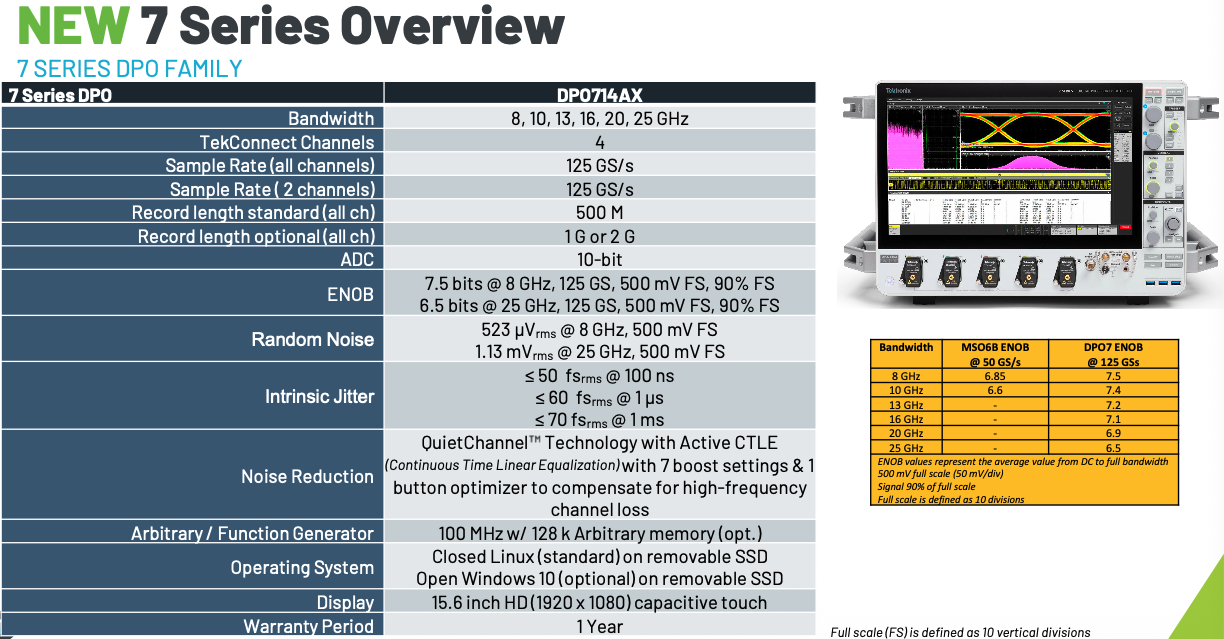
이러한 측정 장비의 실제 유효 성능을 나타내는 핵심 지표가 바로 'ENOB(Effective Number of Bits, 유효 비트 수)'다. ENOB는 오실로스코프에 탑재된 ADC(아날로그-디지털 변환기)의 명목 해상도(예: 10-bit)와 달리, 시스템 전체의 노이즈와 왜곡을 모두 고려한 실질적인 측정 정밀도를 의미한다.
텍트로닉스 7 시리즈 DPO는 이 ENOB 성능을 극대화했다. 발표 자료에 따르면 7 시리즈는 25GHz 주파수에서 6.5비트, 8GHz 주파수에서는 7.5비트라는 높은 ENOB 성능을 구현했다. 이에 대해 박 상무는 "이는 업계 최고 수준이며, 경쟁사 대비 계산상으로 약 1비트 정도 개선된 것"이라고 평가했다. 그는 "신호대잡음비(SNR) 관점에서 1비트의 성능 향상은 약 6dB의 개선 효과와 동일하며, 이는 장비의 노이즈 플로어(noise floor)가 그만큼 낮다는 것을 증명한다"고 강조했다. 이는 엔지니어에게 더 넓은 테스트 마진을 제공하여 더 신뢰도 높은 검증을 가능하게 하는 핵심적인 기술 우위다.
독자 기술 '콰이어트 채널'과 강력해진 분석 툴
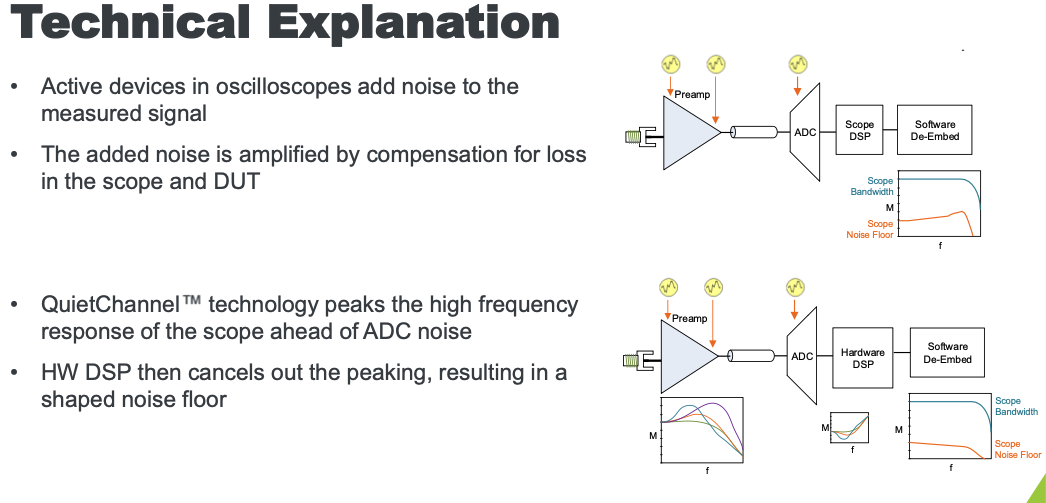
텍트로닉스 7 시리즈가 높은 ENOB를 달성할 수 있었던 배경에는 하드웨어와 소프트웨어 양단에 걸친 기술 혁신이 자리 잡고 있다. 특히 하드웨어 단에서는 텍트로닉스의 특허 기술인 '콰이어트 채널(QuietChannel)'이 핵심적인 역할을 수행한다. 이 기술은 신호가 ADC에 도달하기 전, 오실로스코프 프런트엔드 단에서 의도적으로 신호의 고주파 응답을 피킹(peaking)하여 예상되는 채널 손실을 보상한다. 이후 하드웨어 DSP(디지털 신호 처리) 필터가 이 피킹을 정밀하게 상쇄하는 과정을 거친다. 그 결과, 신호 감쇠가 가장 심한 고주파 대역의 노이즈 플로어가 효과적으로 낮아져 긴 케이블이나 복잡한 테스트 픽스처(fixture)와 같이 손실이 큰 채널을 측정할 때 훨씬 깨끗한 신호와 넓은 아이 다이어그램을 확보, 테스트 마진을 회복시킨다.
하드웨어의 발전과 더불어 소프트웨어 분석 툴 역시 한 단계 진화했다. DDR5와 같은 최신 시스템은 인터포저, 프로브, 픽스처 등 복잡한 신호 경로로 인해 심각한 신호 저하를 겪으며, 이를 보정하는 디임베딩(de-embedding) 과정이 필수적이다. 기존 툴들은 전문가의 지원이 필요할 정도로 복잡했지만, 7 시리즈의 새로운 툴들은 이 과정을 혁신했다.
구체적으로, 지터 및 아이 다이어그램 분석을 위한 'DPOJET'은 'DJA(DPOJET Jitter and Eye Analysis)'로, 복잡한 시리얼 데이터 링크 분석을 수행하던 'SDLA'는 'SIM/SIMA(Signal Integrity Modeling)'로 진화했다. 박 상무는 이 새로운 툴들에 대해 "채널의 디임베딩/임베딩, 이퀄라이제이션 등 복잡한 신호 보정 및 시뮬레이션 기능을 기존보다 훨씬 더 파워풀하게 측정할 수 있는 툴로 새로 출시되었다"고 설명했다. 이는 이제 신호 무결성 전문가가 아니더라도 누구나 깨끗하고 의미 있는 결과를 얻을 수 있음을 의미하며, 복잡한 신호 분석의 대중화를 통해 엔지니어의 효율성을 극대화한다.
미래 지향적 아키텍처와 기술 세미나 안내
텍트로닉스 7 시리즈 DPO는 현재의 측정 과제를 해결하는 것을 넘어, 미래의 테스트 환경 변화에 선제적으로 대응하는 아키텍처를 제시한다. 박영준 상무는 인터뷰에서 '미래 지향적인 측정 방식'의 중요성을 강조했다.
그는 기존 오실로스코프가 장비 자체에서 모든 분석을 수행하는 '스탠드얼론(Stand-alone)' 방식에 머물렀다면, 이제는 새로운 접근이 필요하다고 말했다. "향후 USB와 같은 복잡한 어플리케이션은 측정에 워낙 많은 시간이 걸리기 때문에, 외부 PC와의 연동을 통해 데이터 처리 효율을 극대화하는 방향으로 나아가고 있다"는 것이 그의 설명이다. 이는 단순히 데이터 전송 속도를 높이는 것을 넘어, 장비 자체에서 실행하기 어려운 복잡하고 마진에 민감한 분석을 고성능 PC에서 수행하게 함으로써 프로젝트 일정과 설계 무결성을 보호하는 전략적 접근이다.
이러한 비전을 뒷받침하기 위해 7 시리즈는 데이터 전송 속도를 기존 대비 최대 10배까지 향상시키는 10Gb 이더넷 SFP+ 포트를 탑재했다. 이를 통해 대용량 파형 데이터를 손실 없이 빠르게 외부 PC로 전송하고 심층적인 오프라인 분석을 수행할 수 있다.
텍트로닉스는 이처럼 강력한 성능과 미래 지향적 아키텍처를 갖춘 차세대 오실로스코프 7 시리즈 DPO의 핵심 기술과 실제 활용 사례를 국내 엔지니어들에게 상세히 소개하기 위해 온라인 기술 세미나를 개최할 예정이다. 이번 세미나는 고속 인터페이스 검증에 어려움을 겪는 많은 엔지니어에게 실질적인 해법을 제시하는 자리가 될 것으로 기대된다.

Comments
Related news
Schneider Aims for Building Energy Savings and Operational Stability with Next-Generation HVAC Drives
Schneider Electric has unveiled its next-generation HVAC drive product line 'Altivar HVAC'. The new product line's key features center on enhanced energy savings, system operational stability, and building management system integration. The products are divided into 'ATH200' for OEM and small equipment applications, and 'ATH600' for environments requiring continuous operation and advanced control. The company plans to expand the application scope from commercial buildings to facilities where HVAC system stability is critical, such as hospitals, airports, and data centers. The announcement includes over 30% energy savings, operation from -10°C to +60°C, Modbus and BACnet support, and compatibility with low global warming potential refrigerants.
2026.03.26by 명세환 기자

Ecolab Expands AI Data Center Cooling Business Through Acquisition of CoolIT
Ecolab has agreed to acquire CoolIT Systems, a liquid cooling company for AI data centers, for approximately $4.75 billion. The transaction is expected to close by Q3 2026, subject to regulatory approvals. CoolIT has been supplying direct-to-chip cooling-based coolant distribution units, cold plates, and manifolds, serving hyperscale data centers and colocation operators as customers. This acquisition is a measure to address the high-heat and high-density server environments created by AI proliferation. Ecolab plans to combine its water management and digital monitoring capabilities with CoolIT's hardware technology to expand its data center cooling business.
2026.03.26by 명세환 기자

AI Semiconductor Era, Key is 'Materials Technology'… KIEC Holds Seminar on High-Performance Semiconductor Materials
With rapid growth in the global semiconductor market driven by expanded AI data center investments and increased demand for high-bandwidth memory (HBM), a specialized seminar examining next-generation semiconductor materials and packaging technologies will be held. The Korea Chemical Industry Institute will host a "High-Performance Semiconductor Materials Technology Seminar" on April 24 at the FKI Tower of the Korea Economic Association in Yeouido, Seoul. Applications to participate in the seminar are being accepted on a first-come, first-served basis through the Korea Chemical Industry Institute's official website, with early bird discounts available until March 27 and advance registration open until April 22.
2026.03.25by 배종인 기자
.jpg)
KIMS Shares Techniques for Industrial Application of Casting Technology
The Korea Institute of Materials Science held a casting technology seminar at its headquarters in Changwon, South Gyeongsang Province, and introduced core process technologies utilized in industrial applications. The seminar covered fundamental principles of casting processes and defect control methods, lightweight-oriented die-casting technology, and trends in aluminum casting alloys for mobility applications. At the conclusion of the event, consultations on industrial technical challenges were also conducted, providing an opportunity to expand the interface between research institutions and industry.
2026.03.25by 명세환 기자
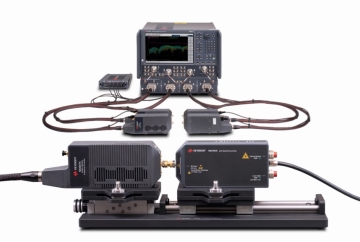
Keysight Launches 220GHz Optical Component Analyzer… Aims at Verifying Next-Generation Optical Transceivers
Keysight Technologies has introduced the N4378A optical wave component analyzer, which can measure the characteristics of opto-electronic conversion components up to 220GHz. This equipment is targeted at the rapidly advancing data center optical interconnection market driven by AI and cloud expansion, and supports single-sweep broadband measurements at 1310nm and 1550nm wavelengths. The device focuses on enhancing measurement accuracy and design verification efficiency in the development process of next-generation 1.6T and 3.2T class optical transceivers through optical modulator and photodetector verification, differential measurements for dual-drive optical modulators, and 0.5mm coaxial connector protection structures. Keysight demonstrated this equipment for the first time at OFC 2026.
2026.03.25by 명세환 기자











