



D-G2CAM Opens the Horizon for Future Mobility
 Published2025.11.20 07:22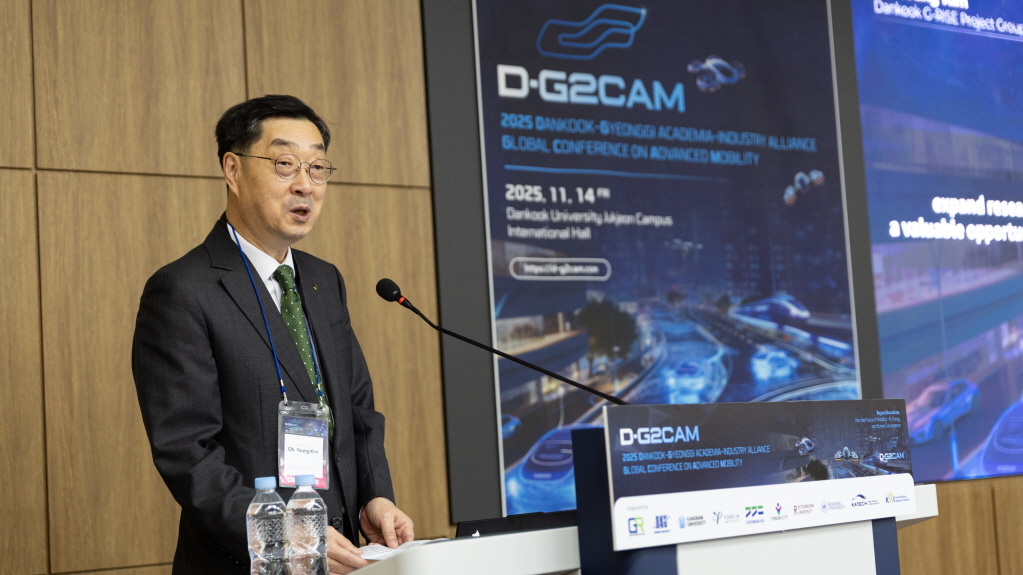
▲D-G2CAM Preparatory Committee Chairman Kim Oh-young is giving a welcoming speech.
Professor Lee Byeong-seon of Dankook University and others demonstrate the potential of next-generation mobility batteries.
'D-G2CAM', which brought together domestic and international cutting-edge technology experts to suggest the direction of innovation for the future mobility industry, has successfully concluded, opening the horizon of future mobility.
The 'D-G2CAM' event, co-hosted by Dankook University and Gyeonggi Province through the Gyeonggi Province RISE project and attended by industry, academia, and research institutes from major countries such as Korea, Germany, China, and Japan, was held on the 14th at the International Hall 101 of Dankook University's Jukjeon Campus.
This conference looked into the future of the intelligent and sustainable mobility industry, which is evolving through the convergence of cutting-edge technologies such as AI, semiconductors, batteries, power electronics, and control systems.
Especially in an era where boundaries between industries are rapidly collapsing, the presentation presented a new paradigm of mobility created by technology and humans together, receiving a great response from participants.
The keynote session that kicked off the conference featured experts representing each country presenting key strategies for future mobility.
Kim Cheol-woo, Director of the Korea Electronics and Telecommunications Industry Promotion Association, gave a presentation on the topic of ‘Talent Development Strategy in the Era of AI-Based Industrial Convergence’ in the field of mobility and;He presented directions for developing expertise in the fields of AI, software, and systems engineering and emphasized the need for cooperation between industry, academia, and research institutions.
Next, Dr. Tae-Young Han (Fraunhofer IKTS, Germany) introduced K-FAST, the largest R&D alliance in Germany, and presented the direction of strategic cooperation through joint Korean-German research projects.
Professor Quan Quan of Beihang University in China explored the present and future of lifting-wing multicopter technology, sharing its potential applications in the aerospace sector and ways to improve energy efficiency.
The afternoon technology seminar featured in-depth presentations on core mobility technologies, including automotive semiconductors, batteries, motor control, and power electronics.
STMicroelectronics' Jett Zhang, a manager, presented strategies for automotive power semiconductor innovation and securing supply chain resilience amid global trade uncertainty.
Professor Lee Byeong-seon of Dankook University introduced the 'all-fiber composite battery' technology utilizing carbon fiber and glass fiber, and demonstrated the potential of next-generation mobility batteries through a prototype that maintained 94% capacity even after 150 charge and discharge cycles.
Professor Kan Akatsu of Yokohama National University presented a PMSM stator flux density control technology using multiple inverters, and presented experimental results showing various effects such as increased torque, reduced iron loss, and vibration control.
Professor Yeonho Jeong of the University of Rhode Island in the United States introduced a hybrid power conversion system (HPCS) based on multiple energy sources, and suggested the direction of development of an intelligent power electronics platform in the field of electric mobility through an integrated energy management strategy and a method to improve the performance of individual energy sources.
D-G2CAM goes beyond simple technology exchange to promote global cooperation and talent development.Within the larger framework of gender, we presented a vision for a sustainable future mobility industry.
In particular, the Korea-Germany technology cooperation model, the establishment of an international joint R&D network, and supply chain stabilization strategies attracted great interest among participants.
Participants shared the latest R&D trends and technological innovations in the electric and hydrogen mobility sectors, exploring practical ways to achieve a balance between economic growth and environmental sustainability.
Kim Oh-young, head of the Dankook G-RISE business unit and chairman of the D-G2CAM preparatory committee, said, “Through this conference, we have opened a new horizon where technology, humanity, and the future meet,” and added, “We will continue to take the lead in creating a sustainable mobility ecosystem through cooperation between industry, academia, and research institutes.”
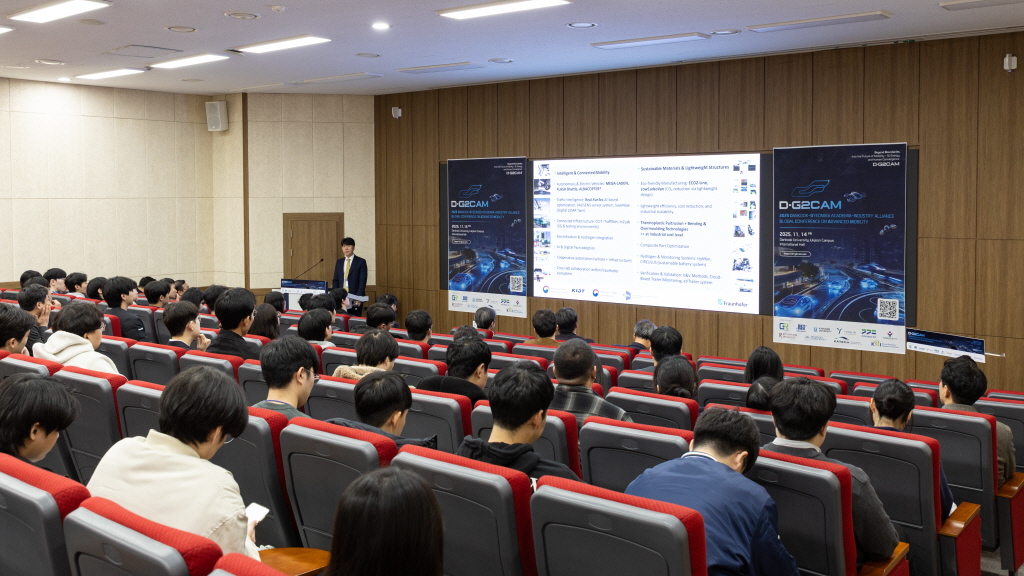
▲D-G2CAM event
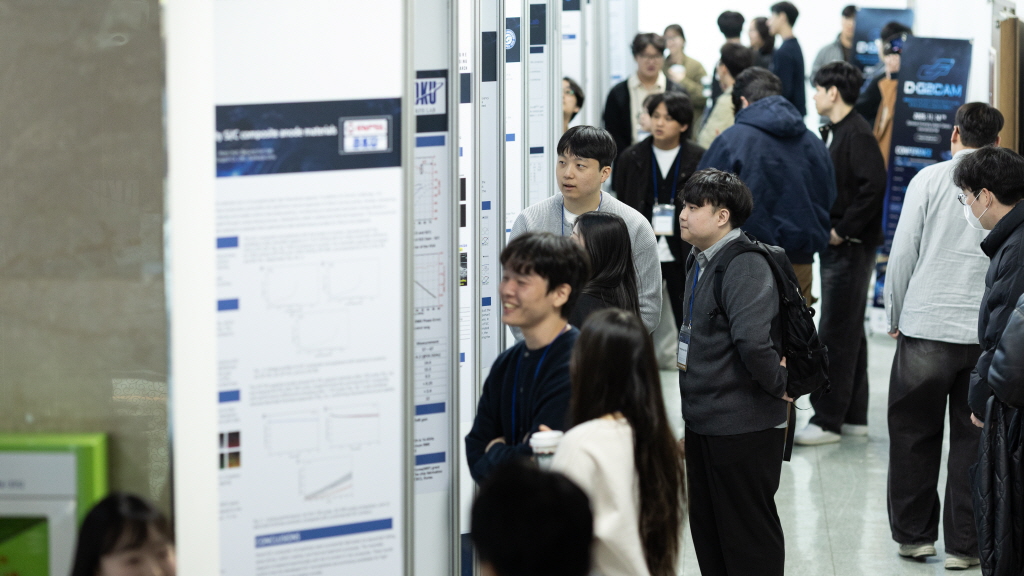
▲D-G2CAM event

Comments
Related news
Dankook University Opens a Platform for the Convergence of AI, Energy, and Humanity... "D-G2CAM 2025," an International Conference on Future Mobility
The international conference 'D-G2CAM 2025: Beyond Boundaries, Into the Future of Mobility' will be held on November 14 at the International Hall of Dankook University's Jukjeon Campus. This event is designed to examine the direction of innovation in the future mobility industry, where cutting-edge technologies such as artificial intelligence (AI), semiconductors, batteries, power electronics, and control systems converge, and to establish a foundation for global cooperation. D-G2CAM 2025 is jointly hosted by Dankook University, G-RISE, Gyeonggi-do RISE, and Yongin-si RISE, bringing together experts from major technology-leading countries including Korea, Germany, China, Japan, and the United States to share technology trends and research achievements.
2025.10.29by 배종인 기자
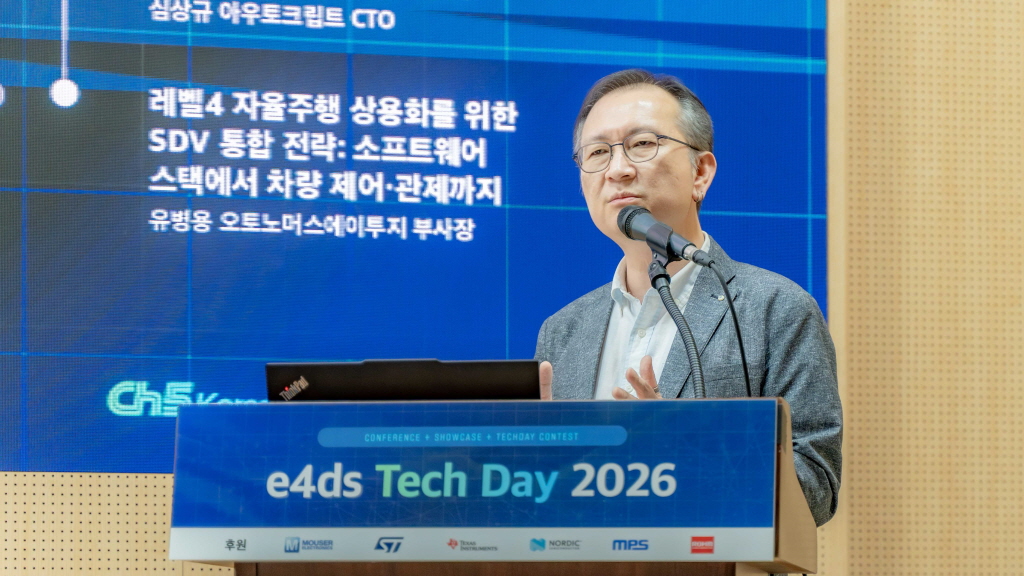
[e4ds Tech Day 2026 ⑨] Sim Sang-gyu, Autocrypt CTO: "In the Physical AI Era, Automotive Security Must Extend Beyond the Vehicle"
At e4ds Tech Day 2026, Sim Sang-gyu, CTO of Autocrypt, explained automotive cybersecurity strategies in the era of Physical AI and SDV (Software-Defined Vehicle). Automobiles are evolving as part of an ecosystem connected to AI, cloud, chargers, IoT, and robots, and he emphasized that the scope of security must expand beyond the vehicle interior to the entire connected environment. In particular, AI model tampering, adversarial attacks, OTA updates, and EV charger hacking were identified as major threats. He explained that response measures require zero trust, AI model integrity protection, intrusion detection, Security by Design and Default, and full lifecycle security management, and that proactive security system establishment beyond regulatory compliance is critical for securing future mobility competitiveness.
2026.10.12by 배종인 기자

Practical HIL Construction Strategy for Automotive and Off-Highway Controller Validation
As vehicle E/E architecture transitions to zonal structures and shifts to software-defined vehicles (SDV), the number of controllers (ECUs) requiring validation and software complexity are surging dramatically. Meanwhile, real vehicle testing cannot provide repeated verification under identical conditions and entails lead time and safety concerns. This white paper explains the principles of HIL (Hardware-in-the-Loop) validation and the structure of the NI platform composed of PXI, SLSC, and VeriStand, and through two actual implementation cases—Camera Record & Replay HIL for In-Cabin Monitoring Controller (ICMU) and Forklift Controller (VCU) HILS—describes how controller-level regression testing becomes possible. Additionally, it explicitly states application boundaries and limitations, such as lack of A2B support.
2026.10.12by 편집부
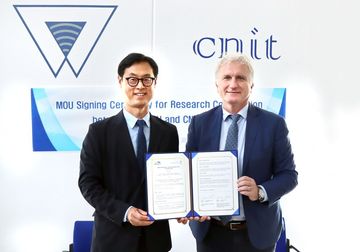
Korea Automotive Research Institute Signs MOU with Italy National Institute for Wireless Communications
The Korea Automotive Research Institute will sign an MOU with Italy's National Institute for Wireless Communications and launch joint research on next-generation mobility technologies based on 6G, V2X, and connected vehicles. The two organizations will conduct research to apply advanced wireless communication technologies to vehicles and discover international joint projects to advance next-generation connected vehicle technology development.
2026.10.12by 배종인 기자
Color Accuracy Issues in Vehicle Interior Ambient Lighting and Intelligent LED Drivers
Vehicle interior ambient lighting is spreading across all price segments, and the level of color accuracy required of lighting designers is rising accordingly. This white paper quantitatively addresses why temperature drift and individual variations of RGB LEDs cannot be corrected by standard constant-current drivers, and explains an intelligent LED driver approach that integrates an MCU, calibration data, and a LIN network interface into the driver. It covers implementation details of the LITIX Interior TLD4020-3ET currently in production, portfolio roadmap, and evaluation/development environments, and clarifies application boundaries including lack of 48V support, lack of RGBi/ISELED support, and absence of direct optical degradation diagnostics.
2026.10.08by 명세환 기자











