


AI that feels like it's learned everything after learning only 1/25th of what it needs to learn.
 Published2025.12.01 08:16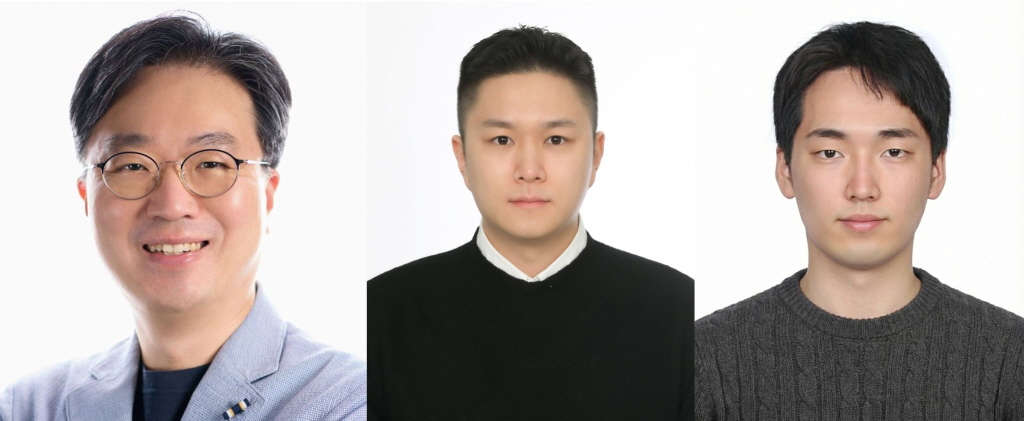
▲(From left) Professor Shim Jae-young, Researcher Lim Jae-young (first author), and Researcher Kim Dong-wook (first author)
A technology has been developed to create an AI that is as smart as if it had learned everything by learning only 1/25th of the amount it originally had to learn.
A research team led by Professor Jae-Young Shim of UNIST's Graduate School of Artificial Intelligence announced on the 1st that it has developed a data distillation technology that can maximize the learning efficiency of 3D artificial intelligence (AI) models, which are key to cutting-edge industries such as self-driving cars and robots.
This achievement has garnered global attention as it was officially accepted as a paper at the international artificial intelligence conference NeurIPS 2025.
3D point cloud data is a method of representing objects as points, and serves as the 'eyes' of self-driving cars, drones, and robots.
On the other hand, data distillation is difficult to apply because there is no set order in the arrangement of points and there is a large rotational variability.
Existing technologies inevitably suffered from performance degradation due to matching errors occurring during the process of comparing the characteristics of original data and summarized data.
Professor Shim Jae-young's team introduced two key techniques to solve these problems.
The SADM loss function automatically sorts point data with different order to match the semantic structure, and the Learnable Rotation techniqueThe AI was made to learn and optimize the rotation angle of the object on its own.
This fundamentally resolves the matching errors of existing technologies and allows the original performance to be maintained even during the data summarization process.
The research team verified performance using the representative 3D dataset ModelNet40.
Even though it was trained with summarized data that was reduced to 1/25th of the original data, it recorded 80.1% recognition accuracy.
This result is not significantly different from the 87.8% accuracy achieved when using the entire data, proving that learning efficiency and performance can be balanced even at high compression ratios.
Professor Shim Jae-young emphasized, “This technology fundamentally solves the existing matching errors caused by the disorderly structure and rotational uncertainty of 3D point data,” and “It will contribute to significantly reducing AI learning costs and time in fields that require the use of large-scale 3D data, such as autonomous driving, drones, robots, and digital twins.”
This research was conducted with the support of the National Research Foundation of Korea (NRF) under the Ministry of Science and ICT and the National IT Industry Promotion Agency (NIPA).
The research results have been accepted as an official paper at the Neural Information Processing Systems (NeurIPS) 2025, one of the world's top three artificial intelligence conferences. The conference will be held in San Diego, USA, from December 2nd to 7th, and UNIST's achievements are expected to garner significant attention from global AI researchers.
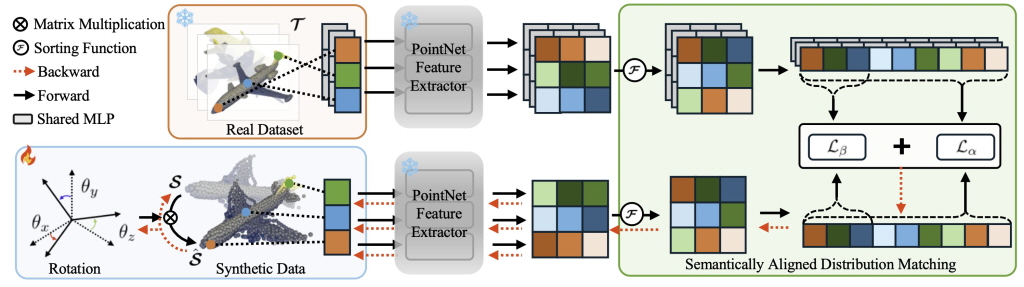
▲Overview of 3D dataset distillation technology

Comments
Related news
UNIST develops the world's first solid-state galvanic battery capable of powering electronic devices with body heat.
Researchers at Ulsan National Institute of Science and Technology (UNIST) led by Professor Jang Sung-yeon have developed the world's first high-performance n-type solid-state thermogalvanic battery that can generate voltage equivalent to an AA battery using only body heat. This technology represents a breakthrough achievement that can accelerate the commercialization of wearable devices and Internet of Things (IoT) sensors operating without batteries, and has been published in the British Royal Chemical Society (RSC) academic journal 'Energy & Environmental Science' on July 7.
2025.08.20by 배종인 기자
.jpg)
No battery life loss even with fast charging
A joint research team led by Professor Kang Seok-ju from the Department of Energy Chemical Engineering at UNIST (Ulsan National Institute of Science and Technology), Professor Kwak Sang-gyu from Korea University, and Dr. Ahn Seok-hun from the Korea Institute of Science and Technology (KIST) has developed a hybrid anode material combining graphite and curved nanoGraphene. This material features a structure capable of maintaining stable battery performance and lifespan even during fast charging.
2025.09.24by 배종인 기자
AI can perform 1,000 chemistry experiments a day without any problems.
Ulsan National Institute of Science and Technology (UNIST) announced on the 25th that a research team led by Professor Bartosz Grzybowski of the Department of Chemistry has developed an 'AI and robot-based automated experimentation platform' capable of automatically performing over 1,000 chemical experiments per day using artificial intelligence (AI) and robotics. This technology is expected to provide a breakthrough turning point in new drug development and novel material discovery by precisely mapping complex chemical reaction networks and rapidly generating new chemical compounds.
2025.09.25by 명세환 기자
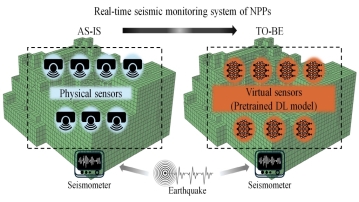
UNIST and Pyo Research Institute Use AI to Predict Nuclear Power Plant Earthquakes
UNIST (Ulsan National Institute of Science and Technology) and KRISS (Korea Research Institute of Standards and Science) have jointly developed an AI-based virtual sensor technology that implements a model capable of predicting seismic damage at 139 points within a nuclear power plant using only a single sensor. Real-time monitoring is now possible without establishing a conventional sensor network, which is expected to significantly improve inspection efficiency and safety.
2025.10.01by 명세환 기자
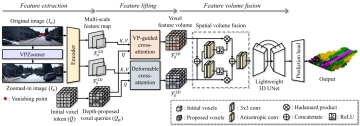
UNIST enhances autonomous driving with camera-based vanishing point technology.
A research team at UNIST's Graduate School of Artificial Intelligence has developed an AI model called 'VPOcc' that applies the Renaissance painters' concept of 'vanishing points' to artificial intelligence, compensating for perspective distortion in camera images. This research was conducted with support from the Ministry of Science and ICT and the National Research Foundation of Korea, and the results have been accepted for presentation at IROS 2025, an international conference in the field of intelligent robotics.
2025.10.15by 명세환 기자











