


AI to Expand Across the Industry by 2026
 Published2025.12.23 16:19
.jpg)
AI-dot-com nears bubble levels, but enters long-term growth trajectory
The world in 2026 is projected to face complex changes, including the spread of populism, structural conflict, slowing growth in developing countries, capital market instability, shrinking middle-class consumption, AI debate, and the rise of digital assets.
According to the '2026 Global Trends' report released by the Hyundai Research Institute on the 19th, the world is expected to face a structural inflection point in all areas of politics, military, economy, society, and technology next year.
The report selected seven major trends, including one in politics, one in military/diplomacy, two in economy, one in society, and two in industry/technology, based on future analysis data from major domestic and international organizations.
The researcher emphasized the need for Korea to develop a response strategy, saying, “The world order is in the process of finding a new equilibrium amid uncertainty and fragmentation.”
The first trend is the 'age of populism'.
The report diagnosed that political and social instability is increasing as populist regimes, regardless of left or right, are expanding around the world.
In Europe, support for right-wing populist parties such as Italy's Forza Italia, Britain's Reform Party, France's National Rally, and Germany's AfD is rising rapidly.
/> The researcher warned of the economic cost, saying, “There is also an analysis that says that after 15 years of a populist government taking power, per capita GDP will decrease by 10% compared to normal growth.”
The World Freedom Index and the World Democracy Index also confirmed a trend of decreasing free and democratic countries and expanding authoritarian regimes.
The second is the ‘disappearance of peace and the normalization of conflict.’
The number of countries involved in conflict over the past five years has increased by 66% since 2008, reaching 98. By 2024, 17 countries will have suffered more than 1,000 deaths due to civil war.
Military spending also increased for the tenth consecutive year, reaching $2.6765 trillion in 2024.
As major countries such as the United States, China, and NATO increase their defense spending, military tensions appear to be intensifying.
Protectionism is also becoming structural in the trade sector.
By 2025, the cumulative volume of import restrictions reached $4.693 trillion, representing 19.7% of global imports, a 7.1 percentage point increase from the previous year. The number of trade concerns raised within the WTO also increased by more than 80% compared to the previous year.
The third trend is the ‘change in the global economic formula.’ The analysis is that the global growth structure has entered a turning point as the high growth of developing countries, which has driven global growth since the 2000s, has slowed down following COVID-19.
In particular, the slowdown in growth in China, which accounts for more than 40% of the developing world economy, was identified as a key factor.
The researcher predicted that “China’s growth rate after 2028 will fall short of the developing country average.”
This has led to a decline in the share of foreign direct investment (FDI) in developing countries, and trade conditions have worsened due to increased protectionism and supply chain restructuring, weakening the growth engine of the global economy.
The fourth is the ‘possibility of a crisis arising from the growing capital market.’
Since the second half of 2023, as global liquidity expanded and expectations of interest rate cuts in major countries grew, an "everything rally" emerged, with prices of all assets, including stocks, bonds, gold, and virtual assets, rising simultaneously.
The problem is that as correlations between assets increase, the risk of the entire market shaking simultaneously even with small shocks increases.
The researcher said, "There is a possibility that a sharp decline in certain asset classes, such as the AI bubble, could spread to the entire financial market," and urged the government to strengthen monitoring and for investors to refrain from excessive risk-taking.
The fifth is the 'concern about the decline in global middle-class consumption'.
High inflation, high interest rates, and slowing growth are squeezing the purchasing power of the middle class, shaking the core axis of global consumption.
The Brookings Institution projects that the size of the global middle class will increase by 17% by 2030, but the pace of consumption expansion is expected to slow due to the recent deterioration in the economic environment.
In particular, the interest rate cut cycle in major countries is higher than before the pandemic. The cost burden on the middle class is expected to increase further as it is likely to end at that level.
The sixth is 'AI, Reality or Illusion?'
While AI technology is rapidly spreading across industries and attracting attention as a new growth engine, concerns about overheating are also being raised.
More than half of global fund managers assessed that AI stocks were in a bubble state, and the US market's CAPE index is approaching dot-com bubble levels.
However, the researcher emphasized national-level investment in data and AI infrastructure and institutional reform, saying, “AI is already producing tangible results in various fields such as manufacturing, finance, and bio, so there is a high possibility that it will enter a long-term growth trajectory.”
The final trend is the 'emerging digital asset market.'
It is assessed that the market has moved beyond the past cryptocurrency-centric speculative market and entered a phase of structural growth based on real-world financial asset tokenization (RWA) and stablecoins.
The RWA market size is expected to surge from $900 million in 2021 to $18.1 billion in 2025.
The market is growing rapidly as tokenization expands to include illiquid assets such as real estate and art.
Regulatory reforms are also accelerating in each country. The US, EU, and Hong Kong are conducting tokenization experiments through sandboxes, and South Korea is also nearing the passage of a token securities bill.
The Hyundai Research Institute emphasized that “2026 will be a year in which the global political, economic, and technological environments will fluctuate simultaneously,” and that “Korea needs to prepare in all directions, including industrial strategy, supply chain management, financial risk response, and technology investment, in line with the global structural changes.”

Comments
Related news
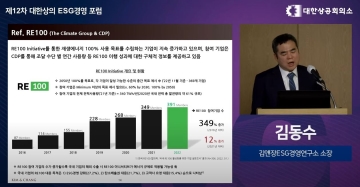
“ESG’s core keyword is circular economy”
Since the concept of ESG first emerged in 2005, interest in it has surged dramatically within the industry over the past five years. ESG began as a movement toward environmental practices and has now established itself as a concept that determines the success or failure of capital markets and nations.
2023.01.13by 김예지 기자
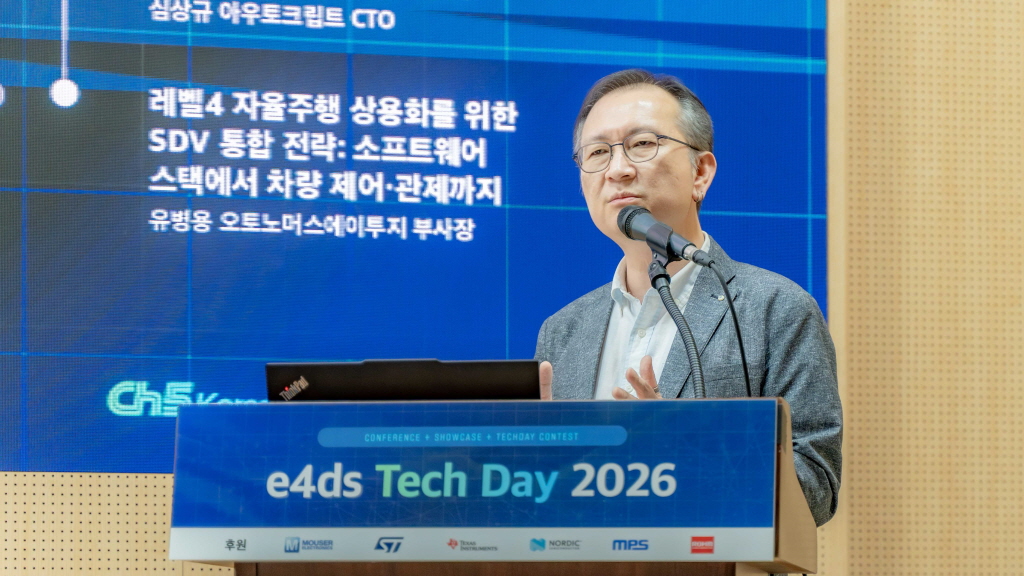
[e4ds Tech Day 2026 ⑨] Sim Sang-gyu, Autocrypt CTO: "In the Physical AI Era, Automotive Security Must Extend Beyond the Vehicle"
At e4ds Tech Day 2026, Sim Sang-gyu, CTO of Autocrypt, explained automotive cybersecurity strategies in the era of Physical AI and SDV (Software-Defined Vehicle). Automobiles are evolving as part of an ecosystem connected to AI, cloud, chargers, IoT, and robots, and he emphasized that the scope of security must expand beyond the vehicle interior to the entire connected environment. In particular, AI model tampering, adversarial attacks, OTA updates, and EV charger hacking were identified as major threats. He explained that response measures require zero trust, AI model integrity protection, intrusion detection, Security by Design and Default, and full lifecycle security management, and that proactive security system establishment beyond regulatory compliance is critical for securing future mobility competitiveness.
2026.10.12by 배종인 기자
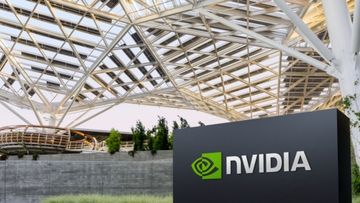
NVIDIA to Invest $1 Billion in U.S. Science Over Next Five Years
NVIDIA has announced plans to invest $1 billion over the next five years to strengthen U.S. scientific and technological competitiveness. The company will enhance cutting-edge artificial intelligence research and development capabilities in key areas including quantum computing, healthcare, and energy security, while expanding support for higher education research institutions and cloud service providers. NVIDIA is participating as a major industry partner in the White House Office of Science and Technology Policy's Genesis Mission, and is promoting supercomputer construction in collaboration with national laboratories including Argonne and Los Alamos.
2026.10.12by 배종인 기자
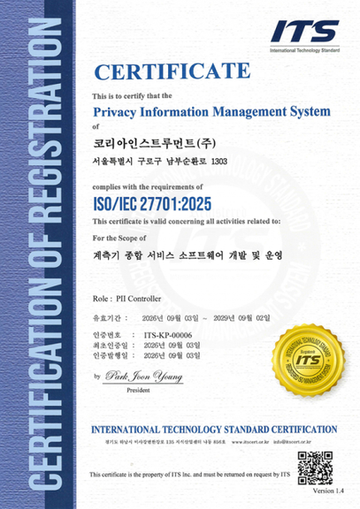
Korea Instrument, KOLAS Accredited Calibration Agency First to Simultaneously Acquire ISO/IEC 27,001·27,701
Korea Instrument has become the first among KOLAS accredited calibration agencies to simultaneously acquire ISO/IEC 27,001 and ISO/IEC 27,701 certifications. Through its proprietary platforms CWIZ Enterprise and CWIZ Partners, the company has embedded information security and personal data protection requirements across all business processes including customer information, equipment data, and calibration reports, with plans to continuously advance its management system through regular audits and security inspections.
2026.10.12by 배종인 기자
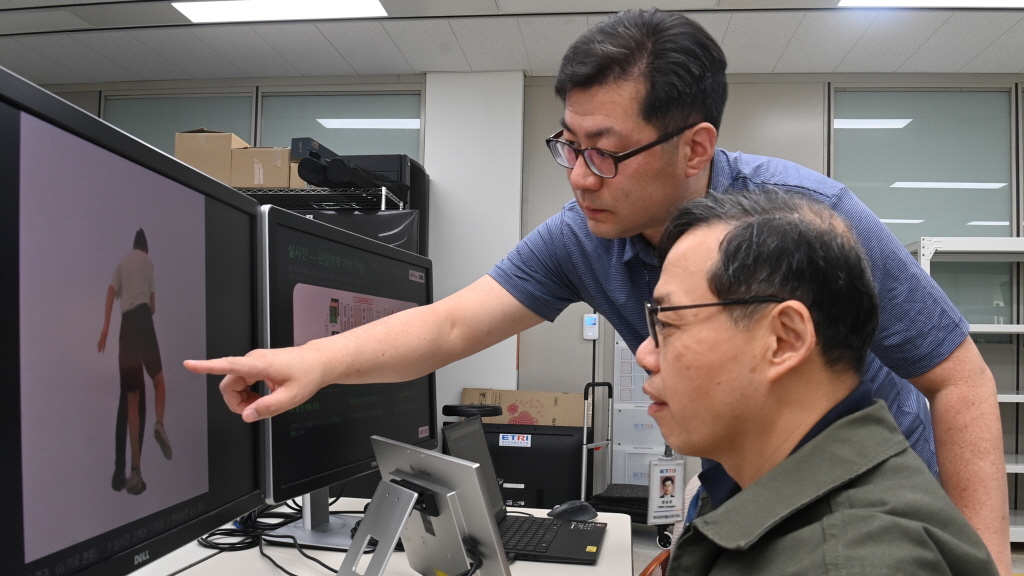
ETRI Unveils 3 Next-Generation Media Technologies Including AI-Dedicated Video Compression
ETRI has unveiled three next-generation media technologies optimized for AI. These include AI-based video encoding (VCM), 3D human generation based on sparse cameras, and generative AI-based pre-visualization technology. In environments where AI directly processes video such as autonomous vehicles, robots, and drones, these technologies enable efficient compression and transmission of large-scale data, and can be applied across various industrial sectors including smart cities, video security, and sports broadcasting.
2026.10.12by 배종인 기자











