


Smart factories, combining autonomy and intelligence, transform into 'human-centered factories.'
 Published2026.01.06 16:48
.jpg)
ST is building a technology ecosystem across all areas, including MCUs, power semiconductors, sensors, and AI models.
Since the Fourth Industrial Revolution, the paradigm of manufacturing has been rapidly changing. Factories are no longer mere collections of automated equipment, but are evolving into "intelligent ecosystems" that make decisions, collaborate, and optimize energy.
The recently published eBook "Autonomy Meets Intelligence," sponsored by STMicroelectronics and Mouser Electronics, identifies the marriage of "autonomy" and "intelligence" as the key to this transformation.
ST experts who participated in the eBook emphasized that autonomy and intelligence must be clearly distinguished.
Autonomy is the ability of a system to perform tasks on its own without human intervention, and intelligence is the ability to understand and make judgments about its surroundings.
For example, if a self-driving robot's movement according to a map is autonomy, then recognizing obstacles and avoiding them is the realm of intelligence.
While Industry 4.0 led the digitalization of factories, Industry 5.0 focuses on collaboration between humans and machines.
Industry 5.0, which is spreading mainly in Europe, prioritizes human safety and well-being, and automation technology is developing in a way that complements human capabilities.
The key technology accelerating the intelligence of smart factories is 'edge AI'.
Image analysis and machine learning tasks that previously required high-performance MPUs (Microprocessor Units) are now possible with MCUs (Microcontroller Units).
ST's new MCU 'STM32N6' has a built-in NPU (Neural Processing Unit) and can even perform camera-based vision processing.
ST experts say, “Industry “High-performance AI, such as large-scale language models, is not necessary in the field,” they said, adding, “Lightweight and efficient edge AI is more suitable.”
Processing data at the edge reduces latency, enables stable operation even in the event of network failures, and offers security advantages.
The industrial sector accounts for 37% of global energy consumption.
Rising energy costs and tightening carbon regulations are putting a strain on manufacturing.
Accordingly, energy optimization has emerged as a key task across all plant operations, including motor control, power conversion, and equipment maintenance.
ST's GaN and SiC-based power semiconductors deliver high efficiency even in high-voltage and high-temperature environments, while isolated gate drivers such as the STGAP series enhance the safety of high-voltage equipment.
AI-based motor control precisely adjusts power according to load, reducing energy waste, and predictive maintenance technology detects equipment failures in advance to prevent unnecessary downtime.
Another key to smart factories is ‘sensing.’
Robots and automated equipment must accurately perceive their surroundings to move safely. For this purpose, various sensors such as vision sensors, ToF sensors, radar, and ultrasound are used.
Recent sensors go beyond simple data collection and perform intelligent functions such as FSM, MLC, and ISPU on their own.
In other words, the sensor itself is evolving into a 'smart sensor' that performs primary analysis and transmits only necessary information to the upper system.
This is an essential technology in the Industry 5.0 environment where people and robots work together, as it reduces network load and increases response speed.
The future of smart manufacturing goes beyond simple automation and is moving toward a "human-centered factory" that combines autonomy and intelligence.
STMicroelectronics is at the center of this transformation, building a technology ecosystem that encompasses all areas, including MCUs, power semiconductors, sensors, and AI models.
Meanwhile, Mouser's extensive list of eBooks can be found at https://resources.mouser.com/manufacturer-ebooks/.

Comments
Related news
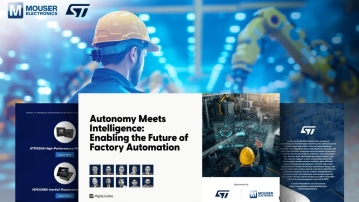
Mouser and ST are exploring how AI, sensing, and intelligent systems are revolutionizing manufacturing.
Global electronic components distributor Mouser Electronics has partnered with global semiconductor company STMicroelectronics (ST) to publish a new e-book addressing the latest challenges and technology trends in industrial automation. The e-book provides focused analysis on how AI, sensing, and intelligent systems are transforming manufacturing innovation.
2025.12.26by 명세환 기자
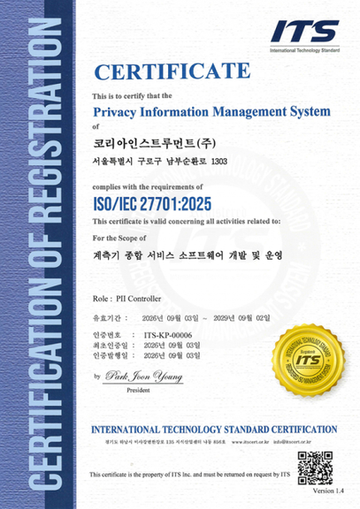
Korea Instrument, KOLAS Accredited Calibration Agency First to Simultaneously Acquire ISO/IEC 27,001·27,701
Korea Instrument has become the first among KOLAS accredited calibration agencies to simultaneously acquire ISO/IEC 27,001 and ISO/IEC 27,701 certifications. Through its proprietary platforms CWIZ Enterprise and CWIZ Partners, the company has embedded information security and personal data protection requirements across all business processes including customer information, equipment data, and calibration reports, with plans to continuously advance its management system through regular audits and security inspections.
2026.10.12by 배종인 기자

TeamViewer One, IT Incident Automation Workflow and Resolution Center Enhanced
TeamViewer has added IT incident automation capabilities and an advanced Resolution Center to its integrated digital workplace management platform 'TeamViewer ONE'. Recurrent service disruptions, configuration errors, and capacity shortages are automatically handled according to preset policies, and device status verification through script deployment can be managed in a unified interface, significantly reducing repetitive tasks for IT teams.
2026.10.12by 배종인 기자
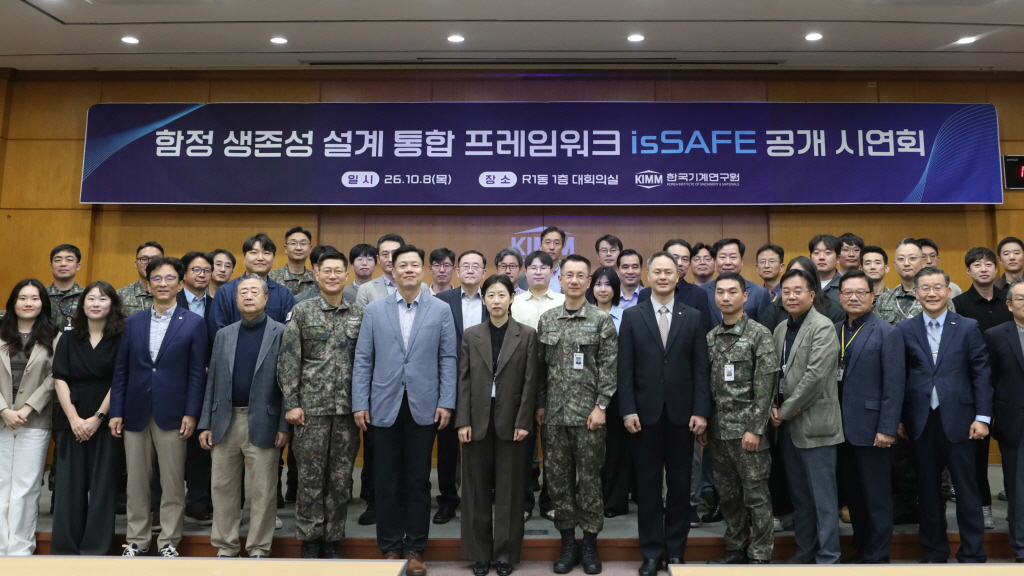
KAERI Develops Domestically-Produced SW 'isSAFE' for Integrated Warship Survivability Analysis
The Korea Institute of Machinery and Materials has developed domestically-produced software 'isSAFE' that comprehensively analyzes warship survivability. This design framework integrates the entire process—from warship modeling to hit scenario generation, vulnerability analysis, and results analysis—into a single platform, establishing an independent technology foundation in the defense technology sector that had previously relied on foreign software.
2026.10.08by 배종인 기자
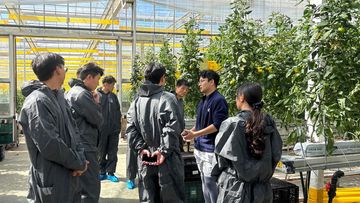
ioCrops Shares AI Smart Farm Operations Case Study
About 20 cultivators from the Agricultural Cooperative's Smart Agriculture Support Centers visited ioCrops' smart farm in Jincheon, North Chungcheong Province. They directly confirmed how data collected through substrate weight sensors, drainage weight sensors, and soil moisture sensors is applied to tomato cultivation, as well as the greenhouse pest control process using the AI-based autonomous spraying robot 'HERMAI'. By sharing on-site operational case studies combining data and automation technology, the adoption of smart farms in agricultural fields is being promoted.
2026.10.07by 배종인 기자











