



Physical AI Growth Driven by Two Axis: 'Humanoid Competition' and 'Industrial Automation'
 Published2026.01.12 15:13
NVIDIA Declares Its Role as the Brain of the Physical AI Ecosystem
Siemens Accelerates Physical AI Adoption Across Manufacturing
The physical AI market is expected to grow in the future along two axes: humanoid competition and industrial automation.
The recently held CES 2026 showcased the full-fledged emergence of a new technological paradigm called "Physical AI" across the industry.
While software-centric AI has been assisting human thinking and judgment, this year's CES was a place to declare that AI has entered a stage where it moves, works, and collaborates in the physical world.
Global companies such as Hyundai Motor Group, Boston Dynamics, Nvidia, LG Electronics, and Siemens have each unveiled their physical AI strategies in different ways, igniting a competition for market dominance.
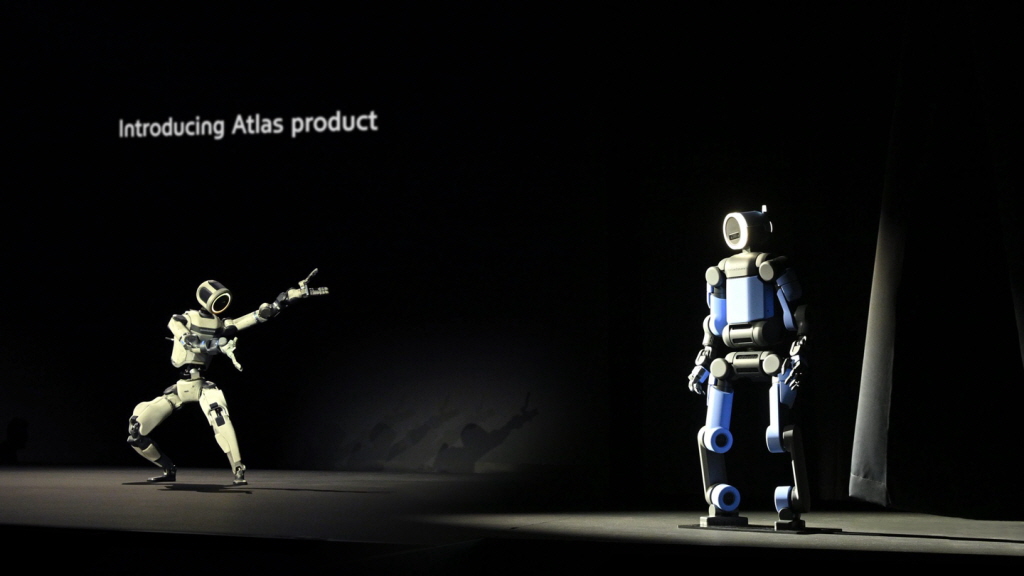
▲Atlas, a humanoid robot unveiled by Hyundai Motor Group and Boston Dynamics at CES 2026.
Hyundai Motor Group and Boston Dynamics presented one of the most notable physical AI demonstrations at CES 2026.
Boston Dynamics' humanoid robot 'Atlas' captured the attention of visitors with its human-level mobility, including high-difficulty movements based on 56 degrees of freedom (DoF), spatial recognition based on a 360-degree camera, and a 50kg load capacity. />
Beyond a simple robot demonstration, it is significant in that it presents a work scenario that can actually be deployed on Hyundai Motor Group's U.S. Metaplant (HMGMA) production line.
Hyundai Motor Group has presented a blueprint to build an "AI robotics platform" centered around Atlas and apply physical AI to all processes, including production automation, logistics, and quality inspection.
In particular, the company announced that it would build an 'E2E (End-to-End) AI robotics system' that would train robots' behavioral data through the Software Defined Factory (SDF) and Robot Metaplant Application Center (RMAC) and then reflect this back into factory operations.
At CES 2026, NVIDIA emphasized that the core of the physical AI market is ultimately the 'AI brain.'
Humanoid robots, industrial robots, and autonomous machines require massive sensor data processing, real-time judgment, and sophisticated control to operate in real-world environments.
To this end, NVIDIA unveiled the 'AI Robotics Full Stack', which integrates the robot-specific AI model 'GR00T', the robot simulation platform 'Isaac Lab', and the industrial digital twin platform 'Omniverse'.
In particular, the next-generation robot computing platform based on Jetson Thor provides a computing performance of over 1,000 TOPS and has been evaluated as a key technology that enables real-time control of humanoid robots.
Nvidia said, “The era of physical AI is a time when software, hardware, and simulations are integrated into a single ecosystem,” and “all robotics companies will be structured to learn through AI models and simulations and immediately apply them in real environments.” It was anticipated.
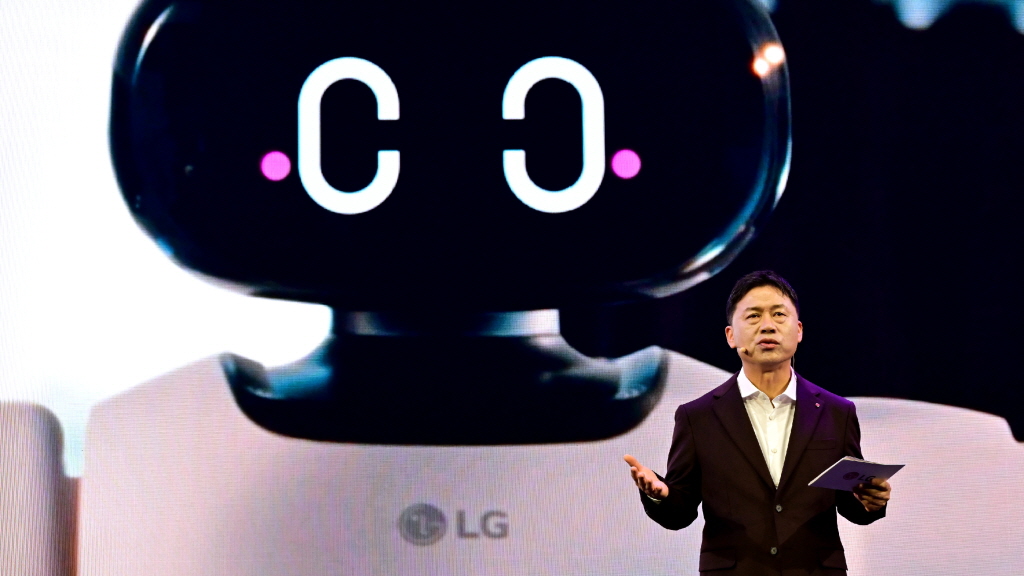
▲LG Electronics CEO Ryu Jae-cheol emphasized at the CES 2026 LG WORLD PREMIERE that the company is ready to lead the era of 'AI in Action.'
LG Electronics unveiled its physical AI strategy in the home, mobility, and service robot fields under the theme of 'AI in Action.'
In particular, the home robot platform 'LG CLOiD' demonstrated the ability to understand the situation in the home and decide on its own actions by combining vision, language, and action models (VLM/VLA).
Beyond simple home appliance control, the strategy is to continuously observe the home environment and learn user behavior patterns to create a 'Zero-Labor Home'.
LG Innotek has strengthened its physical AI in the mobility sector. They emphasized that they are preparing for the era of 'AI Defined Vehicle (AIDV)' by unveiling a number of AI-based cognitive technologies, including internal and external vehicle sensors, UWB-based location recognition, and under-display cameras.
Siemens announced its 'AI-based manufacturing automation' strategy based on its collaboration with NVIDIA.
This structure combines digital twins and AI to apply physical AI to the entire process, from factory design and simulation to operation and maintenance.
Siemens declared that “an era has begun in which AI designs factories, robots operate factories, and digital twins optimize factories.”
Based on the trends revealed at CES 2026, the physical AI market is expected to grow along two major axes.
First of all, it seems that full-scale commercialization of humanoid robots will take place.
With Hyundai Motor Group, Boston Dynamics, Nvidia, and humanoid startups jumping into the fray, humanoid robots are expected to rapidly expand across logistics, manufacturing, and service sectors between 2026 and 2030.
It is expected that industrial automation centered on manufacturing and logistics will accelerate in the coming year.
Siemens, Hyundai Motor Group, LG Electronics, and others are focusing on AI-based factory automation.
As robots move beyond simple repetitive tasks to perform judgment, collaboration, and autonomous tasks, a revolution in productivity is expected to begin in earnest.
Additionally, it is expected that an integrated ecosystem of AI models, simulations, and robot hardware will be established.
The structure of 'AI model + simulation + robot platform' led by NVIDIA isIt is highly likely that it will become the standard in the digital AI market.
CES 2026 confirmed that physical AI is more than just a technology trend; it is a core technology that will reshape industry, homes, mobility, and logistics over the next decade.
We are now entering an era where AI has moved beyond imitating human thought and is now replacing or assisting human physical activities.
Competition in the physical AI market is just beginning, and 2026 will be remembered as the year that heralded its beginning.

Comments
Related news
Samsung Electronics Unveils Vision for "AI as Your Daily Companion" at CES 2026
Samsung Electronics held the CES 2026 'The First Look' press conference in Las Vegas, USA on the 4th and unveiled a new AI vision titled 'Your Companion to AI Living.' Through CES 2026, Samsung Electronics presents experiences that expand AI innovation across all areas of entertainment, home, and care.
2026.01.05by 배종인 기자
LG Electronics to Unveil 'Empathetic AI' at CES 2026
LG Electronics unveiled a wide range of innovative products based on Affectionate Intelligence that understands customers' living patterns and acts autonomously at CES 2026, realizing a 'Zero Labor Home' where robots prepare for the morning and even handle laundry.
2026.01.05by 명세환 기자
NVIDIA Unveils Next-Generation Physical AI Models and Robots at CES 2026… Full-Scale Expansion of Global Robotics Ecosystem
NVIDIA is accelerating innovation in the global robotics industry by unveiling new open models ushering in the era of Physical AI, advanced robotics frameworks, and next-generation AI computing platforms at CES 2026.
2026.01.06by 명세환 기자
SK Hynix Unleashes Innovations, Including HBM4, LPDDR6, and 321-Layer QLC
SK Hynix showcased its position as a leading provider of differentiated memory solutions tailored to AI-era demands at CES 2026, unveiling AI-optimized memory including HBM4 16-layer 48GB, LPDDR6, and 321-layer QLC eSSD.
2026.01.06by 명세환 기자
AMD Unveils "Huge AI Strategy" at CES 2026, Covering AI, Data Centers, and Embedded Systems
AMD CEO Dr. Lisa Su unveiled a new lineup of products across the client, graphics, embedded, and commercial segments during the opening keynote address at CES 2026 on the 5th, officially launching the 'Full-Scale AI Expansion' strategy.
2026.01.06by 명세환 기자











