


CES 2026: A Technological Transformation Driven by Physical AI and Ultra-Large Displays
 Published2026.01.21 15:40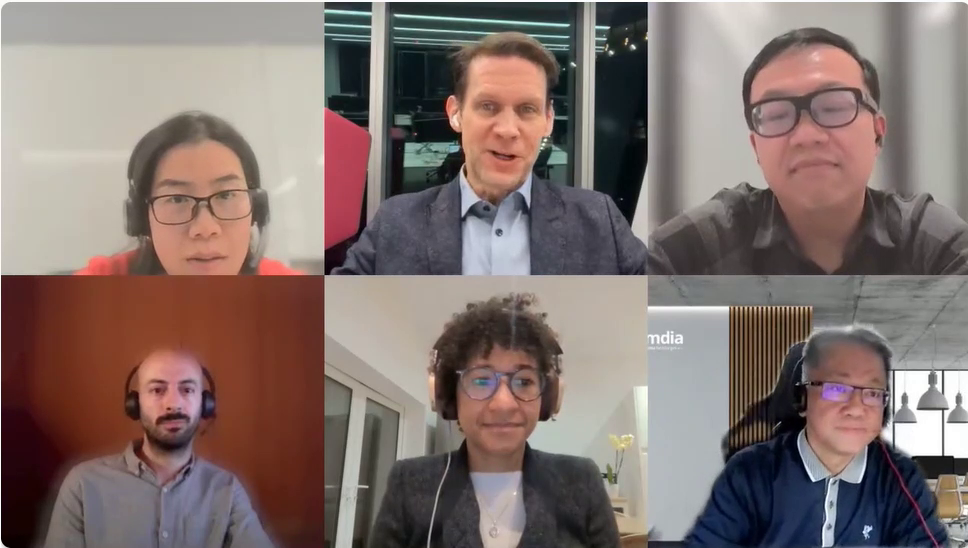
▲Capture from Omdia's 'CES 2026: Big trends and what comes next' webinar.
AI safety, explainability, and security are emerging as key new challenges.
CES 2026, the world's largest IT and home appliance exhibition, concluded with the keyword "Making AI a Reality."
Market research firm Omdia held a webinar on the 20th titled 'CES 2026: Big trends and what comes next' and conducted an in-depth analysis of the technology trends and industry-specific changes confirmed at this year's CES.
Omdia experts agreed that “AI is no longer a concept on a screen, but has entered a stage where it acts in the actual physical world.”
The most notable change is the rise of ‘physical AI’.
Across self-driving cars, robots, and smart devices, there are numerous examples of AI directly perceiving the environment, making judgments, and taking action.
Omdia's automotive and mobility analysts said, "CES 2026 is the first year that AI expanded beyond the digital realm into the physical world," and evaluated that autonomous driving technology has once again reached a leap forward.
Especially video As the underlying AI model evolves into a 'visual-language-action (VLA)' structure that understands the laws of physics and connects them to actions, expectations for Level 4 autonomous driving are also growing.
In the display field, along with the competition for ultra-large and high-resolution displays, 'transformable displays' have been attracting attention.
Major companies such as Samsung Electronics, LG Display, and BOE have unveiled transparent, foldable, rollable, and stretchable displays and presented usage scenarios.
In particular, with RGB-based TVs becoming the de facto standard, ultra-large TVs exceeding 100 inches took center stage at the CES exhibition hall.
Omdia predicted, “Although there are concerns about consumer confusion due to the diversification of technology names, the trend toward larger and more luxurious models will drive growth in the TV market in 2026.”
In the consumer electronics and connected life sectors, ‘connectivity and continuity’ have emerged as key topics.
The vision of wearables, smart homes, and XR glasses connecting as a single AI agent to expand user experience has become concrete.
Purpose-driven products such as small AI devices, wearable pins, and translation-specific smart glasses have also increased.
This shows that products optimized for specific usage scenarios can be more competitive in the market than general-purpose devices with all the features.
In the TV market, AI is evolving beyond content recommendations and improved picture and sound quality to become a "shoppable TV."
The ability to purchase products while watching a show is entering the testing phase, raising the possibility that TV could emerge as a new commerce platform.
However, for manufacturers without their own distribution network, a partnership strategy is considered key.
The PC market is also at a crossroads. The key question is whether AI PCs can move beyond simple hardware spec competition and lead to real user value and improved productivity.
Major PC manufacturers are exploring differentiation strategies by strengthening data linkages between their own AI assistants and devices.
At the same time, product strategies targeting specific user groups such as gamers and creators are being strengthened.
Omdia predicted that the technologies identified at CES 2026 have already entered the commercialization stage and will have a significant impact on the market starting in the second half of 2026.
Competition for AI-based user experiences is expected to intensify, particularly in automobiles, displays, and connected devices.
Experts emphasized that AI safety, explainability, and security will emerge as new key challenges, saying, "How we explain and secure trust will determine future competitiveness, rather than the technology itself."
CES 2026 sent a clear message: AI is no longer the future, it's the present, and the entire industry is now betting on "AI technology that actually works" rather than "technology that's just for show."

Comments
Related news
.jpg)
Samsung Electronics to Unveil World's First 6K Gaming Monitor at CES 2026
Samsung Electronics will unveil the world's first gaming monitor supporting 6K ultra-high resolution at CES 2026. The five new products—Odyssey 3D, Odyssey G8, OLED G8, and G6—support glasses-free 3D, 6K and 5K ultra-high resolution, QD OLED, and the world's first 1,040Hz ultra-high refresh rate, presenting a next-generation gaming experience. Samsung Electronics, the global gaming monitor market leader, plans to strengthen its competitiveness through CES 2026 by showcasing innovative technology and expanding the Odyssey lineup.
2025.12.24by 명세환 기자
Samsung Electronics Unveils Vision for "AI as Your Daily Companion" at CES 2026
Samsung Electronics held the CES 2026 'The First Look' press conference in Las Vegas, USA on the 4th and unveiled a new AI vision titled 'Your Companion to AI Living.' Through CES 2026, Samsung Electronics presents experiences that expand AI innovation across all areas of entertainment, home, and care.
2026.01.05by 배종인 기자
LG Electronics to Unveil 'Empathetic AI' at CES 2026
LG Electronics unveiled a wide range of innovative products based on Affectionate Intelligence that understands customers' living patterns and acts autonomously at CES 2026, realizing a 'Zero Labor Home' where robots prepare for the morning and even handle laundry.
2026.01.05by 명세환 기자
NVIDIA Unveils Next-Generation Physical AI Models and Robots at CES 2026… Full-Scale Expansion of Global Robotics Ecosystem
NVIDIA is accelerating innovation in the global robotics industry by unveiling new open models ushering in the era of Physical AI, advanced robotics frameworks, and next-generation AI computing platforms at CES 2026.
2026.01.06by 명세환 기자
AMD Unveils "Huge AI Strategy" at CES 2026, Covering AI, Data Centers, and Embedded Systems
AMD CEO Dr. Lisa Su unveiled a new lineup of products across the client, graphics, embedded, and commercial segments during the opening keynote address at CES 2026 on the 5th, officially launching the 'Full-Scale AI Expansion' strategy.
2026.01.06by 명세환 기자











