



Vector, Electric Motor Control Unit Early Test Support
 Published2026.01.27 11:15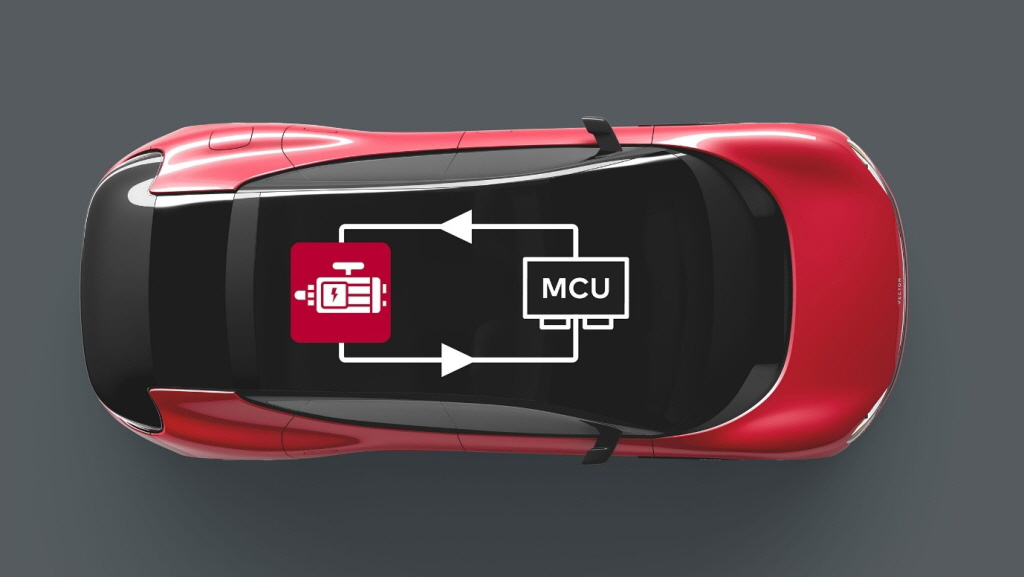
CANoe Model Option Electric Motor for Early Testing of Motor Control Unit
The early testing environment, essential for the development of electric vehicle and industrial motor control technologies, is being further strengthened.
Vector Korea (Country Manager Jang Ji-hwan), a company specializing in automotive network and embedded system development solutions, announced on the 27th that it has introduced a new 'Model Option Electric Motor' feature to version 19 of its test platform, CANoe.
This feature is characterized by its design to verify the performance of the Motor Control Unit (MCU) even before the actual hardware is ready.
The newly added model option provides pre-configured physical simulation models for electric motors, enabling early testing from the early stages of development.
CANoe 19 has already supported both Software-in-the-Loop (SIL) and Hardware-in-the-Loop (HIL) testing, and with this update, its usability in the field of electric motor control has been greatly expanded.
Model option electric motors include PMSM (Permanent Magnet Synchronous Motor), BLDC (Brushless DC Motor), induction motor, conventional DC motor, etc.It provides various types of motor models for immediate use.
These models fully configure the control loop to deliver consistent and realistic input signals to the control unit under test.
In particular, since it uses a signal level-based interface, there is no need to configure a high-voltage and high-current environment, and it is executed directly on the Vector VT5838 FPGA module based on high-frequency PWM signals.
Through this, it is possible to verify normal operating conditions as well as perform fault injection tests in the CANoe environment.
Setup convenience has also been enhanced.
A pre-configured simulation model is loaded into the FPGA with a single click, and parameters can then be easily adjusted within CANoe to match actual motor characteristics.
In addition, open models including the Simulink library are provided, enabling custom modeling that includes additional electrical components such as sensors or inverters.
Vector expects this feature to be widely utilized by developers of control units for actuators and drive motors, as well as test engineers.
In particular, when verification at the full vehicle level is required, an integrated test environment can be established by linking with Vector’s virtual driving simulation environment, DYNA4.
This is expected to enhance control strategy optimization and verification efficiency, and contribute to improving the quality of the development process for electric motors and related components.

Comments
Related news
[2025 e4ds Tech Day] Oh Jun-hyung, Vector FAE, "Software is the Key to Product Competitiveness in the SDV Era."
With the transition to SDV, vehicle electronic architecture is shifting to a centralized model, expanding functional integration and concurrent development across teams. However, the growing scale of development, integration, and validation complexity makes it difficult to cope with existing manual approaches. In response, Vector is providing a DevOps-based automation environment optimized for the automotive sector, automating the entire process of development, testing, and deployment while integrating with various tool chains to simultaneously improve development speed and quality. Vector will participate in the '2025 e4ds Tech Day' to be held at the ST Center on September 9th, and plans to present on the topic of 'SW Factory in the SDV Era: Development Optimization Strategy Through Integration and Deployment Automation.' Accordingly, we have arranged an interview with Oh Jun-hyung, Field Application Engineer at Vector's Embedded Business Division, to discuss Vector's SW Factory solution.
2025.08.19by 명세환 기자
Vector Enables Production Without ECU Software Rework, Supplying vFlash to Volkswagen
Vector Korea, a global specialist in vehicle networking and embedded systems (Branch Manager Jang Ji-hwan), is supplying the ECU software reprogramming tool 'vFlash' to Volkswagen, contributing to improved automotive production quality and prevention of software rework.
2025.08.22by 배종인 기자
.jpg)
Vector Korea provides practical support for the transition to the SDV era, unveiling SIL-HIL testing and AI automation technologies.
Global automotive software solutions company Vector Korea (Branch Manager Jang Ji-hwan) is disclosing an integrated strategy supporting vehicle software lifecycle—including SIL-HIL testing for SDV implementation, AI-based automation, DevOps integrated development environment, and cloud platform—at 'Vector TechDay Korea 2025', providing practical support for the transition into the SDV era.
2025.08.26by 배종인 기자
Breaking Through the 'Magic Triangle' by Combining AI and Engineering
Vector Korea, a global automotive software solutions company (Branch Manager Jang Ji-hwan), held 'Vector TechDay Korea 2025' on the 26th at the Conrad Hotel in Yeouido, Seoul. At the event, Vector Executive Christof Ebert delivered a keynote speech on the topic of 'GenAI from Requirements to Testing'. Vector Executive Christof Ebert stated, "In SDV, we must pursue both speed and functional safety simultaneously," and added, "Speed alone is insufficient. We must combine traditional values with cutting-edge technology to maximize efficiency."
2025.08.26by 배종인 기자
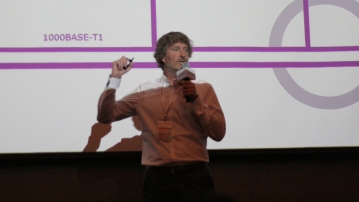
"Innovating Future Automotive Networks with 10Base-T1S and Service-Oriented Architecture"
Global automotive software solutions company Vector Korea (Vector, General Manager Jang Ji-hwan) held 'Vector TechDay Korea 2025' at the Conrad Hotel in Yeouido, Seoul on the 26th. At the event, Kai Jansen, Vector Field Application Engineer, presented on the topic of 'The "All-Ethernet Vehicle" - Vision or Soon to Be Reality?'. Kai Jansen, Vector FAE, stated, "We can revolutionize future automotive networks through 10Base-T1S and service-oriented architecture."
2025.08.26by 명세환 기자











