


"Competitiveness hinges on end-to-end testing capabilities for EV charging infrastructure."
 Published2026.02.02 16:12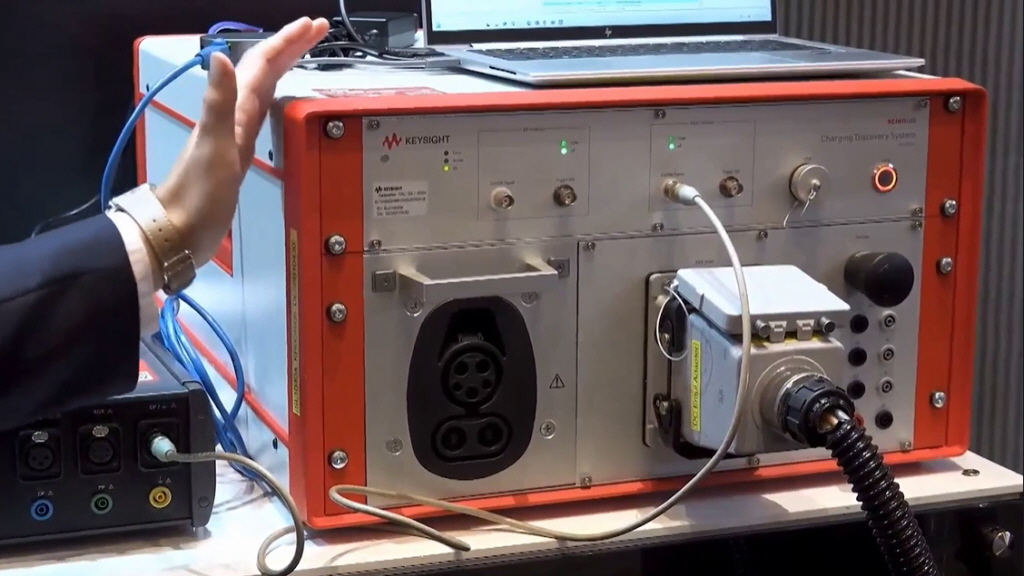
Preliminary testing of encrypted vehicle-to-vehicle communication, certificate management, and interoperability
While the electric vehicle (EV) market has entered a temporary growth slowdown, the technological requirements surrounding charging infrastructure and energy storage systems (ESS) are rapidly evolving, with bidirectional charging, ultra-high power, and grid-connected testing emerging as key challenges.
At the 'Keysight World Tech Day' webinar held online on the 29th, Jongwon Moon, deputy manager of Automotive Solutions Engineering at Keysight Technologies, emphasized that electric vehicle charging technology is evolving beyond simple power supply to become a core element of energy infrastructure under the topic of 'Testing challenges and solution strategies for future EV infrastructure.'
“EVs and chargers are no longer independent devices, but should be viewed as a single energy system integrated with the grid,” explained Vice Minister Moon.
Accordingly, charging infrastructure and ESS require much more complex technical verification and testing than before.
The biggest change is the evolution of charging methods.
Existing EV charging has typically been a one-way structure (V1G) where power flows from the grid to the vehicle.
On the other hand, recent ISO Bidirectional charging (V2G, Vehicle to Grid), which returns power from vehicles to the grid, is being seriously discussed, centered around the 15118-20 standard.
In this case, electric vehicles will function not as simple consumers but as distributed energy resources (DER).
It is a new energy source that contributes to stabilizing power supply and demand along with solar power, wind power, and ESS.
These changes impose new technical requirements on chargers and vehicles.
First of all, compliance with standards for communication with the grid is essential. Interoperability testing with power grid communication protocols such as IEEE 2030.5, SunSpec, and DNP3 is required, and compliance verification for different grid codes in each region is also required.
Interconnection standards such as UL 1741 and IEEE 1547 are key criteria for determining whether EV chargers and vehicles can safely connect and disconnect from the grid.
In particular, the 'anti-islanding' test has already been considered important in the ESS and solar inverter fields, and is emerging as an essential test in the EV field as V2G expands.
This is a test to verify whether the output is cut off within a set period of time so that the vehicle or charger does not supply power independently even when the power grid is disconnected.
As it is directly related to safety, it is considered a technical requirement that must be met in the construction of future EV charging infrastructure.
Increasing output is also an important task.
As battery capacity expands and the demand for shorter charging times grows, DC ultra-fast charging and megawatt-level charging (MCS, Megawatt Charging System) are becoming a reality.
MCS, aimed at large vehicles such as commercial trucks, buses, heavy equipment, and ships, handles power up to 1,500 volts and thousands of amperes, requiring power, heat, and safety management technologies that are on a whole different level from conventional chargers.
Accordingly, test systems and simulation technologies that operate stably even in high-voltage and high-current environments are emerging as essential elements.
Technologies that enhance user convenience are also important requirements for charging infrastructure.
Plug & Charge automatically authenticates and pays by simply connecting the vehicle.The technology consists of a secure communication and authentication system based on ISO 15118.
To implement this, encrypted communication between the charger and the vehicle, certificate management, and interoperability testing must be implemented first.
“EV charging infrastructure is now a complex area where power, communications, software, and safety regulations are intertwined,” said Vice President Moon. “End-to-end testing capabilities encompassing vehicles, chargers, grids, and energy storage systems will determine competitiveness.”
As electric vehicle charging infrastructure moves to the center of the energy ecosystem, the technological requirements and verification systems that support it are expected to become increasingly important.

Comments
Related news
"6G: Rapid market entry through digital twin-based design, emulation, and verification is key to success."
Keysight Korea introduced next-generation technology innovation centered on 6G and Keysight's role in supporting it through a press briefing for Keysight World Tech Day 2025 held on the 10th. Lee Sun-woo, President of Keysight Technologies Korea, who delivered the presentation, stated that the rapid evolution of connectivity and computing is transforming the structure of industries across the board, and presented digital twin-based design, emulation, and verification as core strategies in the journey toward 6G.
2025.09.11by 배종인 기자
Keysight Accelerates Innovation in the AI Era… 'Keysight World Tech Day 2025' Successfully Concludes
Keysight Technologies Korea (Keysight) held 'Keysight World Tech Day 2025,' showcasing the latest technologies in 6G, digital, and automotive fields to accelerate innovation in the AI era, and presented Keysight's solutions.
2025.09.11by 배종인 기자

Keysight: "Emulation is more important than scaling AI infrastructure optimization."
According to the 'AI Cluster Networking Report 2025' jointly released by Keysight and Heavy Reading, the pace of AI adoption is outpacing infrastructure expansion, and telecommunications and cloud operators are transitioning to optimization strategies rather than simple scaling. Ninety-five percent of respondents emphasized the importance of emulation that simulates actual AI workloads, and 89 percent plan to maintain or increase AI infrastructure investments next year. The adoption of high-speed network technologies and elimination of bottlenecks are emerging as key challenges for AI scaling.
2025.10.01by 명세환 기자
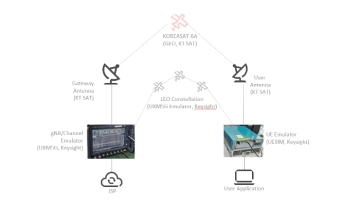
Keysight Korea and KT SAT Give Green Light to Commercialize 6G Non-Terrestrial Communications
Keysight Korea has successfully completed a proof of concept (PoC) for NTN (Non-Terrestrial Network) inter-handover protocol verification in cooperation with KT SAT, utilizing the Mugunghwa satellite 6A.
2025.11.10by 배종인 기자
Keysight Increases Quantum Research Precision and Efficiency
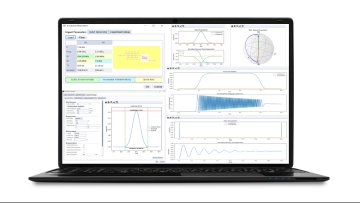
Keysight Technologies has officially announced a new electronic design automation (EDA) solution called "Quantum System Analysis" for quantum researchers and engineers. This solution is the industry's first system-level platform that enables integrated simulation of electromagnetics, circuits, and quantum mechanics in a single environment, and is evaluated as a breakthrough milestone in addressing the challenges of quantum system development.
2025.12.16by 명세환 기자











