


Professor Cho Seong-jae ⑤, “The Philosophy of Circuit Design Must Change the Moment You Deal with Picoamperes”
 Published2026.02.05 08:54
There are quite a few cases in the field where trial and error occurs due to overlooking basic calculations, such as 1 gigaohm resistance.
[Editor's Note] Recently, the e4ds Electrical and Electronic Lifelong Education Center held the '2025 Advanced Engineer Practical Master Class' as an offline course. Targeting current developers who have completed the intermediate course and engineers with practical experience in circuit design, this course covers advanced topics in electronic circuit design and real-world problems in precision measurement environments. Accordingly, we interviewed Professor Cho Seong-jae of the Department of Electrical and Electronic Engineering at Shinhan University, who is teaching this course, to learn about the course's direction and engineering education. This interview will be published in a six-part series.

The moment sensor signals drop to the picoampere (pA) level, conventional circuit design methods no longer work.
In a recent interview with this publication, Professor Cho Seong-jae of Shinhan University identified the 'IV converter (Current-to-Voltage Converter)' as the key to designing light-based sensors and ultra-low current measurement circuits, emphasizing that a fundamental understanding beyond simple circuit configuration is required.
Professor Cho Seong-jae stated, “Since most optical sensors use a current output method, an IV converter is not an option but a necessity,” adding, “If you do not understand why an IV converter must be used and how to implement it, measurement itself becomes impossible.”
The problem is the magnitude of the current being measured.
Nanoampere (nA) currents, especially at the picoampere level, leak easily as they travel through cables.
Professor Cho Seong-jae explained, “The moment a pA-level signal generated by a sensor is brought through a coaxial cable, the current leaks out through the inside of the cable or the surface of the circuit board,” adding, “No matter how much it is amplified later, the signal that has already disappeared cannot be recovered.”
This is not just simple circuit theory, but a problem that occurs repeatedly in the field.
One of the most important factors in IV converter design is OP AMP selection.
Professor Cho said, “side“If the input bias current of the OP AMP is greater than the current you intend to set, the signal gets buried,” he emphasized, adding, “To measure picoamperes, you must use an OP AMP with a much smaller input bias current.”
The point is that no matter how precisely the circuit is configured, if this condition is not satisfied, no result will be produced.
Another key point is feedback resistance.
To convert picoampere current into voltage, ultra-high resistance ranging from several gigaohms (GΩ) to tens of gigaohms is required.
Professor Cho explained, “To make an nA current 1V, a 1 gigaohm resistor is required,” adding, “This is the reason why you cannot get a result no matter how much you turn a variable resistor of several hundred kilohms.”
In reality, there are quite a few cases where people experience trial and error in graduate research or new project sites due to overlooking these basic calculations.
On the other hand, using high resistance does not mean the problem is solved.
Professor Cho Seong-jae pointed out, “Even 1 gigaohm and 10 gigaohm resistors have their surface resistance change due to dust or moisture when exposed to the external environment,” adding, “Unless managed, the design value cannot be maintained.”
The explanation is that ultra-low current circuits require a comprehensive approach that includes not only component selection but also board design and environmental management.
Based on this experience, Professor Cho is conducting lectures that impart the theory and practice of IV converter design.
This is also why research institutes, universities, and new project managers seek out this lecture.
He said, “The purpose of this course is not to train experts, but to share failures and trial and error that are not easily experienced.”He said, “Knowing the know-how gained from 40 years of field experience can shorten the design period and prevent product failures or recalls.”
Creating stable products is ultimately an engineer's competitiveness.
As Professor Cho Seong-jae stated, the technology for handling picoamperes goes beyond simple circuit design and raises questions about the philosophy of engineering.

Comments
Related news
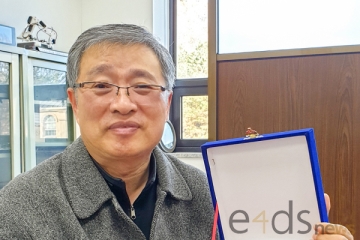
"Need to pay attention to pattern design according to signal flow"
Professor Cho Sung-jae won the '2019 Engineer of the Year Award' in the high-efficiency power supply design category through the '2019 Engineer of the Year Evaluation' conducted by e4ds News in December. e4ds News asked him about his acceptance remarks and inquired about the current state and future of the high-efficiency power supply design field.
2020.01.06by 명세환 기자
[Interview] Professor Jo Seong-jae of Shinhan University - “EMC/EMI, the eternal homework of circuit design, training of experts is essential”
Professor Jo Sung-jae of Shinhan University, who recently conducted an interview with this publication, stated that EMI is a common issue among circuit designers, and emphasized the importance of education provided by specialized institutions, noting that solving EMI requires accumulating experience by encountering and resolving diverse problems over an extended period.
2021.09.14by 배종인 기자
[Interview] Professor Cho Seong-jae ①: "Practical circuit design issues ultimately boil down to fundamentals."
Recently, e4ds Electrical and Electronics Lifelong Education Institute held an offline course titled "2025 Advanced Engineer Practical Masterclass." This course is designed for practicing developers who have completed intermediate-level courses and engineers with practical circuit design experience, covering advanced topics in electronic circuit design and real-world problems in precision measurement environments. In this regard, this publication conducted an interview with Professor Cho Sung-jae from the Department of Electrical and Electronics Engineering at Shinhan University, who is teaching this course, to discuss the course direction and engineer education. This interview will be serialized over six installments.
2025.11.20by 배종인 기자
[Interview] Professor Cho Seong-jae ②, “Electronic Circuits Are Learned by Hand, Not Theory”
Recently, e4ds Electrical and Electronics Lifelong Education Institute held an offline course titled "2025 Advanced Engineer Practical Master Class." This course targets current developers who have completed intermediate-level coursework and engineers with practical circuit design experience, covering advanced topics in electronic circuit design and real-world problem-solving in precision measurement environments. Through an interview with Professor Jo Sung-jae of the Department of Electrical and Electronics Engineering at Shinhan University, who is instructing this course, we inquired about the direction of the course and engineer education. This interview will be serialized over six installments.
2025.12.11by 배종인 기자
.jpg)
[Interview] Professor Cho Seong-jae ③, “Mid-level engineers must also keep learning”
Professor Cho Sung-jae emphasizes that the most overlooked risk in circuit design is the 'moment of OFF switching.' He states that the back EMF and transient phenomena occurring when a transistor turns off are major causes of component failure, but since textbooks do not cover this, practitioners must verify and understand it themselves. His intermediate and advanced courses cover everything from general circuit problem-solving to specialized techniques such as I-V converters in the nA and pA ranges, and also address measurement instrument reliability issues. Professor Cho Sung-jae emphasizes that stable circuit design capability ultimately stems from an engineer's level of understanding and passion. We spoke with Professor Cho Sung-jae about the mindset and attitude that intermediate-level engineers should have when designing circuits.
2025.12.23by 배종인 기자











