


International SOS Releases '2026 Global Risk Outlook'
 Published2026.02.10 15:29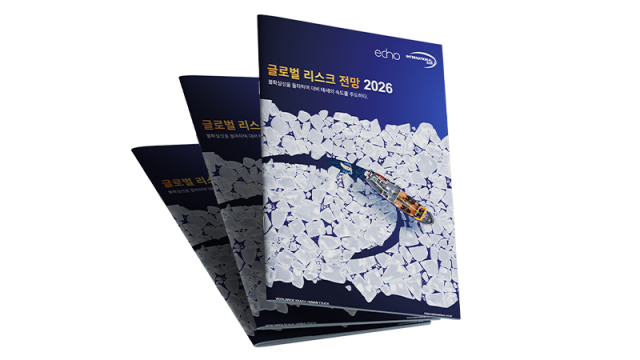
The speed of response to the convergence of geopolitical, cyber, and health risks determines corporate competitiveness.
International SOS, a global employee safety management company, analyzed that the corporate environment ahead of 2026 is becoming increasingly complex with the combination of geopolitical instability, cyber threats, and health risks, and the speed at which organizations prepare to respond to these challenges is impacting corporate competitiveness.
On February 9th, International SOS released its annual report, "Global Risk Outlook 2026," which comprehensively assessed the key health, medical, and security risks facing companies and organizations worldwide. Celebrating its 10th anniversary this year, the report outlines the evolving global risk landscape and outlines directions for strengthening organizational response capabilities and resilience.
According to the report, 57% of global leaders responded that new risks are emerging faster than existing management capabilities, and 74% perceived that time for making critical decisions is shrinking. Conversely, only 35% said their organizations could quickly mobilize in a crisis.
A gap was also identified between risk awareness and actual implementation. Eighty percent of respondents said that quickly detecting risks is a competitive advantage, but only 20% said they can quickly verify risk information. Additionally, 49% recognized that security risks and healthcare risks are increasingly interconnected, indicating a growing need for an integrated response.
The rise of uncertainty was also identified as a major issue. Sixty-six percent of responding companies reported a significant increase in uncertainty over the past year, with geopolitical instability (47%) cited as the biggest factor. Cybercrime followed, but only 14% identified misinformation and disinformation as a major risk.
In terms of technology utilization, a gap between expectations and reality was revealed. While interest in artificial intelligence (AI) is high, only 6% of organizations responded that they are actually using AI significantly for risk management. Furthermore, approximately 80% of security and healthcare professionals expressed concerns that related budgets will stagnate or decrease, potentially limiting response capabilities.
“In an age of uncertainty, resilience goes beyond simply responding to crises; it’s the core of corporate competitiveness,” said Kang Seung-koo, CEO of International SOS Korea. “We hope this report will serve as a reference for domestic companies to strengthen the safety and well-being of their employees and prepare for change.”
Meanwhile, International SOS also released a Global Risk Map, reflecting the latest global security and healthcare risks, alongside this report. Some countries, including Iran, Myanmar, and Niger, saw their security risk ratings raised due to geopolitical tensions, while Mongolia's was downgraded due to stabilization and improved disaster response capabilities. India's healthcare risk rating was revised to "medium," while South Korea maintained its "low" rating for both security and healthcare.
More information on the '2026 Global Risk Outlook' can be found on the International SOS website.

Comments
Related news
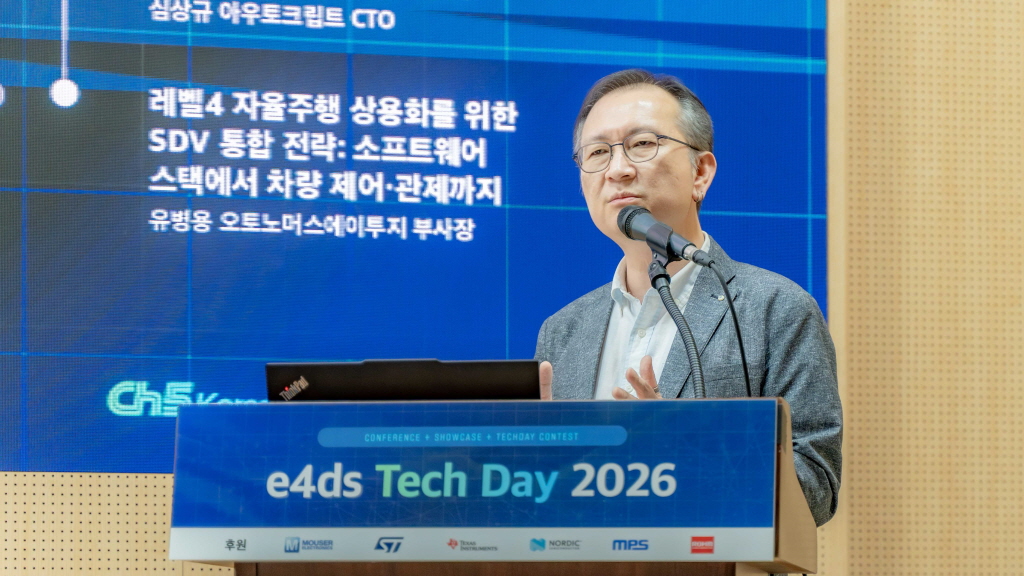
[e4ds Tech Day 2026 ⑨] Sim Sang-gyu, Autocrypt CTO: "In the Physical AI Era, Automotive Security Must Extend Beyond the Vehicle"
At e4ds Tech Day 2026, Sim Sang-gyu, CTO of Autocrypt, explained automotive cybersecurity strategies in the era of Physical AI and SDV (Software-Defined Vehicle). Automobiles are evolving as part of an ecosystem connected to AI, cloud, chargers, IoT, and robots, and he emphasized that the scope of security must expand beyond the vehicle interior to the entire connected environment. In particular, AI model tampering, adversarial attacks, OTA updates, and EV charger hacking were identified as major threats. He explained that response measures require zero trust, AI model integrity protection, intrusion detection, Security by Design and Default, and full lifecycle security management, and that proactive security system establishment beyond regulatory compliance is critical for securing future mobility competitiveness.
2026.10.12by 배종인 기자
NVIDIA to Invest $1 Billion in U.S. Science Over Next Five Years
NVIDIA has announced plans to invest $1 billion over the next five years to strengthen U.S. scientific and technological competitiveness. The company will enhance cutting-edge artificial intelligence research and development capabilities in key areas including quantum computing, healthcare, and energy security, while expanding support for higher education research institutions and cloud service providers. NVIDIA is participating as a major industry partner in the White House Office of Science and Technology Policy's Genesis Mission, and is promoting supercomputer construction in collaboration with national laboratories including Argonne and Los Alamos.
2026.10.12by 배종인 기자
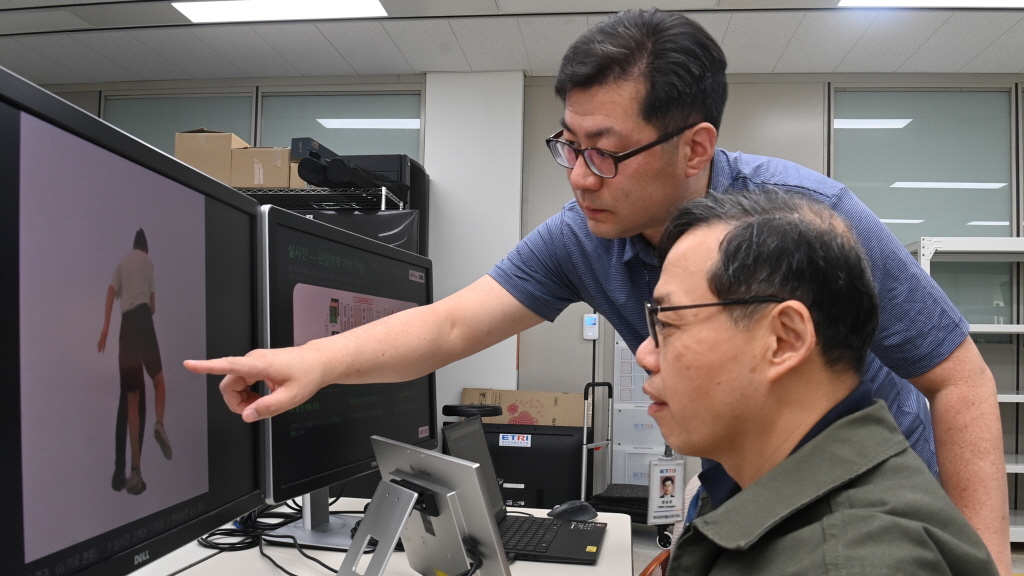
ETRI Unveils 3 Next-Generation Media Technologies Including AI-Dedicated Video Compression
ETRI has unveiled three next-generation media technologies optimized for AI. These include AI-based video encoding (VCM), 3D human generation based on sparse cameras, and generative AI-based pre-visualization technology. In environments where AI directly processes video such as autonomous vehicles, robots, and drones, these technologies enable efficient compression and transmission of large-scale data, and can be applied across various industrial sectors including smart cities, video security, and sports broadcasting.
2026.10.12by 배종인 기자
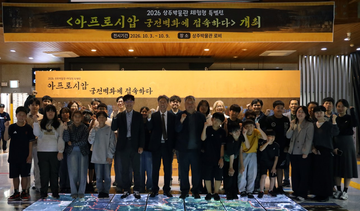
KETI Connects Domestic and Uzbekistan Museums Through Robot Telepresence for Remote Exhibition
The Korea Electronics Technology Institute (KETI) has hosted a remote experiential exhibition that connects domestic museums with an Uzbekistan museum in real-time using robot telepresence technology. Elementary school students in the Sangju area were able to directly operate autonomous robots to remotely view 7th-century Goguryeo envoy palace murals at the Afrasiab Museum in Samarkand, and the exhibition provides spatial experience comparable to on-site visits by combining real-time high-quality video transmission, AI docent, and autonomous driving technologies.
2026.10.12by 배종인 기자
Arduino UNO Q Technical Whitepaper: MPU·MCU Hybrid Board for Cloud-Free Edge AI
Arduino UNO Q is a product that integrates a Qualcomm Dragonwing QRB2210 microprocessor (MPU) running Debian Linux and an STM32U585 microcontroller (MCU) executing Arduino sketches on Zephyr RTOS into a single UNO form factor board. The two processors do not share RAM and resources, exchanging data only through remote procedure calls (RPC) of Arduino_RouterBridge, and the development environment Arduino App Lab and apps reside within the board. This whitepaper describes the design intent of this hybrid architecture, development workflow, hands-on verification results, and limitations in industrial application based on webinar presentation materials and technical Q&A.
2026.10.09by 편집부











