



TI and NVIDIA Accelerate Commercialization of Physical AI Collaborative Humanoid Robots
 Published2026.03.09 16:09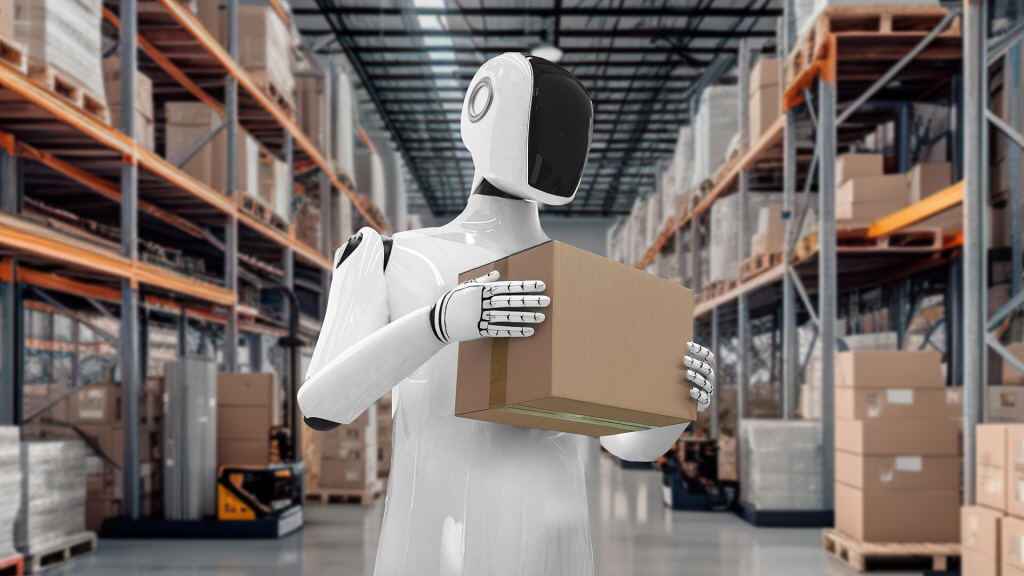
As the technological race to bring humanoid robots into real-world industries and everyday environments intensifies, Texas Instruments (TI) and NVIDIA announced a strategic collaboration to implement next-generation physical AI.
TI announced on the 6th that it is accelerating the development of safer and more reliable humanoid robots by combining real-time control and artificial intelligence computing with NVIDIA.
The collaboration centers on integrating TI's real-time motor control, sensing, radar, and power management technologies with NVIDIA's high-performance robotics computing platform.
This allows developers to precisely verify the robot's perception, drive, and safety functions from the virtual environment stage, and quickly meet the requirements needed for actual deployment.
TI has designed a sensor fusion solution that integrates mmWave radar technology with the NVIDIA Jetson Thor platform.
This solution leverages the NVIDIA Holoscan Sensor Bridge to enable low-latency 3D perception and safety detection, combining camera and radar data to improve object recognition accuracy and reduce false positives.
It provides stable recognition, especially in environments with transparent obstacles or poor lighting, thereby expanding the range of indoor and outdoor applications for humanoid robots.
These real-time sensor fusion technologies enable robots to make more human-like decisions in complex and unpredictable environments.Supports catalogs.
It is expected to contribute to resolving safety issues that have hindered the commercialization of humanoid robots, as it enables safe navigation and work performance in various spaces such as offices, hospitals, and commercial facilities.
The two companies' strategy is to support developers in quickly transitioning from the prototype stage to mass-production-ready systems through this collaboration.
Based on a design that considers deterministic control and functional safety, it lays the foundation for physical AI to operate reliably in real-world applications.
TI will unveil this technology at NVIDIA GTC, showcasing the future of humanoid robots that combine real-time sensor fusion and AI-based perception technology.
The industry believes this collaboration will blur the lines between physical AI and robotics technology, further accelerating the growth of the next-generation humanoid robot market.

Comments
Related news

[Special Feature] Physical AI, Redrawing the Future of Industry ⑤, “'Integrated Operating Systems' as the Key Battleground”
Nvidia, leading the charge, along with major countries including South Korea, is actively advancing development and standardization efforts to secure an Integrated Operating System, recognized as a key driver in the widespread adoption of Physical AI.
2025.12.01by 명세환 기자

TI to Unveil Expanded Automotive Semiconductor Portfolio at CES 2026
Texas Instruments (TI) showcased new product lines at CES 2026, held in Las Vegas, USA from the 6th to the 9th, including high-performance computing SoCs that maximize edge AI performance, a single-chip 8x8 4D imaging radar transceiver, and a 10BASE-T1S PHY that extends Ethernet to vehicle edge nodes, presenting key technologies for implementing Level 3 autonomous driving.
2026.01.06by 배종인 기자

Delays in application modernization hinder AI performance and weaken security competitiveness.
Connectivity cloud company Cloudflare has released the "2026 App Innovation Report," which contains survey results conducted recently among organizational leaders worldwide. According to the report, organizations that have modernized their applications were three times more likely to achieve clear ROI through AI, while conversely, organizations dependent on legacy systems face complex challenges including increased technical debt, expanded security vulnerabilities, and developer talent shortages.
2026.01.16by 배종인 기자
High-performance SoCs, accelerating the era of autonomous driving, are rapidly emerging as a key player in the automotive industry.
According to a Technical Article from Texas Instruments titled "Why Scalable High-Performance SoCs Are the Future of Autonomous Vehicles," automotive manufacturers are accelerating their transition to software-defined vehicles (SDVs) by adopting centralized computing platforms instead of distributed electronic control unit (ECU) architectures, enabled by high-performance systems-on-chip (SoCs) that simultaneously offer scalability and performance.
2026.01.27by 명세환 기자

TI Launches System-Level Solutions Strategy for the Robotics Market
Texas Instruments (TI) held a press briefing where Giovanni Campanella, Vice President of Industrial Automation and Robotics, visited Korea to unveil changes in robotics technology and TI's product and policy direction in response. Campanella positioned the robotics market as a next-generation core growth area and announced that TI will fully accelerate its "system-level" solution strategy beyond individual semiconductor components.
2026.02.09by 명세환 기자











