



Intel Unveils Core Series 2 with Enhanced Real-Time Performance, Expanding Industrial Edge AI Platform
 Published2026.03.10 10:40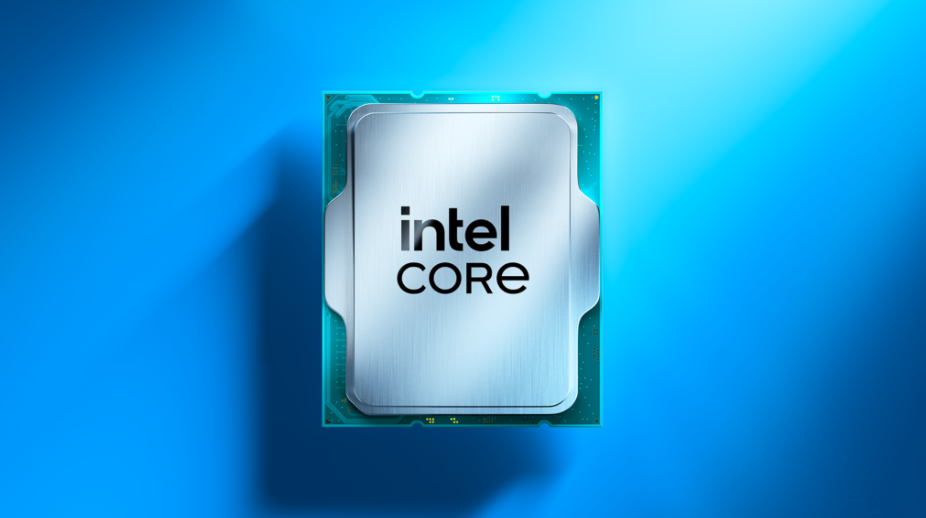
Intel Unveils Industrial P-Core-Based Processors and Healthcare Edge AI Suite at Embedded World 2026
Intel has strengthened its position in the industrial edge computing market by unveiling a new edge processor that simultaneously supports real-time data processing and AI computation in industrial settings.
Intel unveiled the 'Intel Core processor Series 2' equipped with the industrial platform P-core at 'Embedded World 2026' held in Nuremberg, Germany on March 10, and also announced the 'Edge AI suite for Health & Life Sciences' for the healthcare and life sciences fields.
According to Intel, the Core Series 2 processors are designed with the real-time processing and reliability demands of industrial environments in mind. Industrial environments require the simultaneous execution of diverse workloads, such as safety control systems and real-time data processing, while maintaining precise timing and deterministic performance. Existing systems often require a trade-off between computational performance and real-time reliability, often requiring a multiprocessor architecture.
The new processor focuses on improving these structural limitations. Intel says the product offers up to 4.4x lower PCIe latency, up to 2.5x better deterministic response time, and up to 3.8x better deterministic performance compared to the AMD Ryzen 7 9700X. It also boasts up to 1.5x better multi-threaded performance.
Intel also unveiled a preview version of its Edge AI Suite, targeting healthcare and life sciences. This solution provides reference pipelines and benchmarking tools to support the development of AI-based patient monitoring systems. The company explained that with increasing patient volumes and increasing staffing shortages in healthcare settings, patient monitoring technology is rapidly expanding from a single-device environment to a data-driven, connected system.
The suite presents scenarios for running a variety of multimodal AI workloads locally on Intel processors, including electrocardiogram-based arrhythmia detection, remote photoplethysmography, and anonymized 3D visual tracking. This enables OEMs, ODMs, and independent software vendors (ISVs) to evaluate platform performance under conditions close to real-world use.
Dan Rodriguez, vice president and general manager of Intel's Edge Computing Group, said that edge computing is one of Intel's key growth areas, and that with the Core Series 2, Core Ultra Series 3, and the expansion of the Edge AI suite, Intel is providing an integrated platform that supports the edge AI needs of various industries.
Intel expects this product line to expand the use of edge computing environments that simultaneously perform real-time control and AI-based analysis across a wide range of industries, including manufacturing and healthcare.

Comments
Related news
Intel Unveils 18A Process Panther Lake and Xeon 6+, Entering the 2nm Era
Intel has unveiled its next-generation client and server processors, 'Panther Lake' and 'Xeon 6+', based on the 18A process node. Panther Lake is Intel's first 18A-based SoC designed for AI PCs, featuring significantly improved CPU, GPU, and AI performance, with mass production set to begin at Arizona Fab 52 by the end of this year. Xeon 6+ is a server processor equipped with up to 288 E-cores, scheduled for launch in the first half of 2026. Intel 18A is a 2-nanometer-class process developed and manufactured in the United States, maximizing performance and efficiency through RibbonFET, PowerVia, and Foveros technologies, and will serve as the foundation for Intel's future product portfolio.
2025.10.13by 명세환 기자

Intel Strengthens AI Accelerator Portfolio for Data Centers
Intel unveiled a new data center GPU called 'Crescent Island,' optimized for AI inference workloads, at the '2025 OCP Global Summit.' The product features a design with high-capacity memory and energy efficiency, and is expected to contribute to building next-generation AI infrastructure in response to the real-time, global inference era.
2025.10.15by 배종인 기자

Intel and NCSoft Launch Special Gaming Collaboration PC Optimized for Next-Generation MMORPG 'Aion 2'
Intel has officially launched the "AION 2 Gaming Collaboration PC," a special edition desktop optimized for NC Soft's next-generation MMORPG 'AION 2,' establishing a technical foundation to stably implement large-scale battles and expansive worlds unique to MMORPGs.
2026.01.05by 배종인 기자
Intel Unveils First Intel 18A-Based Processor, 'Core Ultra Series 3', at CES 2026
Intel unveiled the Intel® Core™ Ultra Series 3 processor, the first AI PC platform based on Intel's 18A process technology designed and manufactured in the United States, at CES 2026.
2026.01.06by 명세환 기자
Intel's 18A Panther Lake Proves Semiconductor Technology Leadership
Intel held a "2026 Intel AI PC Showcase Press Briefing" on the 28th at the Westin Seoul Parnas in Gangnam, Seoul, and unveiled its technology strategy and new product vision targeting the next-generation PC market. Josh Newman, Intel's Consumer PC division head who took the stage that day, stated, "The 18A Intel Core Ultra Series 3 (Panther Lake) is a result that demonstrates where semiconductor manufacturing technology leadership lies, proving Intel's technological leadership in the consumer mobile CPU market in areas such as mobile gaming, content creation, and AI computing."
2026.01.28by 명세환 기자











