


Hexagon Supports Development of Red Bull and Ford's First F1 Powertrain... Enhances Precision Measurements for 2026 Regulations
 Published2026.03.16 16:14
.jpg)
Advanced Power Unit Development and Quality Verification System in Line with 2026 F1 Regulation Changes
Hexagon disclosed related details on February 11. The background lies in the regulatory changes for the 2026 F1 season. The new regulations require vehicle weight reduction, changes to aerodynamic structures, an increased proportion of electric power, and the application of sustainable fuels. As the powertrain and chassis must be redesigned simultaneously, the structure dictates that measurement accuracy at the component level and the management of manufacturing deviations determine the development schedule and performance.
After establishing its own powertrain organization in Milton Keynes in 2021, Red Bull formalized a technology collaboration with Ford in 2023. Under this arrangement, Ford contributes battery cells, electric motors, control software, and analytics capabilities, while Red Bull handles engine development and integration. This is interpreted as a strategy to reduce dependence on external suppliers and autonomously secure power systems compliant with the new regulations.
Hexagon utilizes coordinate measuring machines (CMMs), 3D laser scanners, and QUINDOS and Q-DAS software to support dimensional inspection, statistical analysis, and machining compensation feedback for complex shaped parts such as gears and blades. This approach reduces defects and rework by connecting data obtained from the test prototype stage to the manufacturing stage. Ben Hodgkinson, Chief Technology Officer at Red Bull Ford Powertrains, stated, "Ensuring tolerances and quality was a key challenge in the process of building the new power unit from scratch."
This case also demonstrates that F1 competitiveness is not determined solely by design ideas. The 2026 regulations require high-efficiency electrification, engine performance, and responsiveness to aerodynamic changes simultaneously. Consequently, how quickly designs are verified and translated into actual component quality is emerging as a deciding factor in performance. This effectively reaffirms that motorsports continue to serve as a testing ground for high-precision manufacturing and digital inspection technologies.

Comments
Related news
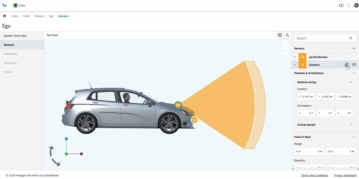
Hexagon Launches Cloud-Based Solution 'VTDx' for ADAS and Autonomous Driving Verification
Hexagon Manufacturing Intelligence, a global leader in sensors, software, and automation solutions, has recently launched "Virtual Test Drive (VTDx)," a cloud-based solution, and is making a full-scale push to ensure pre-launch quality and safety of sensors and automotive semiconductors.
2025.02.10by 배종인 기자
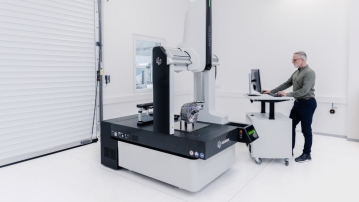
Hexagon Launches Ultra-High-Speed Digital 3D Measuring Machine 'Maestro'
Hexagon Manufacturing Intelligence, a global sensor, software, and automation solutions company, officially launched the ultra-high-speed digital three-dimensional coordinate measuring machine (CMM) 'MAESTRO' on the 6th. MAESTRO is a state-of-the-art measuring instrument designed to respond to the growing demand for increased productivity in industrial operations, maximizing speed, precision, and digital integration while establishing new standards for quality inspection.
2025.05.23by 명세환 기자
Hexagon, “Continued support for strengthening shipbuilding and marine competitiveness through integrated technology”
Hexagon Manufacturing Intelligence, a global leader in sensor, software, and automation technology, participated in the "2025 Shipbuilding, Maritime, and Materials Industry DX Activation Forum" held at Paradise Hotel Busan on June 27, presenting integrated digital transformation cases in the materials design and manufacturing sectors.
2025.07.04by 배종인 기자
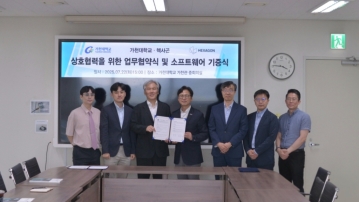
Hexagon and Gachon University Join Hands to Cultivate 3D-Based Digital Engineering Experts
Global sensor, software, and automation solutions leader Hexagon Manufacturing Intelligence has joined hands with Gachon University to nurture specialized talent in 3D-based digital engineering.
2025.07.23by 배종인 기자
"Precision measurement technology must go beyond simple data collection to lead to innovative manufacturing competitiveness to succeed."
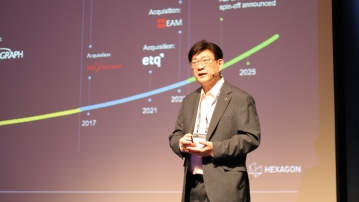
Hexagon held the 'HEXAGON Live Innovation Summit Korea 2025' at the AT Center in Seoul on the 3rd. At the event, Lim Bun Chun, President of Hexagon Manufacturing Intelligence for ASEAN, Pacific, and India regions, delivered a keynote speech on the subject of 'The Future of Precision Measurement and Smart Digital Twins,' presenting the future of manufacturing transitioning from precision measurement to smart digital twins.
2025.09.03by 명세환 기자











