



SK Telecom First Applies AI-Based Network Operations at Gwanghwamun K-Pop Concert
 Published2026.03.23 14:11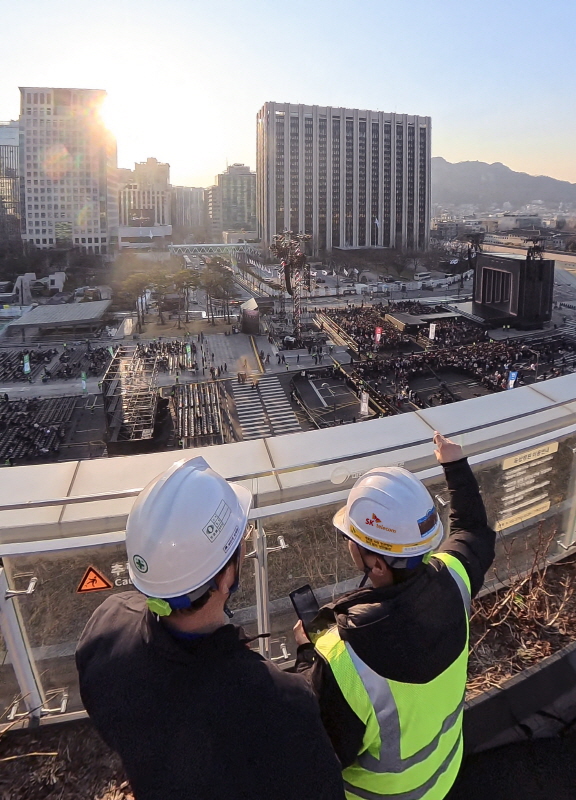
AI manages communication quality at Gwanghwamun K-pop concert
SK Telecom announced that a total of 12.15 TB of mobile data was used between 7 PM and 10 PM on the 21st, covering the three hours before and after the performances held in the areas of Gwanghwamun Square, Cheonggye Square, and Seoul Square. This is approximately double the 5.87 TB recorded during the same time period on the previous weekend, March 14. The burden on telecommunications network operations had increased due to the nature of spectators flocking to the performance venues all at once.
SK Telecom’s self-developed AI-based network operation system, 'A-One (Access All-in-One),' was applied for the first time at this site. The system operated by monitoring traffic conditions on the day of the performance at 5-minute intervals and 50-meter units, and proposing traffic distribution and resource reallocation plans when a risk of overload was detected. It is a form in which pre-design and real-time response are performed simultaneously at large-scale event sites.
Performance characteristics were also evident in usage patterns. Among mobile data used during the three hours before and after the performance, the proportion of those in their 20s was the highest at 30%, followed by those in their 30s at 24%, 40s at 22%, 50s and older at 18%, and teenagers at 6%. Men showed a high proportion of downloads at 54%, while women showed a proportion of uploads at 56%, indicating different usage patterns regarding video viewing versus filming and sharing. The number of foreigners in the same time and region also increased by approximately 23% compared to the previous weekend.
To meet this demand, SK Telecom increased capacity by constructing additional temporary communication facilities beyond its existing network and prepared for an increase in foreign visitors using roaming. On the day of the performance, a total of 199 personnel from SK Telecom, SK Broadband, SK O&S, and others were deployed for emergency duty to support on-site operations.
This case demonstrates the potential of AI-based network operations in environments where users are concentrated in a short period, such as performances, festivals, and sporting events. Telecommunications companies are expected to continue expanding autonomous network operations that combine prediction and automatic control functions to respond to instantaneous traffic fluctuations in ultra-dense areas.

Comments
Related news
SKT and Panesia Jointly Develop Next-Generation AI Data Center Architecture Based on CXL
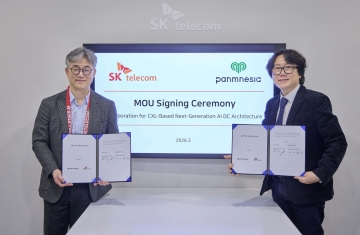
SK Telecom announced that it has signed a Memorandum of Understanding (MOU) with Panesia for joint development of a "next-generation AI datacenter (DC) architecture" based on CXL (Compute eXpress Link) at MWC26 held in Barcelona, Spain. The two companies will transition from an expansion method centered on GPU addition to a structure that flexibly connects and combines CPU, GPU, and memory, thereby improving resource utilization efficiency and reducing cost burden. They will expand the scope of resource connection, previously limited within servers, to the rack unit level, and will also review the application of CXL-based connectivity in place of general-purpose networks during GPU collaborative computing processes. After validating utilization rate, latency, and throughput using actual AI models, they plan to disclose deliverables by the end of 2026 and promote large-scale environmental demonstration and commercialization.
2026.03.04by 배종인 기자
.jpg)
SKT Partners with Supermicro and Schneider to Build Modular AI Data Centers at MWC26
SK Telecom has signed a three-party Memorandum of Understanding (MOU) with Supermicro and Schneider Electric at MWC26 held in Barcelona, Spain, to build an AI data center (AI DC). The three companies will jointly review an integrated solution using a "Pre-fabricated Modular" approach, in which servers and equipment such as power and cooling systems are integrally designed in module units, pre-manufactured, and then assembled on-site. SKT will participate in promoting the integrated model based on its operational experience, while Supermicro will take on the role of GPU server and cluster configuration capabilities, and Schneider will be responsible for MEP (Mechanical, Electrical, and Plumbing) design and operational solution services. Specific construction timelines and cost reduction figures have not been disclosed.
2026.03.04by 명세환 기자
.jpg)
SKT's "Haein" wins GLOMO's "Best Cloud Solution" award at MWC
SK Telecom received the 'Best Cloud Solution' award at the GSMA Global Mobile Awards (GLOMO) held during MWC Barcelona 2026. The award-winning solution is 'Haein,' which comprises over 1,000 Nvidia Blackwell-based B200 GPUs configured as a single cluster, and SK Telecom announced that it provides this in a subscription-based GPUaaS (GPU-as-a-Service) format. SK Telecom explained that it applies GPU virtualization solution 'Petasus AI Cloud' and operational management tool 'AI Cloud Manager' together to partition and reconfigure resources. SK Telecom announced this marks three consecutive years of winning in the same category, following 'Cloud Radar' in 2024 and 'Petasus Cloud' in 2025.
2026.03.05by 명세환 기자
SKT launches iPhone 17e with expanded storage capacity, maintaining price at 990,000 won.
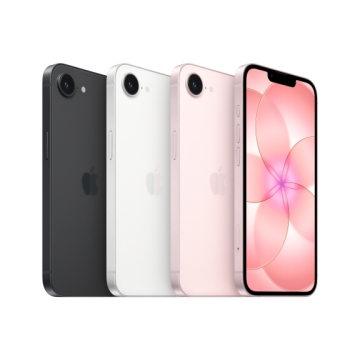
As demand for performance-per-price value in the smartphone market expands, major manufacturers and telecom operators are strengthening their "affordable premium" strategies. SK Telecom has launched the "iPhone 17e," which maintains key features of the iPhone 17 series while reducing price burden. Storage capacity has been doubled compared to the previous generation while maintaining the retail price at 990,000 won. Performance has been enhanced through the application of the A19 chip, Ceramic Shield 2, and improved wireless charging capabilities. When subscribing to online rate plans, OTT usage benefits and smartwatch discount programs are also provided.
2026.03.11by 명세환 기자
SKT Pushes for 'One AI Agent Per Employee'... Full-Scale Transition to Field-Oriented AX
SK Telecom is implementing a "one person, one AI agent" system where all employees create and utilize AI agents tailored to their respective tasks. Beyond simple task automation, the initiative aims to expand AX (AI transformation) in a way that allows field employees to independently define problems and design AI tools. To this end, the company is opening an in-house platform and AX management system that can be used by non-developers, and will operate idea contests and step-by-step educational programs throughout the year. Based on existing application cases such as security coding verification automation and location analysis solutions, the company plans to pursue commercialization and company-wide expansion of key projects by the third quarter of this year.
2026.03.17by 배종인 기자











