


[SDV Tech Report] Roads Become a Battlefield for Software Updates... '24/7 Non-stop Verification Pipeline' Determines Victory and Defeat
 Published2026.03.26 12:36
The value of a car determined by code, not on the road
Automobiles of the past were the pinnacle of mechanical engineering. Engine horsepower and torque, along with the texture of the suspension, determined a brand's identity. However, today's automotive industry is facing a massive turning point. Cars are rapidly being drawn into the era of SDVs (Software Defined Vehicles), often referred to as "smartphones on wheels."
Cars in the SDV era continue to evolve even after they are released. Just as Tesla did, Over-The-Air (OTA) updates—which add new features and improve driving performance overnight—have become a necessity rather than an option. However, behind this dazzling technology lies a "war of verification" among engineers. This is because the difficulty of verifying whether the code poses a threat to human lives on actual roads has increased exponentially with every modification of tens of millions of lines of code.
Amidst these waves of change, National Instruments Korea, which has led the automotive verification market for decades, and Techways, the nation's top system integration (SI) partner, have joined forces. They are attracting the industry's attention by unveiling a 'Hardware-in-the-Loop Simulation (HIL)' solution that can dramatically accelerate the SDV development cycle through an upcoming webinar.
The Birth of 'Real-world Healing (HILs)' Transcending the Limits of 'Virtual'
HILs, the conventional method for verifying automotive controllers, involved inputting modeled virtual data into the controller to monitor its response instead of using an actual vehicle. However, this approach was constantly met with complaints from engineers. The main point was that "virtual data cannot perfectly reproduce the minute variables and sensor noise that occur on actual roads." The discrepancy between the virtual and the real world ultimately led to unexpected defects during the actual vehicle testing phase, becoming the primary cause of extended development periods and increased costs.
NI Manager Kim Nam-kyu defined the core of the solution to be introduced in this webinar as "practical." Through an interview, he sharply pointed out the reality currently facing the automotive industry.
As the automotive industry rapidly transitions into the SDV era, the complexity of verification technology has reached a level that is difficult for individual companies to resolve independently. This webinar is designed to demonstrate how powerful, practical verification solutions are created when a standardized global platform is combined with Korean-style field technical expertise.
A prime example of the 'practical healing' he emphasizes is the in-cabin monitoring unit healing. Previously, virtual images created through graphic simulations were sent to the camera controller, but NI and Techways' solution uses 'raw data' recorded by actual test vehicles driving on the road as is.
This is the so-called 'Direct Injection' method. It is a technology that completely takes over the data path between the camera and the controller, making the controller believe, "I am currently on a real road, not in a virtual environment." Through this, errors that occur during data transformation or conversion processes are fundamentally blocked, and it becomes possible to inject a signal that is 100% identical to reality.
24/7 Automation Pipeline Built with Python API
Another challenge in the SDV era is 'speed.' Just as smartphone apps are frequently updated, automotive software is modified often. It is impossible to meet development cycles using a method where engineers manually input test cases and verify results every time. This is where NI's 'open platform' strategy shines.
VeriStand, NI's core software, provides a powerful Python API. This differentiates it from closed third-party devices. When a developer uploads (commits) new code to the server, the HILL device detects it and automatically runs it as a Python script. It performs tens of thousands of tests day and night and then sends the result reports back to the server. This completes a CI/CD (Continuous Integration/CD) verification pipeline that requires no human intervention.
This automation technology is not limited to passenger cars alone. The NI PXI Real-Time Platform delivers powerful performance even in off-highway vehicles, such as forklifts and excavators, where hydraulic control systems are complex. By computing complex hydraulic physics models in real time and injecting high-current feedback signals into the controller, it perfectly simulates the operation of massive construction machinery on an office desk without the need for actual equipment.
Safety and Security: A Stepping Stone to 'Innovation' Beyond 'Regulation'
The biggest topic in the automotive industry recently is compliance with ISO 26262 (functional safety) and ISO 21434 (cybersecurity). As controllers become more complex, the number of fault injection tests—which involve physically cutting or shorting signal lines—increases to thousands.
NI's SLSC hardware platform automates this fault injection. It prevents human error that can occur during manual operation and automatically generates certification reports for audit submission by integrating with requirements management tools. Furthermore, it supports communication encryption (such as MACsec), a prerequisite for SDV, at the hardware level and can flexibly perform 'fuzzing tests' to find vulnerabilities by injecting random data.
All of this process is focused on helping engineers avoid wasting time on complex equipment setups. NI and Techways are focused on helping customers build better cars by 'utilizing' the equipment rather than 'studying' it.
Engineers Must Focus on Upcoming Innovations
If the paradigm of the automotive industry changes, the tools for verification must also change. Techways' know-how, which has solved the demanding requirements of Korean customers on-site using NI's global standard hardware architecture, has led to a result that goes beyond simple equipment sales to a 'turnkey solution'.
An environment where verification can begin the moment power is turned on, the flexibility to rapidly reprogram to meet changing specifications, and even long-term operating cost reductions. The solution to be unveiled at this webinar is expected to serve as a clear map for South Korean automotive engineers to navigate the vast maze known as SDV.
Manager Kim Nam-gyu concluded the interview by leaving the following final message to the engineers and decision-makers.
With the advent of the autonomous driving and SDV era, clients cannot build verification environments entirely from scratch. Save time by layering Techways' expertise on top of NI's proven open platform. Clients should focus on building innovative vehicles, not on constructing verification environments.
In the SDV era, the winner depends not on who writes more code, but on who can secure the reliability of that code more quickly and accurately. Let's keep an eye on the upcoming webinar to see if the '24/7 non-stop verification pipeline' presented by NI and Techways can be the answer.

Comments
Related news
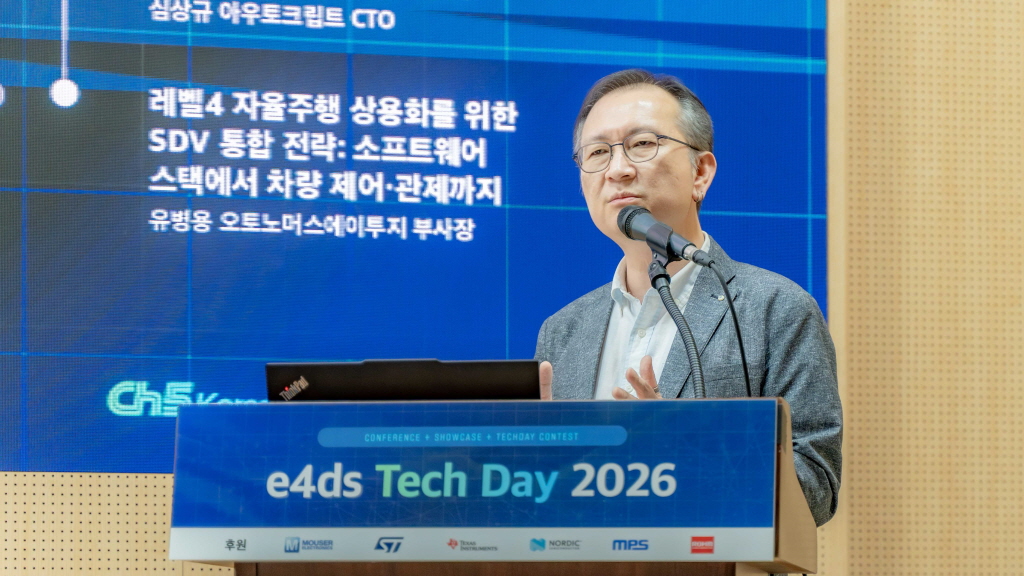
[e4ds Tech Day 2026 ⑨] Sim Sang-gyu, Autocrypt CTO: "In the Physical AI Era, Automotive Security Must Extend Beyond the Vehicle"
At e4ds Tech Day 2026, Sim Sang-gyu, CTO of Autocrypt, explained automotive cybersecurity strategies in the era of Physical AI and SDV (Software-Defined Vehicle). Automobiles are evolving as part of an ecosystem connected to AI, cloud, chargers, IoT, and robots, and he emphasized that the scope of security must expand beyond the vehicle interior to the entire connected environment. In particular, AI model tampering, adversarial attacks, OTA updates, and EV charger hacking were identified as major threats. He explained that response measures require zero trust, AI model integrity protection, intrusion detection, Security by Design and Default, and full lifecycle security management, and that proactive security system establishment beyond regulatory compliance is critical for securing future mobility competitiveness.
2026.10.12by 배종인 기자
Practical HIL Construction Strategy for Automotive and Off-Highway Controller Validation
As vehicle E/E architecture transitions to zonal structures and shifts to software-defined vehicles (SDV), the number of controllers (ECUs) requiring validation and software complexity are surging dramatically. Meanwhile, real vehicle testing cannot provide repeated verification under identical conditions and entails lead time and safety concerns. This white paper explains the principles of HIL (Hardware-in-the-Loop) validation and the structure of the NI platform composed of PXI, SLSC, and VeriStand, and through two actual implementation cases—Camera Record & Replay HIL for In-Cabin Monitoring Controller (ICMU) and Forklift Controller (VCU) HILS—describes how controller-level regression testing becomes possible. Additionally, it explicitly states application boundaries and limitations, such as lack of A2B support.
2026.10.12by 편집부
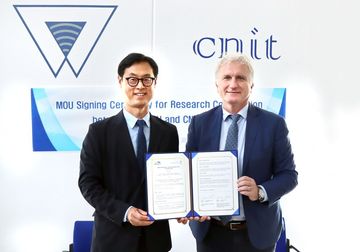
Korea Automotive Research Institute Signs MOU with Italy National Institute for Wireless Communications
The Korea Automotive Research Institute will sign an MOU with Italy's National Institute for Wireless Communications and launch joint research on next-generation mobility technologies based on 6G, V2X, and connected vehicles. The two organizations will conduct research to apply advanced wireless communication technologies to vehicles and discover international joint projects to advance next-generation connected vehicle technology development.
2026.10.12by 배종인 기자
Color Accuracy Issues in Vehicle Interior Ambient Lighting and Intelligent LED Drivers
Vehicle interior ambient lighting is spreading across all price segments, and the level of color accuracy required of lighting designers is rising accordingly. This white paper quantitatively addresses why temperature drift and individual variations of RGB LEDs cannot be corrected by standard constant-current drivers, and explains an intelligent LED driver approach that integrates an MCU, calibration data, and a LIN network interface into the driver. It covers implementation details of the LITIX Interior TLD4020-3ET currently in production, portfolio roadmap, and evaluation/development environments, and clarifies application boundaries including lack of 48V support, lack of RGBi/ISELED support, and absence of direct optical degradation diagnostics.
2026.10.08by 명세환 기자
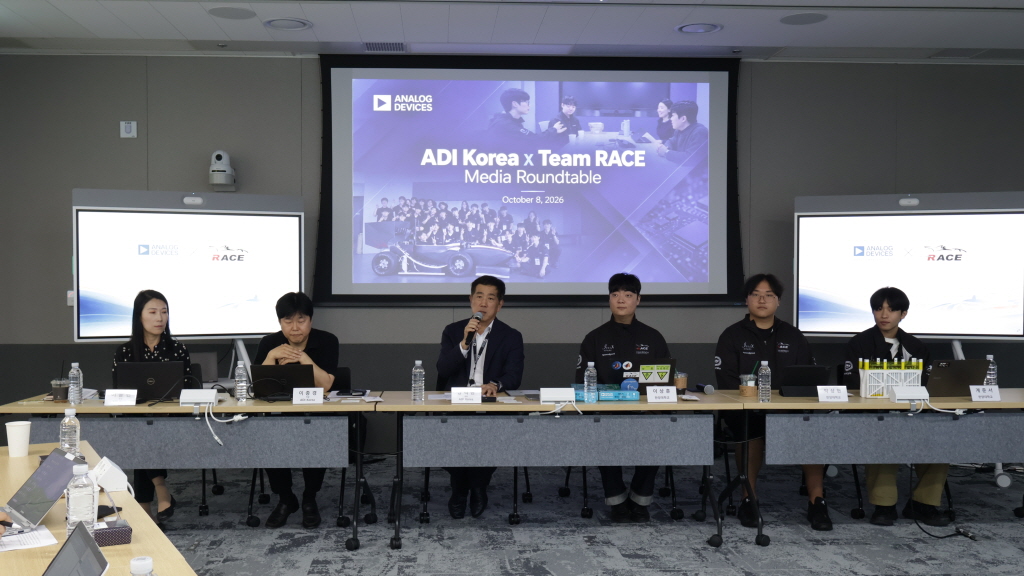
ADI, "Fostering Future Engineers Beyond Component Support"
Global semiconductor company Analog Devices (ADI) is drawing attention for moving beyond simply sponsoring university student car projects to serve as a partner in nurturing future engineers. Over the past three years, ADI has collaborated with Hanyang University's automotive research club Team RACE to support electric formula vehicle development, and recently has been providing technical consultation and semiconductor solutions to enable students to directly develop battery management systems (BMS), creating a model case of industry-academic cooperation.
2026.10.08by 배종인 기자











