



"Semiconductor Raw Material Supply 'Stable' Despite Heightened Tensions in the Middle East"
 Published2026.04.01 08:44
.jpg)
Strengthening cooperation with the government and maintaining joint responses to potential risks
Amid growing concerns over the global supply chain due to the recent escalation of military tensions in the Middle East, it appears that there have been no major disruptions to the supply of raw materials and components for the domestic semiconductor industry so far. It is assessed that the likelihood of short-term production disruptions is low, as key raw materials essential for semiconductor production, such as helium and hydrogen bromide, are also maintaining stable inventory levels.
The Korea Semiconductor Industry Association (KSIA) stated in an explanatory document released on the 31st, “Domestic semiconductor companies have secured a certain level of inventory in advance for all major raw materials that have recently become an issue,” adding, “So far, there has been no direct impact on the production process.”
In particular, the explanation is that since companies operate multiple procurement channels, the likelihood of instability in a specific region leading to an immediate supply crisis is not high.
The semiconductor industry has been strengthening its response capabilities while experiencing various supply chain uncertainties, such as the U.S.-China conflict, the pandemic, and logistics disruptions.
The current situation in the Middle East is also showing a different aspect from the past in that a systematic response is being implemented based on such experience.
"An industry official said, 'Diversifying the raw material procurement structure and continuously reviewing the inventory management system in preparation for emergencies is paying off.'"
Cooperation with the government is also being strengthened. Semiconductor companies closely share the status of raw material supply and demand with the government and maintain a joint response system for potential risks.
This is a preemptive measure in preparation for a prolonged crisis in the Middle East and is part of an effort to enhance overall industrial stability.
However, the industry is not entirely optimistic about the situation.
This is because if instability in the Middle East is prolonged, additional variables such as global logistics disruptions or fluctuations in the prices of specific raw materials could arise.
Accordingly, the semiconductor industry plans to cooperate with domestic and international stakeholders to secure alternative suppliers and further strengthen supply chain stability.
An industry official emphasized, “Currently, there are no major supply and demand issues, but uncertainty has not been completely resolved,” adding, “We will maintain the competitiveness of the semiconductor industry through continuous monitoring and preemptive responses.”

Comments
Related news

Ukrainian military conflict, Korean semiconductor 'crisis'
As the possibility of Russia's invasion of Ukraine increases, concerns about supply instability of specialty gases essential to semiconductor processes—such as neon, xenon, krypton, and helium—are rising, and South Korea's semiconductor industry is closely monitoring the situation.
2021.12.22by 배종인 기자
Semiconductor Helium, Supply Instability Due to Logistics Crisis
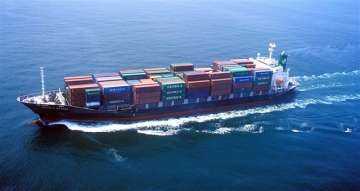
Helium (He) for semiconductors is facing difficulties in domestic supply due to logistics disruptions in the United States, and despite abundant helium at production sites, unexpected supply instability has emerged domestically, drawing attention from the semiconductor industry.
2022.01.18by 배종인 기자
The price of helium, a key semiconductor material, is rising. What's causing it?
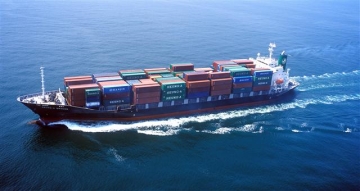
The price of helium, a key material used in the semiconductor industry that comprises the largest portion of Korea's industrial sector, continues to rise. We examine the main causes behind the helium price increase. <br><br> #helium #semiconductor #Linde #Air Products #Samsung Electronics #SK Hynix #logistics
2023.01.05by 배종인 기자
[SEMICON Korea 2023] KC Industrial, D2 supply begins in earnest
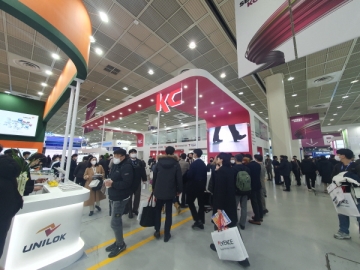
KC Industrial (CEO Lee Han-ki) has announced that in addition to its mainstay product helium, it will begin full-scale supply of deuterium (D2, Deuterium), a semiconductor material. <br> <br> ※ Articles containing important information related to the company's production volume are provided on a paid basis.
2023.02.07by 배종인 기자
Superconductor that does not require helium… LK-99, a superconductor, will change the landscape of special gases
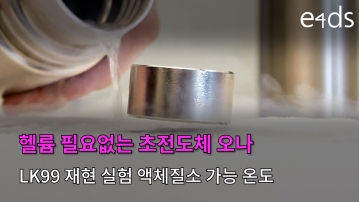
Amid global buzz surrounding LK-99, which is claimed to be a superconductor, expectations are gathering that even if LK-99 is not an actual room-temperature superconducting material, it will drive changes in materials that have been used to produce existing superconductors. In particular, there are rising expectations that liquid helium (L-He), an essential material in superconductor implementation, could be replaced with a more cost-effective material, and the specialty gas industry is also paying close attention to this development.
2023.08.07by 배종인 기자











