



ON Semi Power Modules Applied to Sinung Electric's Next-Generation ESS and Solar Inverters
 Published2026.04.01 10:03
Application of 430kW ESS and 320kW solar inverter improves efficiency and power density
ON Semi announced on April 1 that its PIM will be installed in Sineng Electric's 430kW liquid-cooled string ESS and 320kW utility-class solar inverter platform. As efficiency and long-term reliability are considered critical evaluation factors in renewable energy facilities, this collaboration is focused on improving the performance of large-scale power conversion equipment.
The applied module features a Si·SiC hybrid structure combining ON Semi's Field Stop 7 (FS7) insulated gate bipolar transistor (IGBT) and EliteSiC diode. According to ON Semi, the new module increases power density by 32% and improves efficiency by up to 0.1% in the same form factor as the previous generation. Based on this, the total system output of the solar inverter can be expanded from the existing 320kW to a maximum of 350kW.
The performance improvement is driven by reduced losses and heat generation. This module is designed to reduce power loss by up to 8% and switching loss by 10% compared to the previous generation, and heatsink thermal resistance has been lowered by 9.3% through improvements to the DBC substrate and baseplate structure. In power semiconductors, losses and heat are factors that directly affect system efficiency and equipment lifespan.
System-level improvements were also demonstrated in the ESS. Based on Sinung Electric's 430kW string ESS, benchmark tests showed a 0.75% increase in Round-Trip Efficiency (RTE) and a 5% reduction in auxiliary power consumption. The company explained that as power density increases, the number of required modules can be reduced, leading to expectations of component cost savings. Another feature highlighted was enhanced reliability achieved by lowering operating temperatures in high-load environments.
For renewable energy facility operators, it is crucial to process more power within limited space and lower operating costs. This application is significant in that it utilizes technology to boost output and efficiency without significantly altering the size of the facility. As the solar inverter and ESS markets expand, the impact of performance competition among power semiconductor modules on the overall economic viability and stability of the system is expected to grow even larger.

Comments
Related news

Onsemi Invests $8 Million to Respond to AI and Electrification Power Demands
Onsemi, a leading company in intelligent power and sensing technology, will establish a Wide Bandgap Materials Research Center in partnership with Stony Brook University. The two parties will invest $8 million in the center, and as part of a $20 million strategic partnership with Empire State Development, they plan to foster New York as a power semiconductor innovation hub.
2025.07.22by 배종인 기자
ON Semi Achieves High Voltage and High Efficiency with GaN-on-GaN Technology
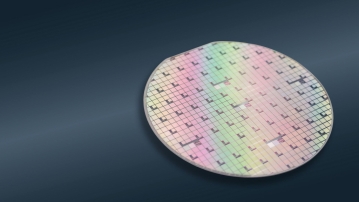
ON Semiconductor, a leading company in intelligent power and sensing technologies, has unveiled vertical gallium nitride (vGaN), a next-generation power semiconductor technology. The new product was developed to address rapidly increasing demand in power-intensive industries such as AI data centers, electric vehicles, and renewable energy. By applying a proprietary GaN-on-GaN structure, it enables vertical current conduction even at high voltages, simultaneously achieving fast switching and miniaturization.
2025.11.04by 명세환 기자
Mouser and Onsemi See the Development of Autonomous Robotics
Mouser and ON Semiconductor have released an eBook that highlights advancements in autonomous robotics. It introduces cutting-edge technologies including the latest image sensors, ultrasonic sensors, Ethernet transceivers, and inductive position sensors, while presenting solutions that enhance the performance and scalability of mobile robots.
2025.12.04by 명세환 기자

Onsemi and InnoScience Expand GaN Power Portfolio, Strengthening Global Manufacturing Capabilities
onsemi, a leading company in intelligent power and sensing technology, has signed a strategic MOU with Innoscience and is moving forward to strengthen its global manufacturing capabilities for gallium nitride (GaN) power devices.
2025.12.05by 배종인 기자
ON Semiconductor Unveils EliteSiC MOSFETs Featuring Next-Generation Cooling Packaging Technology
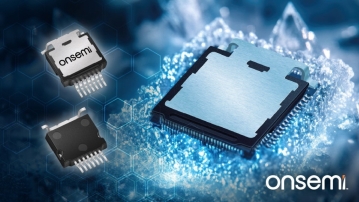
Onsemi, a global leader in intelligent power and sensing technology, has optimized electric vehicles, solar, and energy storage systems through its new EliteSiC MOSFET featuring the industry-standard T2PAK top-cool package.
2025.12.10by 배종인 기자











