


Improvement of carbon dioxide adsorption performance without chemical processes
 Published2026.04.17 09:05
Researchers from the Korea Institute of Materials Science and Technology and universities have achieved research results that reorganize the internal defect structure of metal-organic frameworks (MOFs) and improve carbon dioxide adsorption performance using laser post-processing technology. It presented the possibility of process simplification and cost reduction by controlling the pore structure without chemical processes.
The Korea Institute of Materials Science and Engineering (KIMS) announced on the 17th that a research team including Senior Researcher Lee Hee-jeong, in collaboration with researchers from Kyungpook National University and Yeungnam University, has developed a technology to control the internal pore structure of MOFs using a laser.
The research team explained that as a result of applying the technology, the amount of carbon dioxide adsorbed increased by up to 75%.
Technology for the selective separation of mixed gases, such as carbon dioxide (CO2) and methane (CH4), is considered a key element for natural gas purification and energy efficiency improvement.
Existing liquid absorption processes or cryogenic separation methods had limitations due to high energy consumption and operating costs.
Accordingly, adsorption separation technologies utilizing porous materials have been considered as alternatives, and among them, MOFs have attracted attention due to their large internal surface area and structural control capabilities.
However, it has been pointed out that structural defects occurring during the synthesis process lead to non-uniform pores and a reduction in micropores advantageous for carbon dioxide adsorption.
The research team applied 'Laser-Induced Porosity Engineering (LIPE),' which utilizes lasers instead of chemical or heat treatment.
This technology improves pore distribution by reorganizing existing defect structures through a method of instantaneously heating and rapidly cooling the material.
The research results reportedly showed that relatively large pores were reduced, while micropores and surface characteristics favorable for carbon dioxide adsorption were formed.
According to the research team, MOFs to which the technology was applied showed results such as a maximum 94% increase in specific surface area and a maximum 75% increase in carbon dioxide adsorption capacity.
This study, unlike existing ones, has defects It is differentiated in that it enhances performance by reorganizing existing defects, rather than through a process of removing or creating new ones.
The research team explained that this allows for precise control of the pore structure without additional chemical processes, and simultaneously improves adsorption capacity and selectivity.
This technology is said to be applicable even to MOFs manufactured with low-cost raw materials, which is expected to help reduce material manufacturing costs and simplify the process.
The research team anticipates that it can be utilized in various gas separation industries, such as natural gas purification and hydrogen and methane production processes.
Senior Researcher Lee Hee-jeong and Professor Park Seong-hwan of Kyungpook National University stated, “There is potential for application in the carbon capture and gas separation industries, given that relatively low-energy, large-area processes are possible using lasers.”
This research was conducted with support from the Ministry of Trade, Industry and Energy and the National Research Foundation of Korea. The research results were published online on March 12, 2026, in the international journal 'Small' in the field of nanoscience.

Comments
Related news
KIMS Develops Non-Precious Metal OER Catalyst… Raising Possibility of Commercializing AEM Water Electrolysis
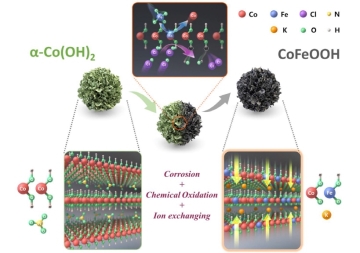
The Korea Institute of Materials Science has developed a non-precious metal oxygen evolution reaction (OER) catalyst applicable to anion exchange membrane water electrolysis (AEMWE). A cobalt-iron based oxyhydroxide (CoFeOOH) was designed with a layered structure, and the electronic structure and reaction pathway were precisely controlled by combining iron doping with surface chemical treatment. As a result, high current density was achieved even at low overpotential, and structural stability was secured during extended operation. The research team applied the catalyst to a unit cell and verified its performance and durability in an actual water electrolysis environment. This achievement, which reduces reliance on precious metals, is expected to contribute to the commercialization of low-cost, high-efficiency green hydrogen production technology.
2026.02.25by 배종인 기자
KIMS Hosts Advanced Semiconductor Packaging Materials Innovation Forum… Discusses Technological Self-Reliance
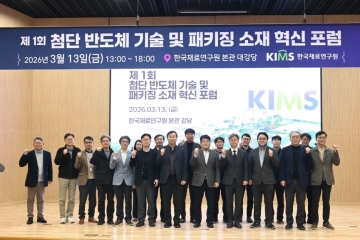
The Korea Institute of Materials Science held a forum to discuss technological trends in advanced semiconductor packaging materials and industrial development directions. The event featured presentations on various technical topics including SiC power semiconductor materials, heterogeneous integration platforms, and advanced packaging interconnect materials. Experts shared the view that securing materials technology and expanding industry-academia-research collaboration are necessary to strengthen competitiveness in the semiconductor industry. The Institute announced plans to strengthen research and development in the packaging materials field and build an industrial cooperation network on the occasion of this forum.
2026.03.16by 명세환 기자

Water electrolysis efficiency is increased by iron substitution
The Korea Institute of Materials Science (KIMS) has moved a step closer to realizing the hydrogen economy by developing a high-performance alkaline water electrolysis catalyst through atomic structure control utilizing iron (Fe).
2026.03.17by 배종인 기자
.jpg)
KIMS Shares Techniques for Industrial Application of Casting Technology
The Korea Institute of Materials Science held a casting technology seminar at its headquarters in Changwon, South Gyeongsang Province, and introduced core process technologies utilized in industrial applications. The seminar covered fundamental principles of casting processes and defect control methods, lightweight-oriented die-casting technology, and trends in aluminum casting alloys for mobility applications. At the conclusion of the event, consultations on industrial technical challenges were also conducted, providing an opportunity to expand the interface between research institutions and industry.
2026.03.25by 명세환 기자
KIMS and Pusan National University Develop Real-Time Diagnosis Technology for Water Electrolysis Performance Degradation
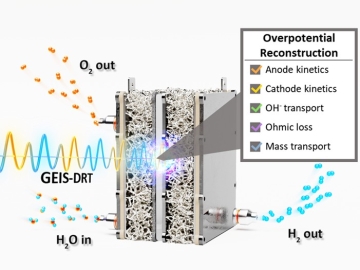
A joint research team from the Korea Institute of Materials Science and Pusan National University has developed a two-electrode-based diagnostic technique that can analyze the causes of performance degradation in anion exchange membrane water electrolysis (AEMWE) systems in real-time during actual operation. The research team presented a method to separate and quantify voltage loss causes by category by combining electrochemical impedance spectroscopy (EIS) data with distribution of relaxation times (DRT) analysis. This technology enables more specific identification of performance degradation causes in actual unit cell environments, and is expected to be utilized in future water electrolysis system design and operation optimization.
2026.04.09by 명세환 기자











