


Talking about the Future of the Test & Measurement Industry in the AI Era: NI President Ritu Favre
 Published2026.04.24 13:24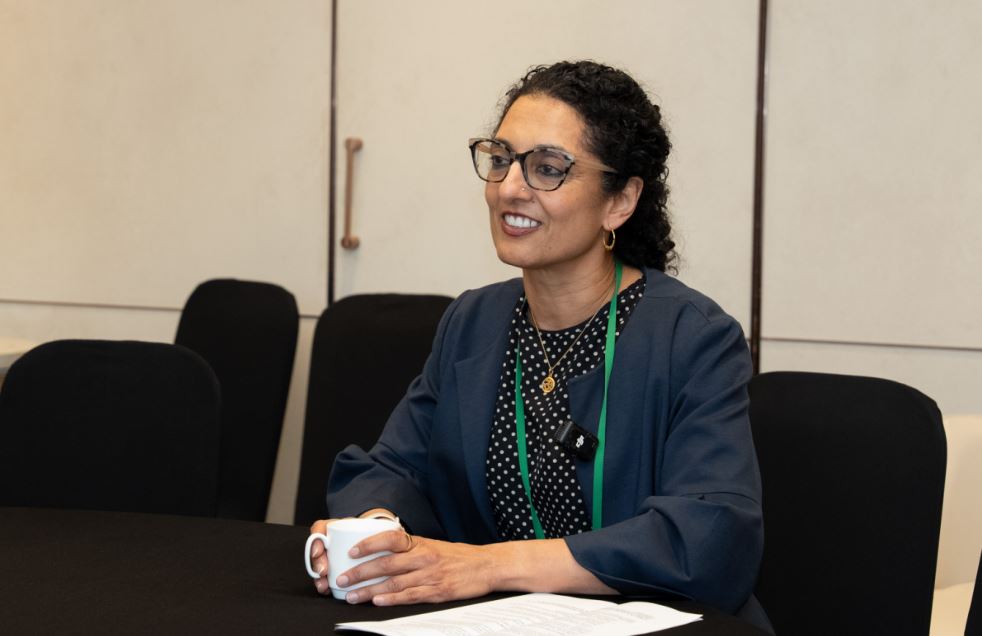
▲EMERSON Test & Measurement Group, NI President Ritu Favre
NI Days Korea 2026 키노트 이후 단독으로 만난 Ritu Favre 사장은 President라는 직함이 무색할 만큼 유쾌하고 활기찬 모습이었다. 무대 위의 긴장감은 온데간데 없고, 질문 하나 하나에 눈을 반짝이며 답하는 모습에서 기술에 대한 진심 어린 열정이 느껴졌다.
Motorola, Freescale, Synaptics를 거쳐 Next Biometrics 대표까지 역임한 35년 반도체 커리어, 7년 전 NI에 합류해 Emerson 인수 이후 사업부를 이끌어온 그녀에게 오늘 발표는 단순한 신제품 소개가 아니었다. 키노트 제목 그대로, 'NI의 새로운 DNA'를 선언하는 자리였다.
이날 인터뷰에서 그녀가 반복해서 꺼낸 키워드는 세 가지였다. 복잡성(Complexity), 속도(Speed), 그리고 데이터(Data). AI가 테스트 산업에 몰고 온 변화의 본질을 그녀는 이 세 단어로 압축했다.
1. 모든 것이 복잡해지고 있다 — AI 시대 테스트 산업의 지각변동
AI 확산과 데이터센터의 폭발적 성장은 테스트·계측 산업 전반을 빠르게 재편하고 있다. Favre 사장이 가장 먼저 꺼낸 화두는 '복잡성의 폭발'이었다.
"예전엔 다이얼 전화기 하나를 테스트했지만, 이제는 ADAS 시스템, 제트 엔진처럼 상상하기 어려울 만큼 복잡한 시스템을 다룹니다. 테스트해야 할 대상의 규모와 속도가 기하급수적으로 늘어나고 있어요."
반도체에서 출발해 제트기, 무선 시스템, 자동차 전반으로 퍼져나가는 기술의 확산 속에서, NI가 다루는 시장도 반도체·자동차·항공우주 방산·에너지 전기기계의 4대 분야로 확장됐다. 이 모든 영역에서 공통적으로 나타나는 현상이 바로 테스트 대상의 복잡도 급증이다.
Favre 사장은 이러한 복잡성 증가가 기존 고정형(Fixed-function) 테스트 방식의 한계를 정면으로 드러내고 있다고 진단했다. 과거에는 '설계→검증→양산'의 단선적 프로세스가 통했다면, 지금은 설계와 검증, 재설계가 끊임없이 반복되는 순환 구조로 바뀌었다는 것이다.
"이제는 설계하고, 검증하고, 다시 설계로 돌아가는 사이클이 계속 반복됩니다. 그 전체 워크플로우에 걸쳐 테스트가 이뤄져야 하고, 각 단계에서 쌓이는 데이터를 통해 제품을 빠르게 개선할 수 있어야 합니다."
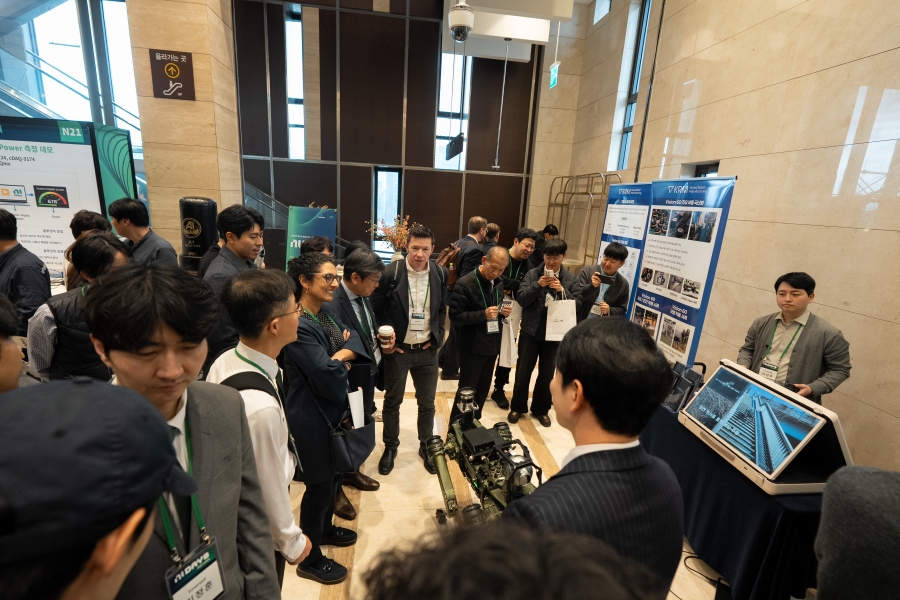
▲ NI Days Korea 2026 부스 투어중인 Ritu Favre 대표
2. 'Software is the Instrument' — AI 시대에도 변하지 않는 철학
NI의 정체성을 한 문장으로 압축하면 'Software is the Instrument'다. 이 철학이 AI 시대에 어떤 의미를 갖는지 묻자, Favre 사장은 자신의 프로그래밍 커리어를 소환했다.
"학교 다닐 때 어셈블리 언어로 코딩했어요. 그게 Fortran, Pascal, C, Python으로 이어졌죠. AI는 그 다음 단계입니다. 코딩의 복잡성을 한 겹씩 추상화해온 역사의 연장선이에요. 소프트웨어가 여전히 계측기이고, AI는 그것을 가능케 하는 인에이블러입니다."
NI의 소프트웨어 진화 역사를 보면 이 흐름이 분명하다. GPIB 기반 PC 계측기에서 시작해, 그래픽 프로그래밍 환경인 LabVIEW를 개발하고, PXI 플랫폼으로 발전해온 NI는 이제 LabVIEW와 TestStand에 AI를 통합하는 단계로 접어들었다. 코드 자동완성, 코드 생성, 그리고 AI 에이전트 'Nigel'까지, 엔지니어가 직접 손으로 코딩해야 하는 부분이 점점 줄어들고 있다.
3. 열린 에코시스템 — PXI + LabVIEW + Nigel + TestStand
NI의 또 다른 강점으로 Favre 사장이 강조한 것은 '오픈 에코시스템'이다. 모듈러 하드웨어와 유연한 소프트웨어 플랫폼 위에, 수백 수천 개의 파트너가 산업별 솔루션을 구축하는 생태계가 형성돼 있다는 것이다.
ADAS 테스트 시스템, RF 테스트 시스템, 레이더 시스템, 우주 관련 테스트까지, NI의 플랫폼(PXI + LabVIEW + Nigel + TestStand)을 기반으로 파트너들이 고객별 맞춤 솔루션을 만들어낸다. 이날 행사에서 삼성이 6G AI 관련 내용을 발표한 것도 이 에코시스템의 일환이다.
"한국의 에코시스템이 아마 전 세계에서 가장 활발한 곳 중 하나일 겁니다. 그게 제가 이곳에 오는 걸 기대하는 이유예요."
현재 NI가 가장 많은 혁신 수요를 보고 있는 분야로는 반도체(AI 칩 수요 폭발), 항공우주·신우주(LEO 위성·드론), 자동차(ADAS·중앙집중형 컴퓨트), 에너지(데이터센터 전력 수요)를 꼽았다.
4. Nigel의 진화: Advisor → Author → Agent
이번 NI Days Korea 2026의 핵심 발표 중 하나는 AI 에이전트 'Nigel'의 로드맵이었다. Favre 사장은 Nigel을 단순한 챗봇이나 코드 보조 도구로 설명하지 않았다.
"Nigel은 테스트·계측 전문가입니다. ChatGPT나 Claude처럼 범용 대형언어모델과 달리, 테스트 루틴과 계측 관련 스킬에 훨씬 깊이 훈련돼 있어요."
이 진화가 테스트 엔지니어의 역할에 어떤 영향을 미칠지 묻자, Favre 사장은 '역할 소멸'이 아닌 '역할 고도화'를 강조했다.
"테스트 요구사항을 직접 입력하고, 테스트 계획을 작성하고, 테스트 프로그램을 코딩하는 반복 작업들을 Nigel이 대신 처리할 수 있게 됩니다. 그러면 엔지니어는 시스템 전체를 어떻게 작동시킬 것인지, 어디에 취약점이 있는지 같은 더 높은 수준의 사고에 집중할 수 있어요. 코딩보다 분석에, 데이터에서 인사이트를 뽑아내는 데 시간을 쓰게 되는 거죠."
'제 엔지니어들한테 항상 했던 말이 있어요. 제품을 제때 출시해야 하고, 수율과 신뢰성을 맞춰야 한다. 테스트 팀은 항상 더 빠르게 가야 했습니다. AI는 그 숙제를 조금 더 쉽게 만들어 줄 거예요.'
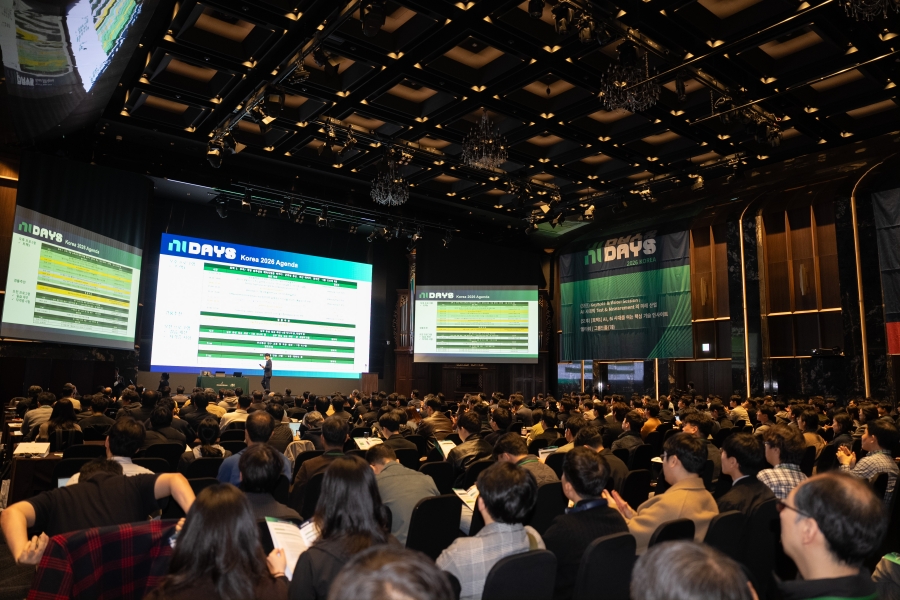
▲ NI Days Korea 2026 행사전경
5. 테스트는 '통과 관문'이 아니라 '전략적 자산'이다
인터뷰 말미에 Favre 사장은 테스트 산업의 미래를 바라보는 NI의 근본적인 관점 전환을 강조했다.
"테스트를 '그냥 출시 전에 통과해야 하는 것'으로만 보는 시각이 아직도 많습니다. 하지만 우리는 다르게 봅니다. 테스트 과정에서 방대한 데이터를 수집하고, 그 데이터로 제품을 더 좋게, 더 빠르게, 더 높은 수율로 만들 수 있습니다. 테스트는 전략적 차별화 요소(Strategic Differentiator)입니다."
향후 50년 NI의 방향에 대해서는 두 가지를 핵심으로 꼽았다. 끊임없는 혁신(Relentless Innovation)과 인재 투자(Investment in People). 하드웨어-소프트웨어의 긴밀한 통합, AI 역량, 그리고 파트너 에코시스템이라는 세 축을 계속 강화해 나가겠다는 구상이다.
AI가 3개월마다 거대한 혁신을 쏟아내는 속도의 시대에, NI가 내세우는 경쟁력은 결국 '유연성'이다. 어떤 새로운 기술이 등장하더라도 플랫폼에 빠르게 통합할 수 있는 열린 구조 그것이 NI가 다음 50년을 자신하는 근거다.
▶ Ritu Favre 약력
Motorola → Freescale → Synaptics → Next Biometrics → NI(현 Emerson T&M 그룹사장). 반도체 업계 35년 경력. NI 합류 7년, 사업부장 취임 3년차.

Comments
Related news
.jpg)
NI Korea CEO Jeong Gu-hwan: "Configurable testing to meet changing requirements is key."
Jeong Gu-hwan, CEO of Korea NI, explained that NI has transformed from its past approach of "free-form lab-like development" into a "systematized company" based on customer feedback and execution capability. Since 2010, as demands for multi-product and short-cycle development, automation, and test time reduction have grown, the limitations of a single-box hardware-centric approach have become apparent. Consequently, NI has focused on "configurable test systems" that combine modular hardware such as PXI with LabVIEW-based software.
2026.02.09by 명세환 기자
NI Days Korea 2026 Preview | The Shift from 'Equipment' to 'Workflow'!
As test requirements have accelerated and become more complex, instrumentation has shifted from being an 'equipment' issue to one of 'systems and operations.' NI Days Korea 2026, held on April 10th, provides an opportunity to examine changes in semiconductor, mobility, and aerospace/defense fields from the perspectives of software-centric testing, NI Nigel™ AI, and SystemLink. We have highlighted the key points to watch for each track.
2026.03.05by 명세환 기자
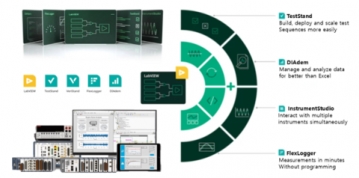
NI, From AI & 6G to Mobility & Defense at a Glance… 'NI Days Korea 2026' on April 10
National Instruments Korea will hold 'NI Days Korea 2026' on April 10th. The event is designed to introduce technology trends including test automation, data acquisition, simulation, and real-time data analysis to engineers, researchers, and industry professionals. The program consists of four tracks: AI·6G, next-generation mobility, military satellite communications·advanced radar·electronic warfare, and academic research·case study sharing and collaboration. National Instruments Korea plans to present approaches to enhance design and verification efficiency through on-site application cases and live demonstrations.
2026.03.30by 배종인 기자
Dual FOC Servo Drive Solution for Robot Hands and Humanoid Robots
The joints and hands of humanoid robots must densely pack multiple motor axes within extremely limited space. The conventional approach of using independent drives for each axis increases board area, heat dissipation, and wiring. This white paper addresses how STMicroelectronics solves this problem through a dual servo drive solution that simultaneously performs flux-oriented control (FOC) on two axes with a single controller (STSPIN32G4). Two patented technologies—shared current sensing (US Patent US 11,757,345 B2) and junction temperature measurement with thermal distribution layout (US 12,264,976 B2)—enabled a 150 W class dual board of 4 x 4.5 cm in size. Under 40 kHz current loop conditions during dual FOC operation, MCU load reaches a maximum of 60%, with the remaining computational headroom utilized for condition monitoring and AI-based automatic tuning. The solution's nature is a reference design rather than a finished product, with applicable boundaries and limitations specified in the text.
2026.10.09by 명세환 기자
The first signal determines the fate of the system
This whitepaper, based on the presentation materials and technical Q&A from the WaveInsense webinar 'Power & Boot Sequence Measurement Know-how,' summarizes measurement techniques for the initial operation interval spanning from the power-on sequence (Power-on Sequence) to the boot sequence (Boot Sequence), clock stability, and DC power quality in embedded systems. It presents a measurement procedure for narrowing down the causes of intermittent boot failures from the perspective of power rail sequence, PGOOD, reset, and clock quality, and addresses measurement pitfalls such as aliasing, low-frequency attenuation in AC coupling, and probe ground loops along with avoidance methods. Finally, it clarifies the boundary leading to integrated verification of power integrity (PI) and signal integrity (SI).
2026.10.09by 명세환 기자











