



Vector Strengthens Mass Production and Integration Competitiveness of SDVs Based on NXP CoreRide
 Published2026.05.06 08:16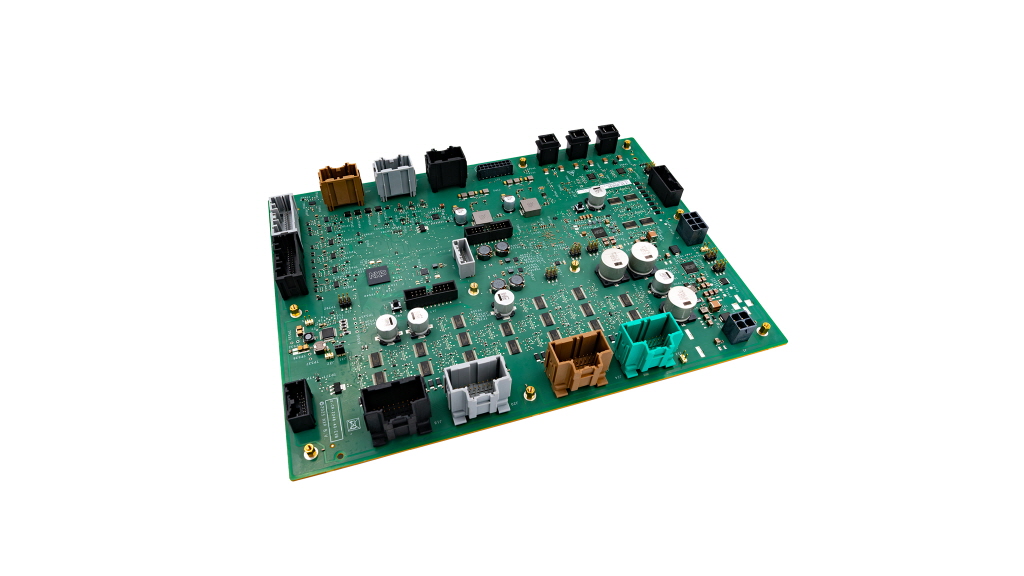
Vector is participating in the NXP CoreRide Z248 zonal reference system. This system provides a real-time computing platform for mass production that can be immediately deployed by OEMs.
Vector Korea, a company specializing in automotive software, is accelerating its push into the software-defined vehicle (SDV) market by further strengthening its cooperation with NXP Semiconductors. Based on the scalable vehicle computing platform 'NXP CoreRide,' the two companies combine embedded software and system integration capabilities to reduce the development burden on automakers and support the transition to mass production.
Vector Korea announced on the 4th that it will provide integrated solutions to help industrialize SDV and establish a large-scale mass production system through the expansion of its strategic partnership with NXP Semiconductors.
The core of this collaboration lies in shortening vehicle development time and enhancing stability by providing a platform that integrates pre-optimized hardware and software.
The 'NXP CoreRide Z248' zonal reference system unveiled by the two companies is based on real-time computing designed for actual vehicle application and is configured to be immediately usable by OEMs driving the transition to next-generation vehicle electric and electronic architectures.
It allows for the review of mass-production-level structures from the initial evaluation stage, contributing to the reduction of development risks.
Through this collaboration, NXP provides a pre-configured platform that combines Vector's AUTOSAR-based 'MICROSAR' software suite with its automotive semiconductors.
The package includes MICROSAR Classic, the software configuration tool 'DaVinci Configurator', and the system design solution 'PREEvision', which help development teams focus more quickly on application implementation.
Synergy is also expected in terms of performance optimization.
Vector's base software focused on improving key system indicators, such as boot time improvement, ensuring ECU startup stability, and sleep-wake-up control considering energy efficiency.
Also CAN and Ethernet-based vehicle networks We focused on increasing communication processing efficiency while reducing memory usage in the environment.
Vector's strategy is to simplify the complex system integration process and support the construction of a scalable SDV platform through close collaboration with semiconductor manufacturers.
This responds to the demands of OEMs driving the advancement of vehicle architecture and a transition to a software-centric development approach.
A Vector official stated, “The key to SDV implementation is the organic combination of proven software and hardware,” adding, “We will support customers in moving more stably from the evaluation phase to the mass production phase through a pre-integrated platform.”
NXP also emphasized that “an integrated approach from the initial design stage is key to securing SDV scalability.”

Comments
Related news

In the SDV era, automotive development methods are shifting from "direct development" to "platform adoption."
According to "CES 2026 Day 2: Integration as Product: The Platform Response to SDV Complexity," recently published by Ian Riches of TechInsights, the 'Alloy Kore' from QNX and Vector and the 'EB civion' from Elektrobit, unveiled at CES 2026, appear on the surface to be solutions targeting different domains. However, their fundamental nature is identical—both represent a strategic shift away from the conventional approach where OEMs directly integrated and managed increasingly complex vehicle software, toward a pre-integrated platform-based approach to enhance development efficiency.
2026.01.27by 배종인 기자
Vector Adds Motor Control Unit Early Test Feature to CANoe 19
I'm ready to translate Korean electronics/semiconductor industry news into English following your specifications. However, I don't see any Korean text to translate in your message. Please provide the Korean text field(s) you'd like me to translate, and I'll process them according to your rules: - Preserving all HTML tags and structure - Keeping product names, part numbers, company names, and units unchanged - Using natural, technical-industry register English - Providing only the translated output
2026.02.03by 명세환 기자

Vector expands investment in AI and cloud strategies, transitioning to an integrated software ecosystem.
Vector Korea announced that it will pursue strategic investments and enhance its product portfolio centered on cloud, artificial intelligence (AI), and code-centric software development. The company is advancing a transition from an embedded software specialist to an integrated "software ecosystem provider," with a focus on scalable software platforms and development tools that connect heterogeneous systems and data environments. The company explained that some technologies have already begun field application with OEMs and industry partners. Building on this foundation, Vector presented plans to strengthen its core business in the automotive sector while expanding its application scope to medical technology, aerospace, and industrial IoT.
2026.02.12by 명세환 기자
.jpg)
Vector Launches 'CANape 24' to Support High-Precision Measurement and Real-Time ADAS Verification
Vector Korea has launched 'CANape 24,' a measurement and calibration software that addresses modern vehicle architecture. The new product supports high-speed, high-precision measurement in domain-based ECU and HPC-based structures, and newly applies the ASAM CMP protocol. It enables real-time validation of camera, radar, and lidar-based ADAS algorithms, and enhances the logging environment with 100GB cloud storage and encryption functionality. The product is characterized by integrated support for data collection, analysis, calibration, and validation in increasingly complex vehicle software development environments.
2026.02.19by 배종인 기자
Vector Korea Acquires RocqStat, Promoting Integration of Timing and WCET Verification
Vector Korea announced the acquisition of embedded software timing analysis technology 'RocqStat' and a team of specialized experts from French startup StatInf. The company explained that it will strengthen its timing analysis and WCET (Worst-Case Execution Time) estimation capabilities to respond to growing demand for software verification required in safety-critical systems. In the medium term, Vector plans to integrate RocqStat into its code test toolchain VectorCAST to enable timing analysis, WCET estimation, and testing and verification to be performed in a single environment, while maintaining business continuity for existing StatInf customers.
2026.03.05by 배종인 기자











