


NXP and Quanta Collaborate on Deterministic Zone Networking for SDV
 Published2026.05.18 15:02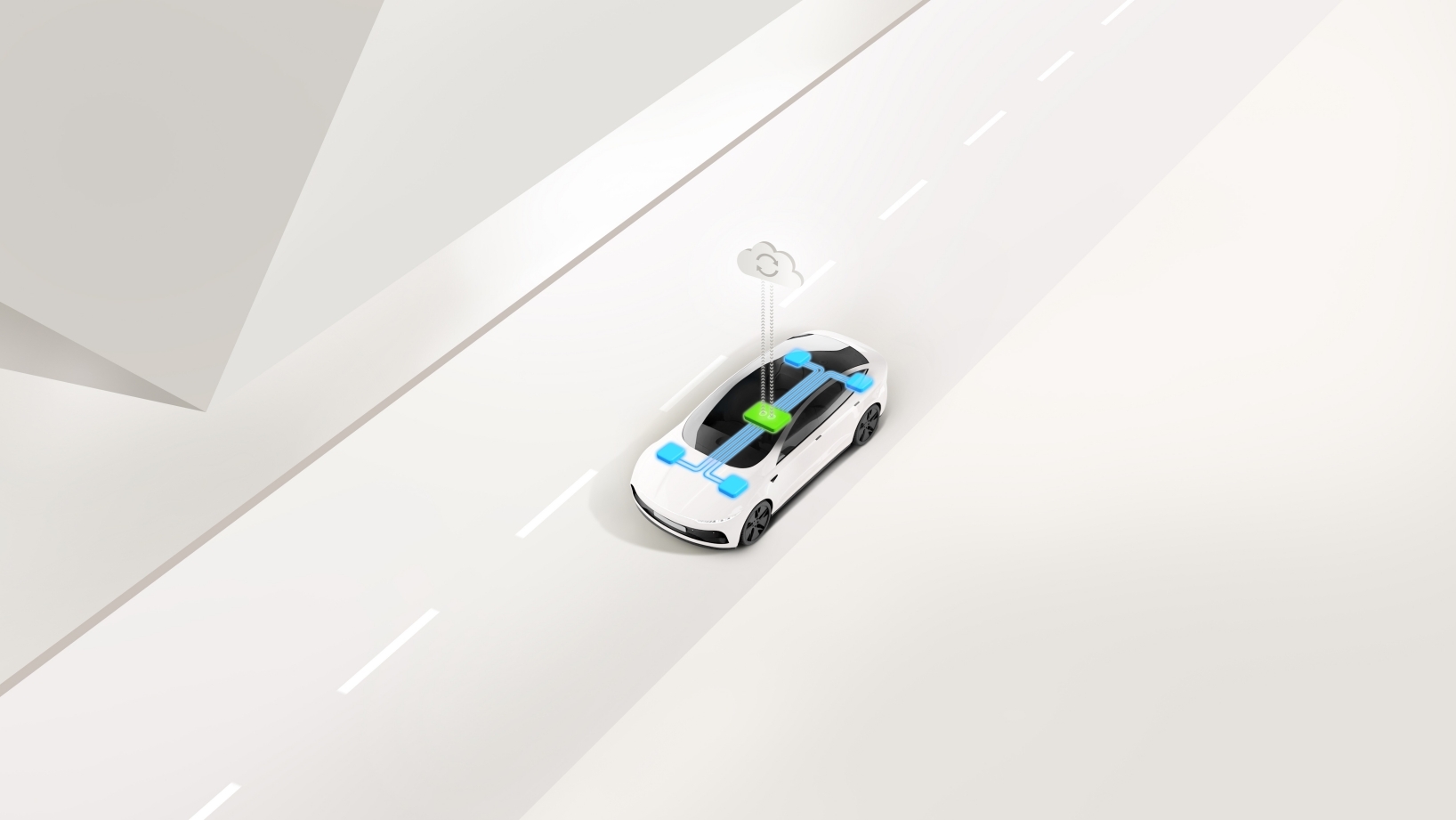
Alleviating the burden of real-time communication verification based on S32 platform and MotionWise
NXP Semiconductors announced on the 15th that it is collaborating with Taiwanese system manufacturer Quanta to implement a deterministic zone networking solution specialized for next-generation vehicle architectures. This collaboration focuses on ensuring predictable latency and low jitter for in-vehicle networks during the SDV transition process.
This collaboration addresses the challenge of consistently controlling in-vehicle data flow during the SDV development process. As autonomous driving, high-performance computing, and OTA updates expand, network latency or timing errors are acting as direct variables affecting vehicle performance and safety.
The solution is based on NXP's S32 automotive processing platform and TrustMotion MotionWise middleware. It is a structure that combines MotionWise's deterministic scheduling and communication technologies to implement predictable end-to-end latency across the ECU and vehicle network.
In conventional vehicle development, network configuration and integration verification were concentrated in the later stages, leading to a higher risk of development delays or errors. The two companies plan to reduce this burden through an integrated workflow that includes automatic topology discovery, schedule generation, and deployment capabilities.
The platform includes the S32 automotive processor, SJA1110 switch-based TSN networking, CAN and LIN connectivity technologies, and multi-PMIC power management technologies. It is characterized by combining automotive-grade computing, networking, and system orchestration into a single verification platform.
Applications include latency-sensitive vehicle functions such as Ethernet-based audio, HPC up-integration, real-time RCP control, and smart energy networking. OEMs can extend the zone-based architecture to multiple vehicle programs.
This collaboration was driven by the emergence of zone-based architecture as a core infrastructure for SDV implementation. NXP and Quanta are also pursuing integration with the NXP CoreRide zone reference system, and deterministic zone networking solutions are currently being offered to OEMs and ecosystem partners.

Comments
Related news
Mouser Supplies NXP i.MX 91… Expanding the Foundation for Linux-Based Edge Device Development
Mouser Electronics has begun supplying NXP Semiconductor's i.MX 91 application processor. The i.MX 91 is based on an Arm Cortex-A55 operating at up to 1.4GHz and is designed to enable rapid development of Linux-based edge devices. It targets diverse applications including smart home, IoT, industrial, and medical sectors, and incorporates EdgeLock Secure Enclave to provide security features such as secure boot, tamper detection, and lifecycle management. Support for NXP's long-term product supply assurance program is also included. Mouser supplies the FRDM-IMX91S board and evaluation kit for development validation, supporting early-stage evaluation and design acceleration through wireless connectivity, power consumption measurement, and preliminary demo exploration.
2026.02.25by 명세환 기자
NXP Unveils 'i.MX 93W', Integrating AI, Wireless, and Security, Targeting Edge-Based Physical AI Expansion
NXP Semiconductors has unveiled the i.MX 93W application processor, which integrates AI computing, wireless connectivity, and security functions into a single package. The product is characterized by combining a dedicated AI NPU with Wi-Fi 6, Bluetooth LE, and 802.15.4-based tri-radio connectivity. NXP explained that this can replace up to 60 individual components and reduce complexity in RF design and wireless certification processes. It is expected to be utilized as a platform for rapidly building collaborative AI agents in edge environments such as smart buildings, medical devices, and industrial gateways.
2026.03.11by 배종인 기자
NXP Launches CoreRide Z248, Optimized for 48V Zone Architecture
NXP Semiconductor unveiled CoreRide Z248, a new zone-based system for automotive manufacturers, on March 12th. This system integrates 48V power distribution, intelligent data routing, and advanced functional safety as a hardware-software solution, reducing the complexity of vehicle architecture and accelerating production stages. As a pre-validated, design-ready system, it enables OEMs and Tier 1 suppliers to transition production more quickly and efficiently. The Z248 is built on NXP's latest MCU and MRAM technology, and provides Smart Data Energy Network (SDEN) functionality that supports OTA updates and high-speed data processing. Through this, it is expected to make significant contributions to the advancement of future vehicle architecture.
2026.03.12by 배종인 기자

NXP Partners with NVIDIA to Unveil First Integrated Robotics Solution
NXP has unveiled the first product in its robotics solutions series in collaboration with NVIDIA. This solution is characterized by integrating data processing and transmission functions necessary for sensor fusion, machine vision, and precision motor control into a single architecture. It is designed to rapidly connect diverse information generated from the robot body to a central processing unit, with focus on reducing complex software configuration and component count. Application potential is being discussed for humanoid robots as well as industrial autonomous machinery. The industry is viewing this as the beginning of intensified architectural competition in efficiently connecting the robot's "brain" and "body."
2026.03.18by 명세환 기자
.jpg)
NXP Unveils Omrox Starter Kit… Lowering Barrier to Industrial Location Tracking
NXP has introduced a starter kit for real-time location tracking systems (RTLS) based on the omlox standard in collaboration with Synchronic IT and Ploceate. The kit provides UWB anchors and tags, a location tracking engine, and analytics middleware, focusing on simplifying the process of testing and deploying RTLS in industrial environments. Based on NXP's new Trimension SR048 and MCX W72, it has been designed for use in asset tracking, robotic position control, worker safety zone management, and indoor navigation. NXP has presented a direction to resolve RTLS adoption delays, which have been hindered by fragmentation of technology choices and vendor lock-in concerns, through open standards and interoperability.
2026.03.27by 명세환 기자











