


NetApp and Google Cloud Expand Integrated Storage Services… Lowering the Burden of AI Data Movement
 Published2026.05.19 13:22
NetApp announced on the 19th that it has unveiled enterprise data management and storage capabilities in partnership with Google Cloud. The two companies also introduced related features for AI-based workloads and data utilization at the recently held 'Google Cloud Next 2026'.
As the adoption of AI by enterprises expands, data is becoming distributed across on-premises, public cloud, and multi-cloud environments. This process necessitates data migration, replication, and changes to management systems, raising concerns about increased operational costs and latency.
The newly launched 'Google Cloud NetApp Volume Flex Unified Service Level' supports both file and block workloads in a single storage pool. Available in all Google Cloud regions, it supports the operation of high-performance workloads such as databases, high-performance computing (HPC), electronic design automation (EDA), and VMware environments.
NetApp has also officially launched 'NetApp Data Migrator,' which supports data movement between multi-clouds. This service is designed to reduce complex migration procedures and make it easier to transfer data between various environments.
Pravjit Tiwana, Senior Vice President of Cloud Storage and Services at NetApp, explained that customers can utilize Google Cloud services, including AI, without moving data separately after migrating file and block data to Google Cloud NetApp Volumes. Google Cloud also stated that an integrated structure is necessary to expand the use of AI, ensuring that data is not isolated in specific environments.
As data storage and movement methods emerge as major challenges in building AI infrastructure, collaboration between cloud providers and storage companies is expected to become a more critical factor in corporate workload transformation and data utilization strategies.

Comments
Related news
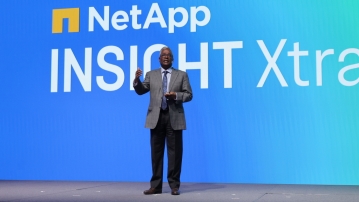
Intelligent data infrastructure is a platform that connects data to AI performance in real time.
NetApp held the 'NetApp INSIGHT Xtra' event on the 3rd at the Westin Seoul Parnas, sharing data strategies for success in the AI era. George Kurian, NetApp CEO, who delivered the keynote address, stated that "the success or failure of AI is determined not by the model but by the data infrastructure," and announced a technology roadmap centered on the 'NetApp Data Platform' based on a distributed architecture.
2026.02.03by 배종인 기자
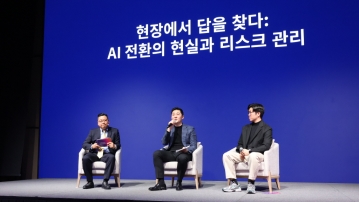
The key to AI success lies in prioritizing data strategy over infrastructure.
At the 'NetApp INSIGHT Xtra' event held on the 3rd at the Westin Seoul Parnas, a panel discussion was conducted under the theme of 'Finding Answers on Site: The Reality and Risk Management of AI Transformation,' addressing the challenges and solutions in Korea's AI industry landscape. In the panel discussion, Kim Eun-seop, Executive Vice President of NetApp, served as moderator, with Seo Young-min, Executive Director of DS&G, and Kim Ja-hyun, Director of Upstage AI, participating as panelists to examine the misconceptions and limitations companies face in the process of adopting AI.
2026.02.03by 배종인 기자
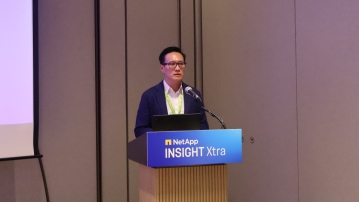
Data infrastructure is the engine driving AI innovation
Global data infrastructure company NetApp held a press briefing on the 3rd at Parnas Western Seoul and unveiled its data platform strategy to prepare for the AI era, marking its 25th anniversary of entry into the Korean market. Henry Kho, NetApp's Vice President of GCASK (China, ASEAN, Korea), and Kang Yeon-sik, Executive Vice President, who led today's presentation, emphasized the importance of an intelligent data platform, stating that "the success or failure of AI depends not on algorithms, but on how data is managed and utilized."
2026.02.03by 명세환 기자
.jpg)
NetApp Officially Supports Super Bowl LX Data Operations and Builds Levi's Stadium Infrastructure
Intelligent data infrastructure company NetApp is officially supporting data operations for NFL Super Bowl LX. Through collaboration with the San Francisco 49ers and the NFL, NetApp has built an enterprise-grade data platform at Levi's Stadium. The core focus is establishing an environment to reliably process and manage large-scale data generated during games, including player motion tracking data, high-resolution video, and real-time fan reactions. As the NFL expands into global markets, data-driven operations are emerging as a critical factor influencing game quality and fan experience. NetApp's infrastructure will be utilized during Super Bowl LX to enhance operational efficiency in game management and provide consistent digital services regardless of location and environment.
2026.02.10by 명세환 기자
NetApp and NVIDIA Jointly Design AI Data Platform… Targeting Distributed Data Management
NetApp has unveiled 'NetApp AI Data Engine (AIDE)', an AI data platform co-designed with NVIDIA. The platform focuses on analyzing distributed data within enterprises without moving it, expanding metadata, and supporting the entire AI data pipeline including search, curation, transformation, and delivery. NetApp plans to begin priority supply to key customers and partners, followed by full commercialization around August of this year. The company intends to further expand support for hybrid cloud, multimodal data, and agentic AI in the future.
2026.03.24by 배종인 기자











