



NetScout Announces Strategy to Enhance Infrastructure Visibility Based on Smart Data
 Published2026.05.27 10:17
Expanding the scope of observability utilization for performance management, security, and AIOps connectivity
NetScout announced a strategy to enhance infrastructure visibility using Smart Data in Seoul on the 27th. The company explained that it will support collaboration among DevOps, NetOps, SecOps, and ITOps organizations by precisely analyzing network and application data in an increasingly complex digital infrastructure environment.
Smart data is the transformation of raw network traffic into multidimensional data that can be utilized for operational and security analysis. It is characterized by structured information designed to identify service performance, user experience, application behavior, and signs of network anomalies simultaneously.
Existing observability has been centered around log, metric, and trace data. However, while logs are strong for analyzing individual events, it is difficult to grasp the overall flow, and although metrics show numerical changes, they have limitations in root cause analysis. Trace also describes the call relationships between systems, but it does not show the entire actual state of the network.
NetScout utilizes Adaptive Service Intelligence (ASI) technology to complement this limitation. ASI analyzes packet data to extract both quantitative metrics and contextual information, and processes them into a smart data format that is easy for AI and automation systems to utilize.
This data is applied to the integrated monitoring solution 'nGeniusONE' and the network detection and response solution 'Omnis Cyber Intelligence (OCI)'. nGeniusONE supports the identification of network blind spots and shadow IT, while OCI is utilized in conjunction with SIEM tools to identify abnormal network behavior and potential threats.
NetScout also emphasized that smart data can be integrated with existing operational platforms such as Splunk, Kafka, and ServiceNow. Through this, companies can expand the scope of data utilization while maintaining their existing analytics environments, and improve the accuracy of AIOps-based operational automation by keeping service dependency maps and CMDBs up to date.

Comments
Related news
NetScout Unveils AI & Machine Learning-Based DDoS Defense Strategy
Netscout unveiled its next-generation DDoS defense strategy based on AI and machine learning at 'Security Megavision 2026' held in Seoul. As attack patterns have become increasingly complex due to the combination of cloud and botnet infrastructure, Netscout pointed out the limitations of conventional threshold-based defense and emphasized the necessity of intelligent, automated response approaches. Netscout explained that real-time traffic analysis and machine learning-based detection and blocking automation, coupled with AISecOps implementation, can enhance operational efficiency. The strategy involves building a more sophisticated response system by combining multi-layered defense architecture spanning data centers, large-scale networks, and cloud environments with global threat intelligence.
2026.02.05by 명세환 기자

NetScout Strengthens 'AI-Ready Data' Platform for Telecom Companies
Netscout (NASDAQ: NTCT) announced that it has enhanced "Omnis AI Insights," which converts network data into AI-enabled smart data for communication service providers (CSPs). The platform leverages packet-based metadata to improve operational visibility and supports automation and security detection in AIOps environments. According to a McKinsey survey, 64% of telecom executives are expanding AI adoption, while 45% cited data issues as a major obstacle. Netscout plans to unveil the related solution at Mobile World Congress in March.
2026.02.23by 명세환 기자
Nvidia Makes Bold Move to Become AI Datacenter 'Operating System'
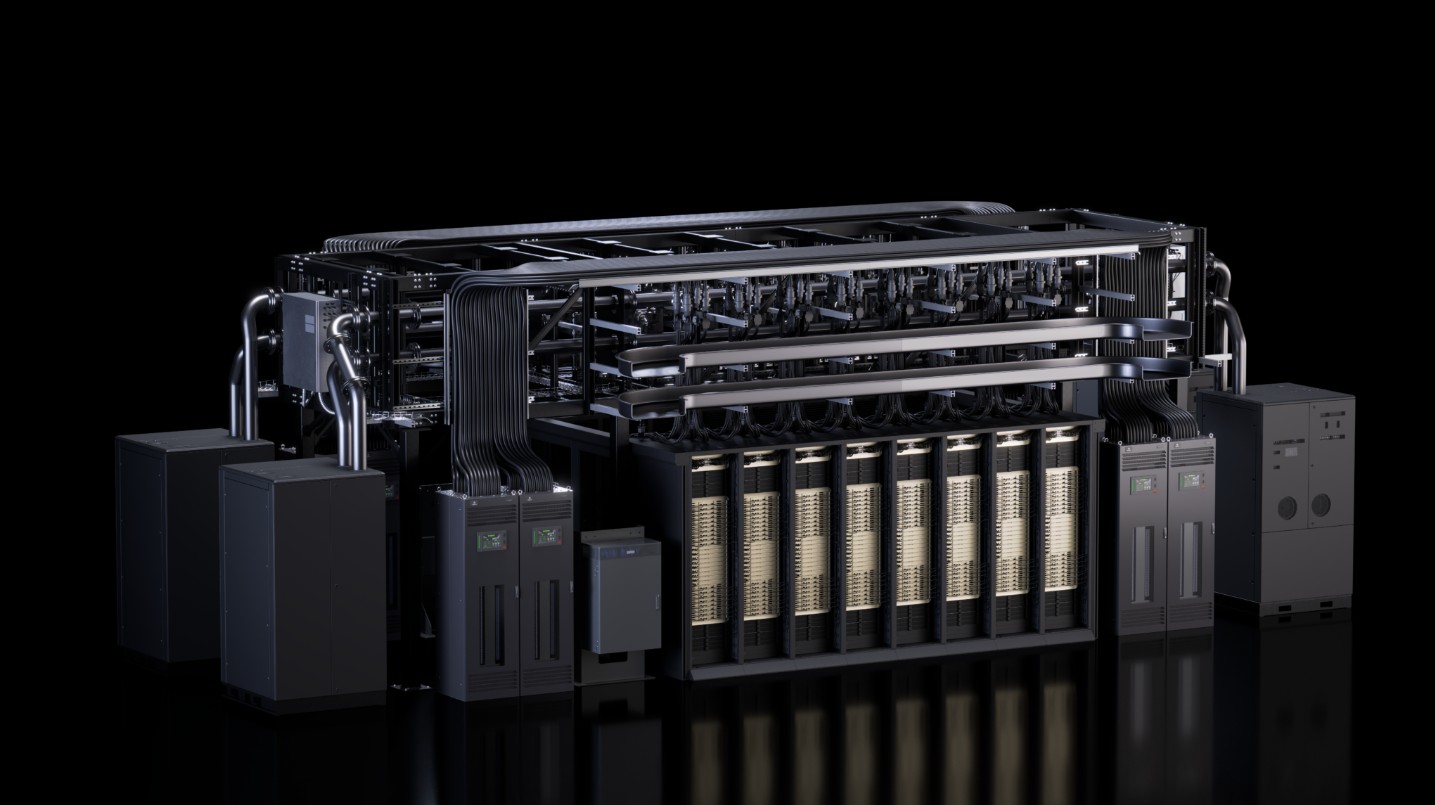
At the OCP Global Summit 2026, Nvidia disclosed not only the rack design of its next-generation AI platform 'Vera Rubin,' but also extensively revealed datacenter buildings, power grids, operational software, and network specifications. This is interpreted not merely as a technology disclosure but as a strategy to establish its design as the standard for AI infrastructure. Particularly, the 800V direct current power grid, open datacenter standard, DSX open-source software, and collaboration with Google, Meta, and Cisco are expanding the competitive landscape of the AI industry from GPUs to networks, power, cooling, and operations. Through 'openness,' Nvidia has embarked on securing leadership across the entire AI datacenter ecosystem.
2026.10.16by 배종인 기자
Theori Joins Anthropic's Cyber Verification Program
AI-based offensive security company Theori has joined Anthropic's Cyber Verification Program (CVP). This follows OpenAI's Daybreak, securing access to advanced cybersecurity AI capabilities from two major AI companies. Through the CVP, Theori will be able to enhance its AI-based autonomous penetration testing platform 'Xint's' vulnerability detection and attack path verification engine.
2026.10.16by 배종인 기자

SKT Begins iPhone Duo Pre-order…Offering Up to 2.21 Million Won in Benefits
SK Telecom will commence pre-orders for Apple's first foldable smartphone, iPhone Duo, starting from the 16th. Customers can receive discount benefits worth up to 2.21 million won by trading in used phones and utilizing partner cards, and all activation customers will receive complimentary Google AI Plus 2-month subscription and Tving 6-month subscription. Lucky roulette and prize events will also be held concurrently, with the device scheduled to launch on October 23rd.
2026.10.16by 명세환 기자











