


Edge AI is essential for design based on lightweighting, power optimization, and sensor intelligence technologies.
 Published2026.08.03 16:23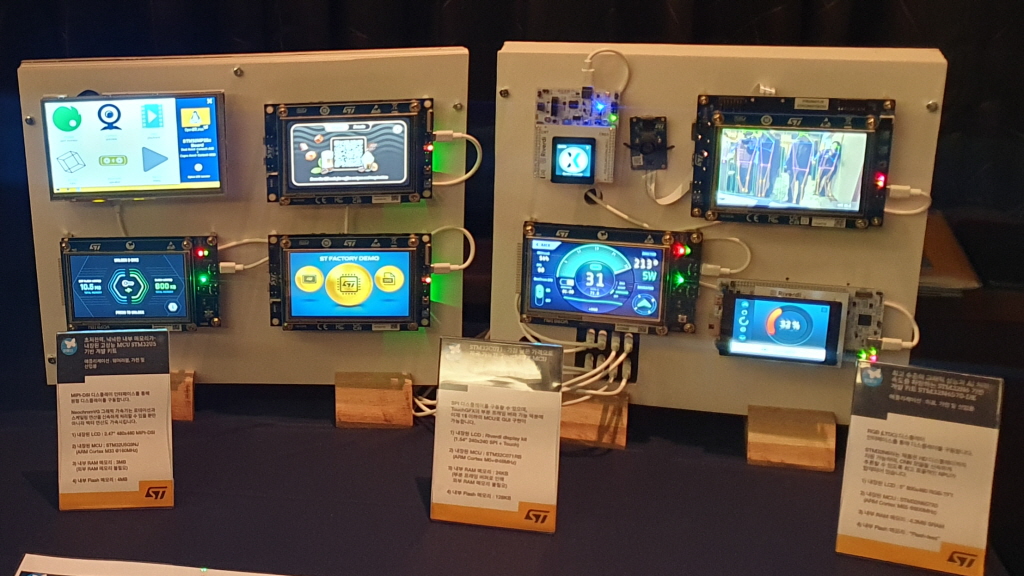
Developers Move Away from Cloud-Centric Thinking and Prioritize Power, Latency, and Memory
The center of gravity of AI technology is shifting from the cloud to the edge. This is not merely a technical change, but a trend that fundamentally alters product design methods and user experience across the entire industry.
According to the 'Edge AI Landscape' recently presented by STMicroelectronics, the technological options developers must consider are changing significantly as ultra-low-power AI based on MCUs and intelligent sensors enters the practical application stage.
Edge AI is no longer a future technology.
A structure that performs inference immediately at the point of data generation is becoming the standard, and balancing power, performance, and cost has emerged as a key challenge.
In the past, high-performance systems based on GPUs or MPUs were essential to implement AI functions, but now an era has dawned where even human detection, acoustic analysis, and simple vision models can be processed using only MCUs.
AI acceleration MCUs such as ST's STM32N6 provide 600 GOPS-class performance and can process even lightweight computer vision models.
Another important change is the role of the sensor.
While conventional sensors were limited to the role of collecting data, they are now evolving into 'intelligent sensors' equipped with MLC (Machine Learning Core) or ISPU (Intelligent Sensor Processing Unit) to perform AI inference on their own.
These sensors perform continuous event detection with ultra-low power of less than 1mW, significantly reducing the load on the MCU and dramatically extending battery life.
We have entered an era where the selection of sensors determines product competitiveness in battery-based products such as wearables, smart homes, and industrial IoT.
These technological changes present developers with three practical strategies.
The first strategy is to improve the functionality of existing products using AI. Since quality and accuracy can be enhanced solely through software without changing the hardware, the ROI is rapid.
Second is a cost reduction strategy. By replacing functions that previously required an MPU with MCU-based AI, BOMs and power consumption can be reduced. This provides a particularly strong competitive edge in mass-produced products.
Third, it is a strategy to create entirely new applications. By implementing features at the edge that were previously only possible via the cloud—such as posture and gesture recognition, biometric authentication, and object segmentation—new user experiences can be provided.
So, what should developers prepare? In this regard, ST offers the following advice.
First, we must move away from a 'cloud-centric mindset.' When designing models, edge optimization must be considered from the outset, and power, latency, and memory constraints should be prioritized.
Second, the roles of the MCU, NPU, and sensors must be clearly distinguished. Architecture design becomes much clearer when understanding the structure where the MCU is lightweight and control-centric, the NPU is for medium-difficulty vision and multimodal functions, and the sensor is for ultra-low-power event detection.
Third, sensor selection must be treated as a core element of product design. Support for MLC and ISPU is now an essential specification.
Fourth, you must actively participate in the TinyML ecosystem. TensorFlow Lite Micro, Edge Impulse, ST Neural-ART, etc., significantly improve development speed and model quality.
Edge AI is not just a technology trend, but a shift in the paradigm of product development.
Developers who understand the distributed AI architecture extending from the cloud to the edge and to sensors will lead the future.
We are not at the beginning of that change; we have already entered the stage of full-scale practical application.
ST stated, “What developers need is not to ‘wait’ for new technology, but to ‘utilize’ technology that has already arrived,” adding that “Edge AI is no longer an experiment, but a realistic technology that can be applied to products right now.”

Comments
Related news
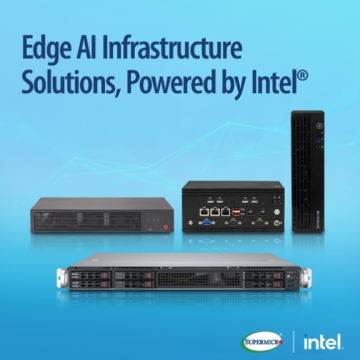
Supermicro Expands Intel-Based Edge AI Portfolio
Supermicro has expanded its lineup of edge AI systems featuring Intel's latest processors and GPUs. Based on Core Ultra Series 3 and Core Series 2 processors, along with Arc Pro B Series GPUs, these systems deliver up to 367 TOPS of AI inference performance. Available in various form factors ranging from fanless platforms to mini towers, they address industry demand for low-latency, power-efficient AI infrastructure in retail, manufacturing, logistics and other operational environments.
2026.06.25by 배종인 기자

Mobilint Expands Industrial Edge AI Market
AI semiconductor company Mobilint has signed a memorandum of understanding with Taiwan-based industrial computing company ADLINK and rugged computing company Getac. Through this agreement, Mobilint plans to integrate its AI NPU and full-stack SDK into both companies' platforms and jointly develop edge AI solutions applicable to various industrial fields including manufacturing, logistics, smart cities, and defense. The companies will conduct joint sales and marketing activities targeting global customers to promote expansion in the industrial AI market.
2026.06.29by 배종인 기자
.jpg)
ON Semi Acquires Synaptics for $7 Billion... Enters Physical AI Market
onsemi is acquiring Synaptics through a stock exchange valued at approximately $7 billion. Through this transaction, onsemi will secure Synaptics' AI processor, NPU, and wireless connectivity portfolio, enabling it to provide physical AI solutions integrating power, sensing, computing, and control technologies. The company will expand its business across all edge AI application domains including autonomous driving, robotics, and AR/VR, with the market size projected to reach $243 billion by 2030.
2026.06.29by 배종인 기자
.jpg)
DeepX Signs Partnership with Japan's Koshida Tech... Entering Edge AI Market
On-device AI semiconductor specialist DeepX has established a strategic partnership with Japanese technology distributor Koshida Tech. Based on the NPU product DX-M1, the two companies will jointly promote edge AI commercialization in Japan's manufacturing and infrastructure fields. The DX-M1, built on 5-nanometer process technology, delivers 25TOPS performance with ultra-low power consumption of 3~5W, enabling applications in security cameras, industrial computers, robots, drones, and smart factories.
2026.07.03by 배종인 기자
Kim Bong-jo, CEO of Carelab, “Connecting from Prototype to Mass Production with Arduino UNO Q”
Arduino UNO Q is a hybrid Edge AI board that combines a Qualcomm QRB2210 MPU and STM32 MCU, simultaneously supporting on-device AI and real-time control. It provides GPU and DSP acceleration, Linux and Docker-based development environments, and is optimized for industrial AI applications including smart factories, predictive maintenance, and security/robotics. We met with Kim Bong-jo, CEO of Care Lab, who is hosting a webinar on July 30th titled "A New Chapter for Arduino: Starting Edge AI Development with Arduino UNO Q," to hear detailed insights about Edge AI development using Arduino UNO Q.
2026.07.03by 배종인 기자











