



[Interview] Ja-yeon Hwang, Manager at WaveInsense, "The First Signal Determines the System"
 Published2026.08.18 14:01
“첫 신호가 시스템을 좌우”
전원·클럭·리셋의 기본기 강화 必
클럭 품질이 시스템 안정성 결정
[편집자주]웨이브인센스(WaveInsense)는 현장 난제를 해결하는 정밀 측정 솔루션 기업으로, 오는 9월17일 e4ds eewebinar를 통해 ‘Power & Boot Sequence 실전 측정: 첫 신호가 시스템의 운명을 결정한다’를 주제로 웨비나를 진행할 예정이다. 이번 웨비나에서 웨이브인센스는 전원·부팅 시퀀스 오류가 시스템 전체 문제로 이어지는 실제 사례를 소개할 방침이다. 또한 개발자들이 놓치기 쉬운 전원 레일 순서, 안정화 시간, Power Good, 클럭·리셋 타이밍의 중요성을 강조하며, 클럭 품질·노이즈 측정 시 프로빙 실수도 짚는다. 이에 본지는 이번 웨비나에서 발표를 맡은 황자연 웨이브인센스 과장과 만나 발표 내용과 임베디드 개발시 주의할 점에 대해 들어보는 자리를 마련했다.
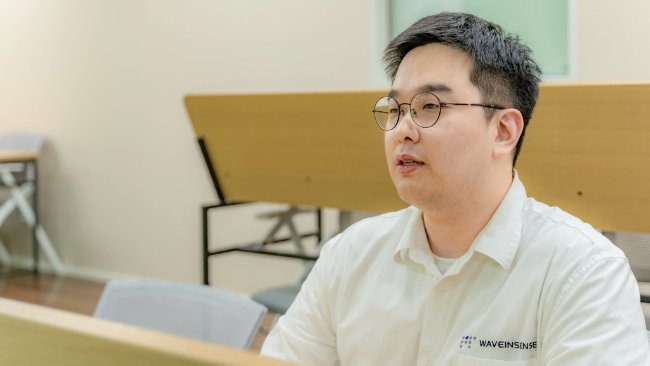
■ 웨이브인센스에 대한 소개를 부탁드린다
웨이브인센스는 ‘첨단 정밀 측정 솔루션을 통해 사람과 기술을 연결하고, 새로운 가치를 창출하는 기업’입니다.
단순한 장비 공급을 넘어서 엔지니어가 현장에서 마주한 기술적 난제를 해결할 수 있도록 ‘현장 최적화형 정밀 측정 솔루션’을 제안한다.
오실로스코프, RF, EMI 사전 적합성 분석 등 고도화된 계측 솔루션과 문제 해결형 기술 지원을 결합하여, 고객사의 제품 개발 성공과 지속 가능한 성장을 든든하게 뒷받침하고 있다.
■ 이번 웨비나의 제목인 ‘첫 신호가 시스템의 운명을 결정한다’가 매우 인상적이다. 실제 개발 현장에서 Power Sequence나 Boot Sequence의 작은 문제가 시스템 전체 오류로 이어졌던 사례가 있다면
Power Sequence와 Boot Sequence 문제는 개발 현장에서 생각보다 자주 발생하며, 특히 개발 단계에서는 발견되지 않다가 양산 단계에서 큰 비용과 인력 손실로 이어지는 경우가 많다.
CTO분들의 경험에 따르면, 복합기 분야에서는 개발 단계에서 SMPS와 메인 코어 보드의 충분한 검증을 진행해 안정적으로 동작했지만, 양산 단계에서 공급망 안정화와 원가 절감으로 다른 제조사의 SMPS를 적용하면서 부팅 불량이 발생했다.
의료기기 분야에서는 환자 모니터링 장비나 초음파 진단기처럼 여러 전원 레일과 프로세스가 순차적으로 초기화되는 시스템에서 유사한 사례가 발생했다.
두 분야의 사례 모두 개별 부품은 모두 사양을 만족했지만 시스템 관점에서는 Power Sequence와 Boot Sequence의 조합 문제가 발생한 것이다.
■ 임베디드 시스템 개발자들이 부팅 문제를 디버깅할 때 가장 많이 놓치는 측정 포인트는 무엇인지
우선 CPU가 정상적으로 부팅할 수 있는 조건이 갖춰졌는지 확인해야 한다. 가장 흔한 사례 중 하나는 전압 자체는 정상으로 보이지만, 각 전원 레일의 인가 순서와 안정화 시간이 적절하지 않아 Boot Sequence에서 타이밍 문제가 발생하는 경우다.
전원 인가부터 CPU Reset 해제 구간에서는 Power Rail의 상승 순서와 안정화 시간, Power Good 신호를 우선 확인해야 한다.
이와 함께 클럭이 안정화된 이후 CPU Reset이 해제되는지도 확인해야 하며 자세한 측정 방법은 웨비나에서 소개할 예정이다.
■ 웨비나에서 Clock 안정성과 Jitter, Phase Noise 측정 방법을 소개해 주실 예정으로 알고 있다. 최근 고속 인터페이스를 사용하는 시스템에서 클럭 품질 관리가 중요해진 배경과 개발자들이 현장에서 주의해야 할 부분은
이번 웨비나에서는 Jitter와 Phase Noise에 대해서는 간략히 소개하는 정도로 다루며, 모든 데이터에 기본이 되는 클럭의 품질에 대해 다룰 예정이다.
시스템의 동작 속도가 높아지면서 과거에는 문제가 되지 않았던 미세한 Jitter나 Noise도 타이밍 마진과 시스템 안정성에 직접적인 영향을 줄 수 있다.
측정 시에는 클럭 주파수뿐만 아니라 파형 품질과 안정화 시점, 프로빙에 따른 왜곡에도 주의해야 한다.
■ Power Rail Ripple, Ground Noise 같은 전원 품질 이슈는 눈에 띄지 않지만 시스템 신뢰성에 큰 영향을 준다. 엔지니어들이 오실로스코프를 사용할 때 자주 범하는 측정 실수와 이를 피하기 위한 팁을 알려 준다면
가장 흔한 실수는 긴 그라운드 리드를 사용해 실제보다 큰 노이즈와 링잉을 측정하는 것이다.
그라운드 스프링을 사용해 프로빙 루프를 최소화하고, 측정 대역폭과 프로브 설정을 적절하게 적용하는 것이 중요하다.
■ 이번 웨비나는 부팅 시퀀스부터 PI(Power Integrity), SI(Signal Integrity)의 기초까지 연결되는 내용으로 구성되어 있다. 웨비나를 통해 참가자들이 반드시 얻어갔으면 하는 핵심 메시지 한 가지를 꼽는다면
시스템 문제의 근원은 대부분 전원, 클럭, 리셋 같은 기본 요소에 있다.
이를 위한 기본기를 다지는 웨비나인 만큼 주니어 하드웨어 소프트웨어 엔지니어 분들은 문제의 근원을 밝히는 기본기를 익힌다 생각하시고, 시니어 엔지니어 분들은 back to basic으로 더 고급 디버깅을 발전시키는 재료가 되는 내용이라 봐주시면 좋겠다.

Comments
Related news
Kim Gwi-soo, Technical Director at Wave Incense, “‘Problem-Solving Measurement Technology Support’ Brings New Wind to the EMC & EMI Market”
WaveInsense is a company that focuses on practically solving EMI/EMC issues by combining measurement instrument distribution with on-site technical support. This direction stems from the hands-on experience and philosophy of co-founder and CTO Gwi-su Kim, who has directly addressed EMI/EMC problems in the past. He cautions against unnecessary external costs wasted through incorrect debugging methods and emphasizes the importance of precisely diagnosing core technical elements and presenting practical solutions that can be immediately applied in the field. With this in mind, we met with CTO Gwi-su Kim to learn about WaveInsense's measurement capabilities as well as the EMI/EMC problem-solving know-how he has accumulated in the field.
2026.04.17by 배종인 기자
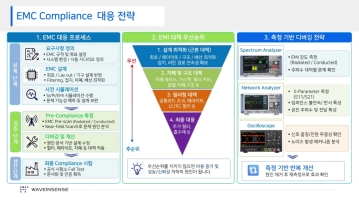
Noise problems should be viewed on the frequency axis, not the time axis.
Kim Kwi-soo, CTO of WaveInsense, presented at the e4ds webinar on the topic of "War Against Noise: Piercing Through SI/PI/EMI in the Frequency Domain," introducing an integrated analysis strategy for examining SI, PI, and EMI issues encountered by hardware engineers in the field from the frequency domain perspective. CTO Kim emphasized that noise issues in high-speed digital systems should not be addressed through temporary solutions by dividing them into SI, PI, and EMI categories, but rather should be viewed as a single connected physical phenomenon in the frequency domain to identify root causes.
2026.05.14by 배종인 기자
KBG expands high-purity silicon business for semiconductor packaging with low-volatility silicon technology
KBG, a functional silicon material company, has established a process to remove low-molecular siloxanes to 150ppm or below using thin film evaporator (TFE) technology. Along with building its own analysis system, the company is expanding its high-purity silicon business for semiconductor packaging and gradually broadening its supply scope as a binder for coating, molding, and thermal management materials.
2026.10.13by 배종인 기자

TI Unveils Three Solutions Including Ultra-High-Speed ADC for AI Data Centers
Texas Instruments (TI) has unveiled three semiconductor solutions to address power instability and downtime issues in AI data centers: an ultra-high-speed ADC, an isolated hot-swap controller, and a low-jitter oscillator. The ADC34DSO75 supports nanosecond-level real-time monitoring with 3GSPS sampling, the LMI800PS provides high-density integrated protection for 800V power, and the LMK6B ensures signal integrity with 9.6fs ultra-low-jitter performance. The initiative aims to reduce unplanned downtime and improve data center operational stability.
2026.10.13by 배종인 기자
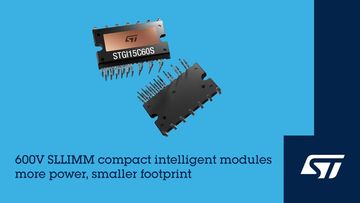
ST Microelectronics Launches Compact Intelligent Power Module for Air Conditioners and Heat Pumps
ST Microelectronics has launched the SLLIMM Compact series, a compact intelligent power module for air conditioners, heat pumps, and industrial drive applications. The module integrates a 600V 3-phase IGBT inverter bridge in a single package while reducing size by more than 30% compared to existing DBC-based products. The STGI15C60S implements a complete 3-phase inverter within an 18.8×32.8mm footprint and is optimized for low- to mid-power motor drive design.
2026.10.13by 배종인 기자











