



Improve factory productivity by introducing IoT-based smart factories
 Published2015.10.08 15:44
KT announced that it has signed an MOU with Kyodong Food Co., Ltd. to introduce an IoT-based smart factory.
A 'smart factory' refers to a factory that utilizes IoT technology to eliminate unnecessary tasks and contribute to increased productivity.
According to the 'Manufacturing Innovation 3.0 Project,' jointly conducted by the Ministry of Science, ICT and Future Planning and the Ministry of Trade, Industry and Energy, pilot projects are currently underway with the goal of establishing approximately 10,000 smart factories among small and medium-sized enterprises (SMEs) and mid-sized companies nationwide by 2020. However, according to a survey conducted by the Korea Federation of SMEs, 79.2% of companies responded that they have no intention of adopting smart factories due to reasons related to funding and business conditions.
Gyotong Food Co., Ltd., located in Okcheon, North Chungcheong Province, also faced difficulties in securing management personnel and managing inventory at its cold storage plant located on the outskirts of the city. KT supports the creation of an industry-based IoT ecosystem by providing IoT-specialized networks such as LTE-M and the 'IoT Makers' platform. In addition, target SMEs can achieve cost reduction and effective business operations by establishing IoT-based smart factories, without the need to purchase separate equipment, through the streamlining of equipment control, logistics management, and inventory management.
Factories on the outskirts facing labor shortages expect cost reduction and increased productivity.
KT will first develop a mobile system that allows real-time monitoring and control of factory facilities, such as cold storage warehouses, via smartphone even from outside the company, and build a system that predicts and responds to equipment failures in advance by attaching IoT sensors to the facilities.
In addition, the company plans to attach IoT sensors to logistics pallets to monitor inventory status in real time from production to shipment. This enables an accurate First-In, First-Out (FIFO) system, and Kyodong Food expects increased sales through benefits such as maintaining product freshness and reducing waste.
Kim Byung-guk, CEO of Kyodong Food Co., Ltd., stated, “Most factories are located in suburban areas due to the nature of their operations, so there is a severe labor shortage,” adding, “By implementing an IoT-based smart factory, we expect to achieve improved productivity and cost reduction by reducing cumbersome and repetitive tasks while deploying limited human resources to the right places.”
Yoo Yong-gyu, Senior Vice President of KT’s Future Convergence Business Promotion Office, stated, “This MOU marks the first instance of member companies from different industries joining forces since the launch of the 'olleh GiGA IoT Alliance.' We will strengthen collaboration with leading member companies to build smart factories applicable not only to large corporations but also to small and medium-sized enterprises, and take the lead in realizing the creative economy.”

Comments
Related news
.jpg)
Moxa Delivers Smart Factory Solutions with 360° Network Reliability
2015.04.09by 명세환 기자
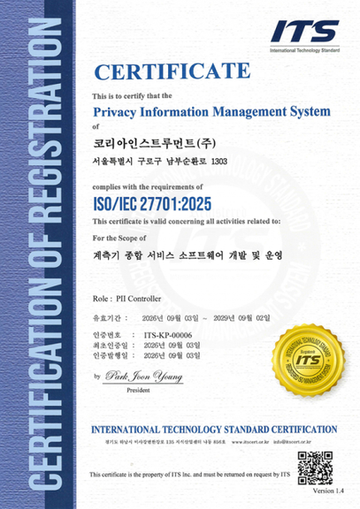
Korea Instrument, KOLAS Accredited Calibration Agency First to Simultaneously Acquire ISO/IEC 27,001·27,701
Korea Instrument has become the first among KOLAS accredited calibration agencies to simultaneously acquire ISO/IEC 27,001 and ISO/IEC 27,701 certifications. Through its proprietary platforms CWIZ Enterprise and CWIZ Partners, the company has embedded information security and personal data protection requirements across all business processes including customer information, equipment data, and calibration reports, with plans to continuously advance its management system through regular audits and security inspections.
2026.10.12by 배종인 기자
TeamViewer One, IT Incident Automation Workflow and Resolution Center Enhanced
TeamViewer has added IT incident automation capabilities and an advanced Resolution Center to its integrated digital workplace management platform 'TeamViewer ONE'. Recurrent service disruptions, configuration errors, and capacity shortages are automatically handled according to preset policies, and device status verification through script deployment can be managed in a unified interface, significantly reducing repetitive tasks for IT teams.
2026.10.12by 배종인 기자
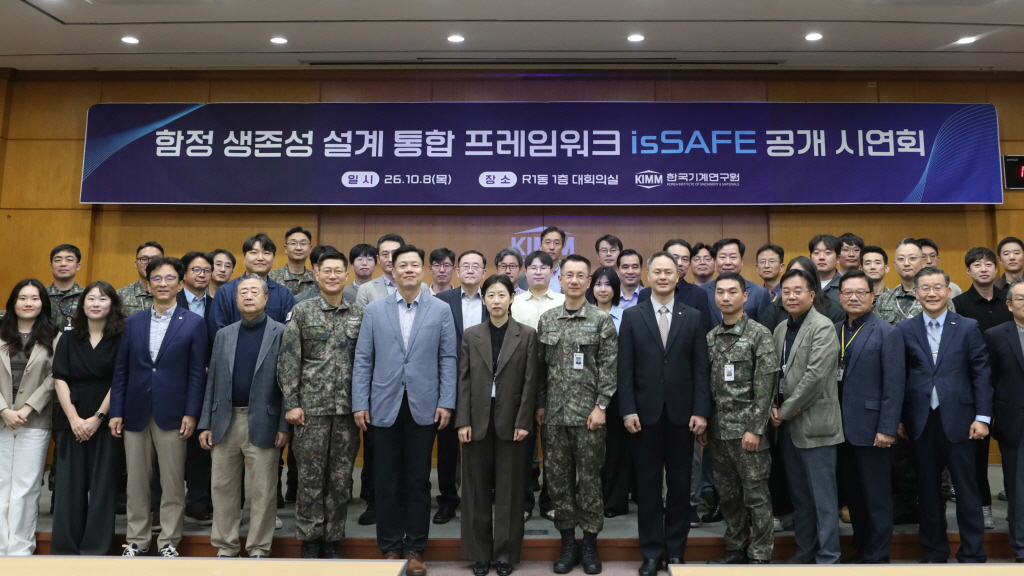
KAERI Develops Domestically-Produced SW 'isSAFE' for Integrated Warship Survivability Analysis
The Korea Institute of Machinery and Materials has developed domestically-produced software 'isSAFE' that comprehensively analyzes warship survivability. This design framework integrates the entire process—from warship modeling to hit scenario generation, vulnerability analysis, and results analysis—into a single platform, establishing an independent technology foundation in the defense technology sector that had previously relied on foreign software.
2026.10.08by 배종인 기자











