


Where Are We in Core Sensor Element Development? ② “Development of 79GHz Automotive Radar Sensor to Preempt the Autonomous Vehicle Market”
 Published2015.11.23 12:16
Focus on LiDAR and radar sensor technologies required for autonomous driving
Where does the development of core sensor components stand? This week, following last week, we introduce the development status focusing on automotive sensors. The government has decided to invest a total of 150.8 billion won (114.8 billion won in state funds) from this year to 2020 to develop and localize 10 key sensor components.
We assessed the competitiveness of the domestic sensor industry by examining the development status and goals of these sensors. Last week, we introduced the 9-axis smart motion sensor, metabolic rate measurement system, ultra-small hazardous gas sensor, and optical sensor among the technologies selected for the advanced sensor industry development program.
Following last week's development status of smart motion sensors, metabolic rate measurement sensors, hazardous gas sensors, and optical sensors, we introduce ▲vehicle shunt resistance current sensors ▲LiDAR sensors for autonomous vehicles ▲vehicle 79GHz radar sensor technologies.
Accelerating Development of Intelligent Current Sensors and Automotive Shunt Resistors
First, the development of the automotive shunt resistance current sensor module involved the participation of Minyoung Industry and the Automotive Parts Research Institute, and is led by Taesung Electronics. As is well known, automotive sensors are evolving from mechanical sensors (1st generation) and semiconductor sensors (2nd generation) to intelligent sensors (3rd generation). This is because the control methods of mechanical sensors have reached their limits as demands for increased vehicle convenience, the need for fuel efficiency control due to environmental issues, and safety have grown. Intelligent sensors enable system diagnosis, engine control, vehicle safety, and system monitoring.
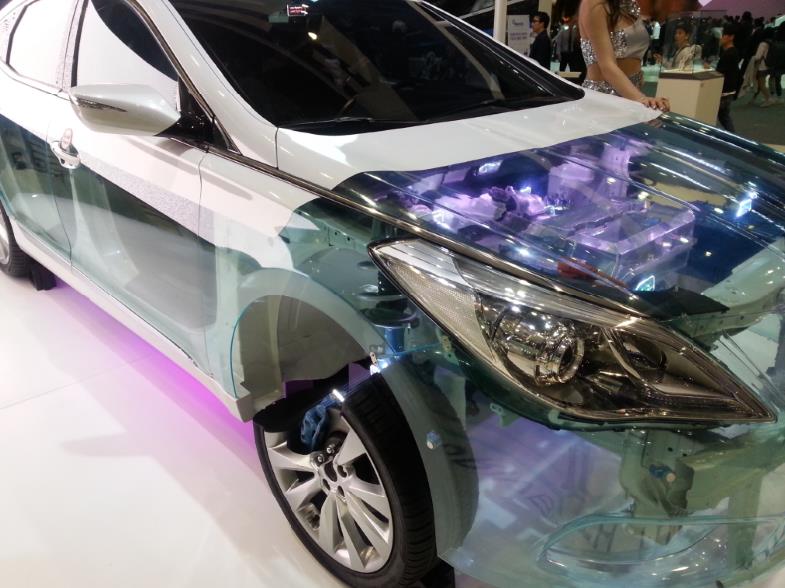
Currently, the main power supply and operating current of automobiles are 12V, 50–100A, and 300A for internal combustion engine vehicles, whereas hybrid vehicles require 48V/12V, 200–350A, and electric vehicles require up to 450V and 500A. To meet these power supply requirements, there is a shift from conventional Hall-type current sensors to multi-channel current sensors and intelligent current sensors (shunt resistors). This is the background behind the need to develop smart current sensors with multi-functional capabilities.
Shunt resistors used in automobiles are components that measure current values by inserting a resistor in the middle of a circuit and utilizing the voltage difference generated across the resistor. Current sensors in the battery monitoring sector account for more than 75% of the total current sensor market (approximately 540 billion won).
Shunt resistors are currently applied across a total of 13 automotive electronics component fields, and in the battery monitoring sector, they are used in intelligent control-type current sensors. Major application areas include steering systems (EPS, MDPS systems), 12V AMS, and ISG systems. Production of 12V AMS and ISG systems is handled by Hyundai Mobis in Korea, while overseas companies include Bosch and Hella, with Continental recently expanding its presence as well. The shunt resistors used by these companies are supplied by Isabelle Hütte. Hyundai Motor Company is developing current sensors for 24V systems.
Regarding the goals of this project, Park Jong-min, a manager at Taesung Electric, stated, “The goal is to develop vehicle application technology for automotive shunt resistor modules and high- and low-voltage current sensor modules.” He added, “We plan to first secure technology for the localization of shunt resistors and then expand commercialization technology.” This includes the development of 12V low-voltage current sensor modules, high-voltage current sensor modules for electric vehicles, and technologies for 12V and 24V commercial current sensor modules.
Localization of sensors in the mobile device sector through the development of commercial scanning LiDAR
Two projects are underway to develop core sensors for the commercialization of autonomous vehicles: the development of LiDAR sensors and radar sensor RFICs. First, for the development of an 8-channel 15f/s scanning LiDAR sensor for autonomous vehicles, Jeongsang LiDAR, the Electronics Technology Institute, the Gyeongbuk IT Convergence Industry Technology Institute, and Yeungnam University participated as research institutions.
Autonomous vehicles require high-speed scanning LIDAR sensors because they require real-time 3D image information of the road surface and the road ahead. LIDAR sensors, which detect 3D information based on spatial coordinates and distance, emit an 8-channel laser beam at a 6.4-degree angle to detect and image objects up to a distance of 200m.

Consequently, there are growing calls to localize sensors in the mobile device sector through the development of commercial scanning LiDAR products. Once this technology is commercialized, it is expected to impact unmanned systems and spatial information exploration technologies in various industrial fields, such as robotics, unmanned aerial vehicles, and national defense. However, the LiDAR sensor market is currently dominated by U.S. and German companies, while domestic research remains at the basic research stage for 1-channel 2D scanners. This is why it is necessary to develop high-speed scanning and miniaturized structures through the expansion of LiDAR sensors to multiple channels.
Accordingly, the project team set a goal to develop a laser sensor for searching 3D spatial image information. The plan is to develop a LiDAR sensor that applies eight laser beams, where the lower four beams search for shape image information of the driving lane, and the upper four beams detect and image objects such as vehicles, pedestrians, and motorcycles ahead. This 8-channel mirror-rotating high-speed scanning LiDAR technology has a maximum measurement distance of 200m and a driving range of 145 degrees horizontally and 6.4 degrees vertically, and is developed as an integrated transceiver optical system.
Jae-joon Yoon, Deputy General Manager at Canevicom, stated, “In the first year, we plan to secure reliability by developing a core module for a 2D scanning LiDAR with a measurement range of 100m,” adding, “In the second and third years, we will expand this to 4 to 8 channels and develop a model that reflects user needs to pursue mass production.”
Target the 79GHz radar rather than the commercially available 77GHz radar.
The development of radar sensors is being carried out through two projects. One is the development of RFIC and array antenna technology for automotive 79GHz radar sensors led by ETRI and KAIST, and the other is the development of RFIC and array antenna technology for automotive 79GHz radar sensors led by KETI.
The installation of vehicle radar is becoming mandatory as a measure to reduce high casualties. Vehicle safety ratings are applied based on whether radar is installed, and as the market size expands, new demand is expected to increase. In addition, 360-degree view radar sensors are attracting attention as a core sensor technology for autonomous driving. Radar has the advantages of being less affected by rain or fog, less affected by day and night conditions and sensor contamination, and capable of extending detection range.
The project targets 79GHz radar rather than the currently commercialized 77GHz radar. The plan is to develop a 79GHz radar multi-channel transmit/receive single-chip CMOS RFIC and a 79GHz band small array antenna. Additionally, the goal is to develop reliability enhancement technologies for automotive applications, diagnostic/compensation circuits, and RFIC+array antenna front-end modules, as well as to commercialize a distance, speed, and angle detection signal processing platform for module performance verification and technology incorporating a radome.
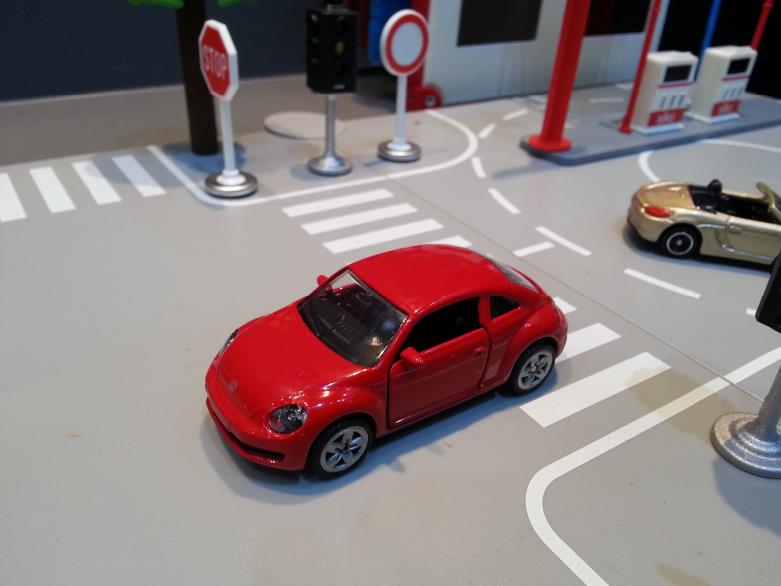
To realize this, the key is to develop a low-cost/miniaturization solution that integrates CMOS radar chips and array antennas. Kim Cheon-soo, a director at ETRI, stated, “CMOS technology is absolutely advantageous for achieving low costs for mass distribution,” adding, “It is possible to secure core technologies for CMOS radar through simultaneous research and development with advanced institutions.”
The automotive radar market is projected to grow at an annual rate of 23%, reaching a market size of 42 million units and $18 billion in 2020. Currently, ETRI possesses 77GHz radar chip and system technology, while Kwangwoon University has secured W-band 4-channel I/Q receiver IP. KAIST has developed ultra-low power 26GHz UWB radar chips and 24GHz FMCW radar chips, and the Gumi Electronics & Information Technology Institute possesses chip antenna and RFIC technologies. In particular, Mobis has specialized personnel (approximately 50 personnel) related to the design and evaluation of front and rear radars, and is applying in-house development and mass production of absorbing materials for rear radars.
Technology for automotive 79GHz radar sensor RFICs and array antennas, another key pillar of automotive radar development, is also being pursued. This project, led by the Korea Electronics Technology Institute (KETI) as the lead organization and involving Digital Edge, Chungnam National University, and Soongsil University, is also focused on the development of 79GHz radar. The project team considered CMOS for the product development process but ultimately decided on the BiCMOS process. This decision was based on the assessment that the BiCMOS process is more advantageous than the CMOS process in terms of cost and superior in terms of noise and stability. Currently, companies such as Infineon and Freescale Semiconductor have successfully achieved mass production using the 77GHz SiGe process.
"In the first year of the project, we will develop MPW; in the second year, we will develop transceivers with the participation of RFIC fabless companies and PCB & module manufacturers; and in the third year, we will develop radar modules by verifying automotive reliability," said Ahn Kwang-ho, a principal at KETI. "If this happens, in the fourth year, the final developed products will include a 76-81 GHz DBF radar module, antenna & radar chips applied to the radar module, and DSP signal processing technology."
Comments
Related news
Sensor annual growth rate approaches 10%, reality is that most chips are imported
Advanced sensors that support consumer safety and convenience functions at the edge device level are collectively referred to as devices that recognize the external environment and convert it into electrical signals that are easy for higher-level systems to process. Generally, they encompass sensors with dramatically improved external environment sensing through the integration of manufacturing technologies such as semiconductors and nano/MEMS, as well as intelligent sensors that organically incorporate signal processing functions including data processing, automatic calibration, self-diagnosis, and decision-making. Sensors are trending toward miniaturization, integration, and intelligence in accordance with the convenience of daily life and the intelligentization of IT, and are receiving attention as key enabling technologies for realizing smart societies as convergence points between industries and as intermediaries between humans and devices. The intelligentization of sensors is prominent in applications such as compasses and maps, GPS sensor maps, and virtual/augmented reality, while integration is manifested in single sensor modules, multi-sensor modules, and one-chip multi-sensor solutions. Examples of sensor miniaturization include gas sensing utilizing birds, gas sensors using thick-film processes, and MEMS-based gas sensors.
2015.08.10by 신윤오 기자
[Reporter's Notebook] Ambitious Sensor Development Industry: Do You See the Future of the Sensor Industry?
A major initiative has begun to elevate the domestic sensor industry to one of the four leading nations by 2025. The Ministry of Industry, Trade and Energy has launched the "Advanced Sensor 2025 Forum," bringing together approximately 60 participants from industry, academia, research institutes, and government to nurture the sensor industry as a future flagship sector.
2015.11.09by 신윤오 기자
How far has the development of core sensor elements come? ① “We will compete with overseas companies by developing the smallest 9-axis sensor”
The government has adopted a policy to intensively foster image sensors, magnetic sensors, inertial sensors, pressure sensors, radar sensors, environmental sensors, optical sensors, infrared sensors, acoustic sensors, and bio-medical sensors by providing a total of 150.8 billion won (national budget of 114.8 billion won) from this year through 2020.
2015.11.16by 신윤오 기자
[e4ds Tech Day 2026 ⑨] Sim Sang-gyu, Autocrypt CTO: "In the Physical AI Era, Automotive Security Must Extend Beyond the Vehicle"
At e4ds Tech Day 2026, Sim Sang-gyu, CTO of Autocrypt, explained automotive cybersecurity strategies in the era of Physical AI and SDV (Software-Defined Vehicle). Automobiles are evolving as part of an ecosystem connected to AI, cloud, chargers, IoT, and robots, and he emphasized that the scope of security must expand beyond the vehicle interior to the entire connected environment. In particular, AI model tampering, adversarial attacks, OTA updates, and EV charger hacking were identified as major threats. He explained that response measures require zero trust, AI model integrity protection, intrusion detection, Security by Design and Default, and full lifecycle security management, and that proactive security system establishment beyond regulatory compliance is critical for securing future mobility competitiveness.
2026.10.12by 배종인 기자

Practical HIL Construction Strategy for Automotive and Off-Highway Controller Validation
As vehicle E/E architecture transitions to zonal structures and shifts to software-defined vehicles (SDV), the number of controllers (ECUs) requiring validation and software complexity are surging dramatically. Meanwhile, real vehicle testing cannot provide repeated verification under identical conditions and entails lead time and safety concerns. This white paper explains the principles of HIL (Hardware-in-the-Loop) validation and the structure of the NI platform composed of PXI, SLSC, and VeriStand, and through two actual implementation cases—Camera Record & Replay HIL for In-Cabin Monitoring Controller (ICMU) and Forklift Controller (VCU) HILS—describes how controller-level regression testing becomes possible. Additionally, it explicitly states application boundaries and limitations, such as lack of A2B support.
2026.10.12by 편집부











