



[Cafe E-People] Visiting the MCU Community ② Oroka, Reborn as a System Engineer through Robots
 Published2015.12.07 17:14
From general member to assistant manager
I feel sorry for the offline meeting being discontinued, so I personally made a suggestion.
• What prompted you to start running a cafe in the first place?
I didn't open it myself. At first, I searched around to learn about firmware and found a famous cafe with a large number of members. However, when I went to such a place, they set a level and authority and restricted the reading of articles. 'It's a community, so why do they set permissions and make access difficult?' I was thinking that, and then I happened to find Oroka through a Naver search. At the time, there were about 3,000 members, but there were no levels, so I joined this cafe.
Later, I started going to offline meetings frequently. However, the person who hosted the offline meetings started a company and stopped the offline meetings. I felt sorry that it was ending so insignificantly, so I sent a text message to the person in charge of the offline meetings and asked, “I want to continue this meeting. Can I run the meeting instead?”
I started taking charge of permission and leading offline meetings. At first, I was a regular member, but while leading meetings, I was suggested to run a cafe as well, and since then I have been working as an assistant manager.
• What is the gender ratio of the cafe?
The 20s and 30s are the most numerous, followed by the 40s, 50s, and teens. About 13% are women. Women do not attend offline meetings, but about 10 women attended the seminar. They seemed to be engineering students.
• What are the main questions regarding the MCU?
There are many questions about how to use MCU. What products are there? What functions does this product have? Is it right to use this function? What did I do wrong? These are the questions. Most of them are from people who use Raspberry and Arduino. If you can't implement something by looking at the data sheet or if the function you want doesn't work, ask a question.
• Can't we just look at the data sheet?
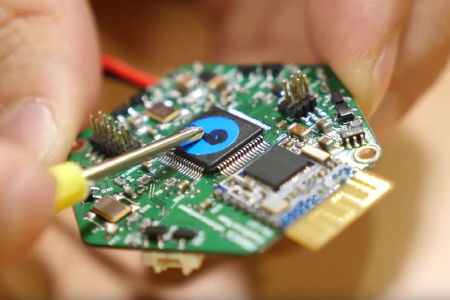
Datasheets are just a standard, and in many cases, you may need to modify them a bit or use tricks to apply them. And datasheets are only about the MCU, as the name suggests.
If you attach another circuit and a sensor there, the sensor and MCU need to perform a specific function, but if a problem occurs, it is not easy to solve it with just the data sheet.
EBS appearance broadcast screen (Source: EBS)
Posting content from offline meetings
From beginners to experts, attention at a glance
• How are offline meetings usually conducted?
First, think about which project to start. The reason for doing the project offline is that you can study hardware, MCU, firmware, software, etc. comprehensively through the project.
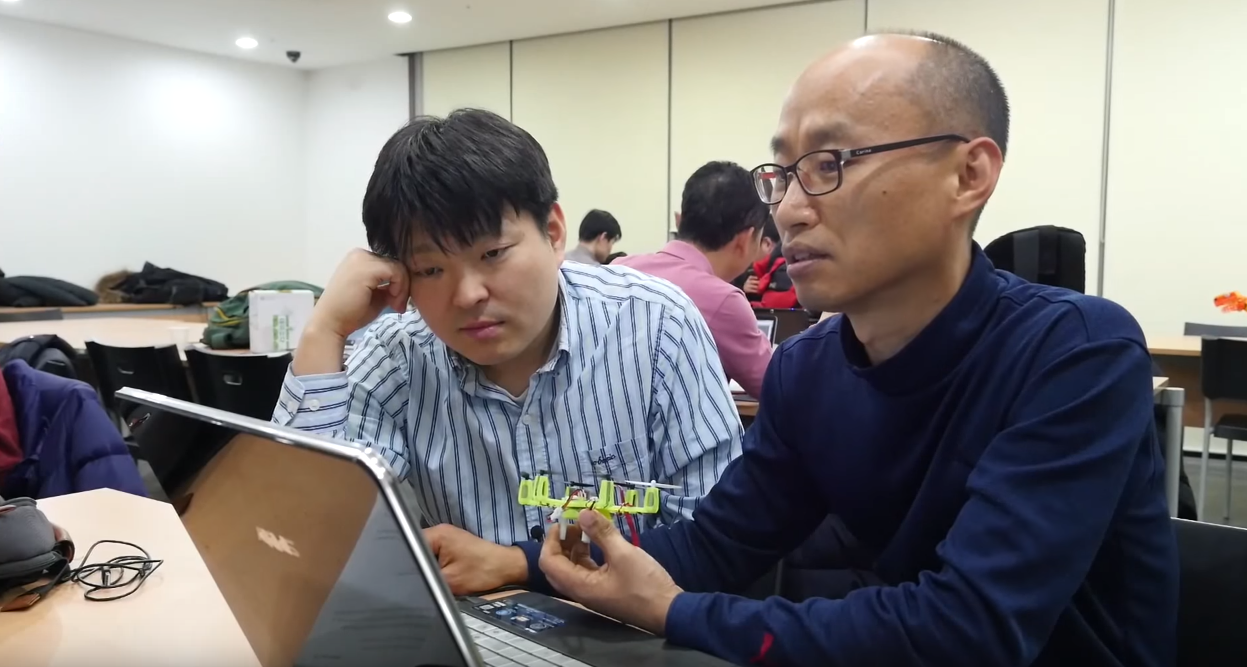
Before I started running the study, it was too difficult. There were some parts that were forced, as people who had been doing it for 10-20 years could do it. So when I started leading the meeting, I looked for something that didn't cost much, had all the sensors, and that people would be interested in. There's a multicopter on Kickstarter called the 'Flexbot' that can be made from parts 3D printed.
Since I was a mechanical designer, not a hardware engineer, I first bought an acrylic stick, attached four propellers to it, and experimented with floating it. I uploaded photos and videos of the entire process to the cafe. The response was explosive. At that time, the number of Oroka members increased from 10,000 to 5,000.
• Is that when many members started to gather?
In fact, the key to Oroka is that the basics are solid. With the basics solid foundation of ROS and electronic circuit basics courses, other members' courses, and content that many engineers are interested in, the moment offline meeting content was covered, Oroka's membership began to increase exponentially. Rather than the difficult ones in the past, I prepared a project that I could do first and posted the preparation process in real time. The reactions at that time were comments such as 'It's this easy?', 'This is amazing', and 'I want to try it too'.
Since the intermediate process is shared in real time and even small tips are provided, about 25 to 30 people gathered for the offline meeting. Most people have difficulty actually buying and assembling it, so there are many cases where they cannot fly it. But since we can do it with acrylic and we are not experts in this field, I think a lot of people were interested.
Consider the questioner's development environment before answering
I need to do some research to come up with an accurate answer.
EBS appearance broadcast screen (Source: EBS)
• The company also holds technical seminars.
Technical seminars are limited in space and time, so they cannot solve problems immediately. The people who host seminars may be experienced, but most of them are engineers for that specific MCU. They do not know about all products. For example, they cannot answer questions about making a watering machine for a flower pot, an electronic photo frame, or an arcade game with a Raspberry Pi. In the end, only those who have made it can solve it.
I can only give advice on the fundamental functions of MCU, but I can't answer what I want to make. Even if I'm an expert, I have to know the various development environments, such as the circuit diagram of the person asking the question, to answer. When doing a project based on MCU, you also need a lot of knowledge about technologies other than MCU.
Another important point is that you have to give accurate information. If you don't know for sure, don't answer. If you get it wrong, you'll get cursed at. Incorrect information causes trouble for the questioner. Because after receiving the answer, the next task is not just a few lines of code, but there may be a problem at the end. In that case, you have to start over from the beginning. The cost of the parts is also not small.
• Is there any connection between what you are doing now and the community?
It has nothing to do with anything. I work on mechanical design. For example, in the case of a cell phone, I design how to place the PCB inside the external mechanism of the cell phone and make an accurate mold to fit the actual dimensions. It has nothing to do with firmware or MCU.
• So, what prompted you to study firmware?
The downside of being a mechanical designer is that you can't hold a finished product in your hands. You design a phone, put it together, make the exterior, then make the PCB, and the firmware or software makes the product work. I'm just an intermediate step.
Then I thought, 'I'll also participate in the production from start to finish and make something that can be operated after entering the program through firmware software.' That's why I started studying firmware. Originally, I can program. I know websites and C language, but I didn't know much about firmware, so I wandered around and ended up coming to Oroka.
• Do other engineers want to be involved in the whole process?
I think so. Conversely, people who do firmware want to make hardware.
The job of a system engineer is to put philosophy into a single product.
Engineers' ultimate dream
 • Ultimately, do engineers need to know the integration process?
Even when I hold seminars, I tell the members to ultimately aim to become system engineers. Lockheed Martin and Korea Aerospace Industries (KAI) in the US need system engineers. The reason is that in order to manage spacecraft and automated machines, they need to be able to optimize everything from hardware to software.
In the case of the United States, Steve Jobs played that role well. He was involved in everything from design to testing to create an optimized product. On the other hand, Korean companies focused on implementing separate functions, and were unable to produce an optimized product.
EBS appearance broadcast screen (Source: EBS)
If you look at the news recently, there was an uproar because a former Samsung and Hynix process system employee set up a company in Taiwan. They were already chasing us with a huge amount of capital, so if someone who knew everything went over, it would be the same as handing over all the technology to China. It's very important to have someone who knows the overall system so that they can figure out where is important and what is needed.
Even if they are in their 40s or 50s, young people come to learn new technologies. However, if I am good at firmware and also do hardware, I will have the competitiveness to make anything by myself. That is why the 'mechatronics' department was created in universities. It is a kind of system engineer training course where you learn mechanics, hardware, and firmware, but it seems that it has not yet become established in Korea.
Information sharing by real experts is urgently needed
This field can be fostered more actively
• What is the biggest concern when running a community?
The biggest problem with Oroka is that real experts do not participate. There are only a few real experts among the 30,000 members. There are only a few experts among the staff. Our country's intellectuals are stingy when it comes to sharing information.
For example, if you have a doctorate, you think that all authority and abilities are justly paid for. You think that they are purely your own money and effort. However, foreigners are not like that. They think that they are something that they received from society. They think that they have their own efforts, but they also think that they became doctors because someone with passion and a sense of mission helped them. However, if you look at engineers in our country who have been working for more than 20 years, they all think that it is their know-how and do not share their skills. This is a characteristic of Korean engineers. He thinks that if he makes this public, his rice bowl will disappear.
One of the reasons Oroka's group became active is because they opened up all of their sources.
When we first built our multicopter, we asked, "Who knows about the circuit?" Someone immediately commented and thanked us, but when we checked the next day to see that the comment had been deleted. I hope many people don't know.
The reason why our country’s creative economy is not working is not because the quality of researchers’ technology is low, but because it is not shared. In the case of the United States, even if the government does not necessarily promote the creative economy, people share with each other and create synergy, which leads to a butterfly effect that revives the economy. In our country, they just present at an academic conference and that’s it. In fact, our country has a strict hierarchy, and because there are professors under one professor, they tolerate unscrupulous behaviors such as changing book covers, as reported in the news. As many as 300 people were indicted. In this situation, it is natural that we do not have Microsoft or Apple.
Seminar registration closes in 5 minutes
It was rewarding to see everyone from children to grandfathers enjoying themselves.
• When do you feel proud while participating in the community?
It's time to hold a seminar. We held a total of 4 seminars, and the first seminar was sold out in 20 minutes, and the second seminar was sold out in 5 minutes, with 300 participants.
It was gratifying to see everyone from elementary school students to grandfathers come and show off their projects and share them with each other, as if they really enjoy this field.
EBS appearance broadcast screen (Source: EBS)
• What needs to be improved in the community?
In foreign countries, after making something, they apply it and post it on a bulletin board. In our country, there is no such thing. Once you make it, you are done. Of course, making a result is a great thing in itself, but so far, more than 100 multicopters have been released, and I don't know what they did with them. I hope that more people will share the sources that they created after getting ideas and thinking, "This is possible, it's cool."
Second, I want to add a wiki format to the cafe bulletin board. Since many people post on the cafe, the data is fragmentary and unsystematic. In that sense, the information on the blog is much better. It is detailed and organized by series.
• Are there any foreign communities that you are modeling after?
It is a modified version of the source code of a foreign community called 'Beat Crazy'. This place travels around the world, doing demonstrations and having fun. It also holds competitions and sells for research purposes in conjunction with studios. It also operates a wiki. I think 'Oroka's future should go that way too.'
• Lastly, is there anything you would like to say to prospective members?
Open time, mind, and skills are important when running a café. Of all of these, making time is the hardest, but if you want to break away from being a lurker in the community and become a member of some group, I hope you keep three things open.
In the end, I gather for any gathering that I want. Even without events, the number of members continues to increase to 30~40. It is not difficult for the staff to continue to upload content, but if the number of active members increases and the community becomes more developed, I hope that companies will take interest and establish an 'open source foundation' through sponsorship and support, and do more wonderful things.
Comments
Related news
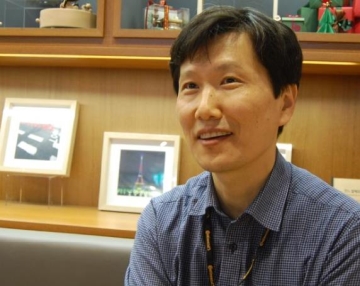
[Cafe e-People] Visiting the MCU Community ① Embedded Workshop, MCU Helper Who Reads Beginners' Minds
E4ds News meets with community operators who share information related to MCUs (Micro Controller Units). The first community in 'Finding MCU Communities' is 'Embedded Workshop'.
2015.11.30by 명세환 기자

Intel Unveils Next-Generation 'Core Ultra Series 3' and vPro Platform for Enterprise PCs
Intel has officially unveiled the "Intel Core Ultra Series 3" for next-generation enterprise PCs and the latest vPro platform, addressing a wide range of demands from enterprise notebooks to high-performance workstations.
2026.03.26by 배종인 기자
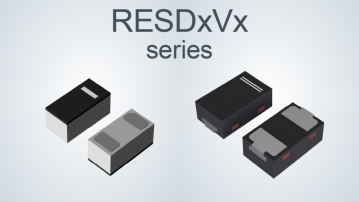
ROHM Launches ESD Protection Diode Compatible with High-Speed Interfaces of 10Gbps or Higher
Semiconductor specialist ROHM has developed the 'RESDxVx series' of ESD (electrostatic discharge) protection diodes capable of responding to next-generation high-speed data communication environments exceeding 10Gbps, simultaneously enhancing both signal quality maintenance required in high-speed interfaces and IC protection performance.
2026.03.26by 배종인 기자
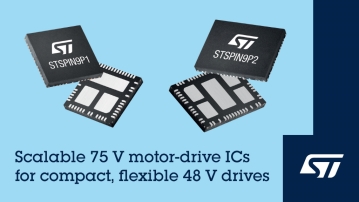
ST Launches 75V Drive IC Targeting 48V Industrial Motor Driving
ST Microelectronics has unveiled the 'STSPIN9P' series of 75V motor drive ICs tailored for 48V-class industrial drive system design. The new product family is characterized by half-bridge and full-bridge configurations that enable design scalability according to motor type and output conditions. Power supply circuits, protection functions, and current sensing circuits are integrated on-chip to simplify system configuration, and the devices are designed to support applications up to 500W maximum. The company plans to provide reference designs and demo boards to support development and evaluation in industrial automation, robotics, pumps, fans, lighting, and textile machinery.
2026.03.26by 배종인 기자
Nordic supports security updates for the entire lifecycle of IoT devices at a single fixed cost
Nordic Semiconductor, a global leader in low-power wireless connectivity solutions, has unveiled a single fixed-cost licensing model that delivers FOTA (Firmware Over-the-Air) and device management capabilities throughout the device lifecycle via nRF Cloud, and introduced a new firmware update solution to prepare for the enforcement of the European Union's Cyber Resilience Act (CRA).
2026.03.26by 배종인 기자











