



Microchip, World's First to Obtain LoRa Alliance Certification
 Published2015.12.28 11:51
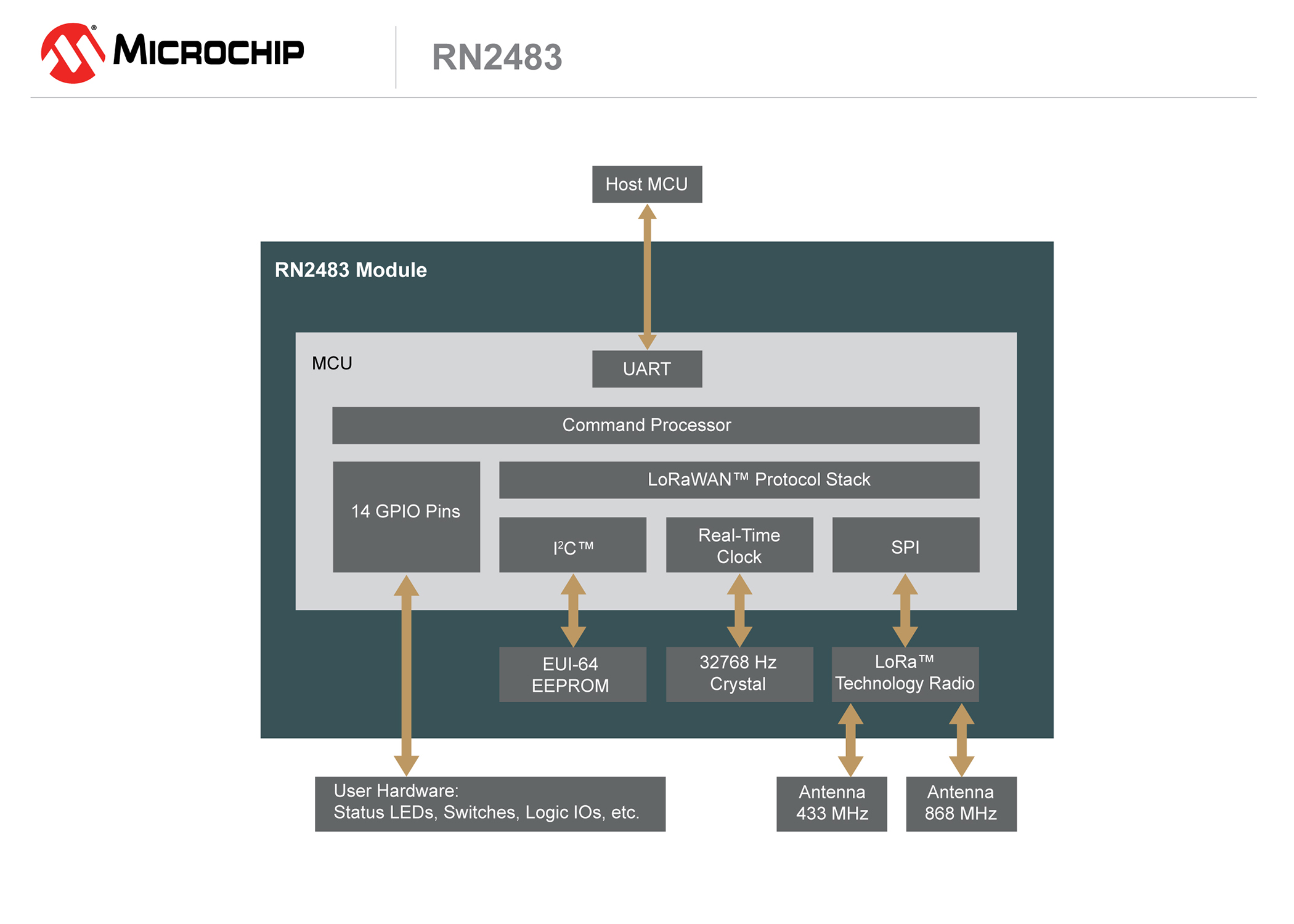
The stack-on-board RN2483, known as the Golden-Unit reference module
Microchip Technology (Korea Representative: Han Byung-don) announced that its RN2483 LoRa module has become the world's first to pass the LoRa Alliance's LoRaWAN certification program.
The RN2483 module was independently tested by Espotel’s accredited testing laboratory to determine whether it meets the functional requirements of the latest LoRaWAN 1.0 protocol specification operating in the unlicensed band of 868 MHz. When using this module, end devices can be quickly and easily integrated into any LoRaWAN network.
The LoRaWAN standard enables low-speed IoT (Internet of Things) and M2M (Machine-to-Machine) wireless communication with a range of up to 10 miles (16.093 km) and a battery lasting more than 10 years, and can connect millions of wireless sensor nodes to a LoRaWAN gateway.
Steve Caldwell, Vice President of Wireless Products at Microchip and Chairman of the LoRa Alliance Strategy Committee, stated, “The launch of the accredited certification program has taken the LoRa Alliance’s goal of standardizing a secure carrier-grade LPWAN (Low-Power Wide Area Network) open specification a step further,” adding, “We are proud that Microchip is the first and only module supplier to obtain LoRaWAN 1.0 specification certification.”
In addition, Vice President Steve Caldwell stated, “Through this certification program, customers can verify that devices specialized for each application can operate reliably on all LoRaWAN networks, which is a very important requirement for the global expansion of IoT using LPWAN.”
Jouko Nikula, who is in charge of Espotel's LoRaWAN test service products, stated, "Microchip was thoroughly prepared for the certification test, and Microchip's engineers responded very professionally and meticulously during the test," adding, "Espotel also at its own testing and research institutes “We plan to use Microchip’s RN2483 module as the standard for future LoRaWAN certification development, interoperability, and performance testing,” they stated.
Microchip's LoRa development team had already conducted extensive verification and interoperability testing with major LoRaWAN network infrastructure providers prior to the launch of the certification program, and the team was already considered a "Golden Unit" in the LoRaWAN ecosystem. Peter Kaae Thomsen, CTO of OrbiWise, a leading LoRa core network provider, officially announced that the company has already adopted the RN2483 module as a reference device used to test its UbiQ network solutions.
Gartner projected that 25 billion objects would be connected to the Internet by 2020. As the IoT market grows rapidly, developers face the challenge of building simple yet robust infrastructure with limited resources. This requires solutions that minimize Total Cost of Ownership (TCO), are easy to design, enable rapid product launch, offer excellent interoperability, and allow for nationwide deployment.
Microchip's 433/868MHz RN2483 LoRaWAN module is a wireless module certified under the European Telecommunications Directive (R&TTE Directive) that shortens development time and reduces development costs. In addition, the RN2483 incorporates 14 GPIOs in a small module form factor of 17.8 x 26.7 x 3.0 mm, providing not only high space efficiency but also the flexibility to control and connect numerous sensors and actuators.
Since the RN2483 module comes with a LoRaWAN protocol stack, it can easily connect to all existing infrastructure, including private LANs (Local Area Networks) and public networks operated by telecommunications carriers, as well as the rapidly expanding LoRa Alliance infrastructure, to build a nationwide LPWAN.
In addition, by integrating this stack, this module can be used with any microcontroller that has a built-in UART interface, including Microchip’s hundreds of PIC® MCUs. Meanwhile, the RN2483 features Microchip’s simple ASCII command interface, making it easy to configure and control.
The RN2483 module resolves the long-standing dilemma faced by wireless developers who previously had to choose between wide coverage and low power consumption. Through LoRa technology, developers can now maximize both coverage and low-power characteristics while reducing the cost of additional repeaters. Furthermore, the RN2483 provides security features for network communications using AES-128 encryption.
The RN2483 features scalability, robust communication, and mobility, and operates reliably even in harsh outdoor environments, making it highly suitable for a wide range of wireless monitoring and control designs based on low data transfer rates. Key IoT and M2M applications include smart cities (streetlights, parking, traffic sensors), energy measurement (electricity/water/gas smart meters), and industrial/commercial/home automation (HVAC control, smart appliances, security systems, lighting).
Comments
Related news
(4).jpg)
Microchip's MOST150 technology powers the virtual cockpit infotainment system in the new Audi Q7 SUV.
Microchip Technology, a global leader in microcontroller, mixed-signal, analog, and flash-IP solutions (Korea Representative: Han Byeong-don), announced that Audi AG has adopted MOST® technology for implementing the Audi Virtual Cockpit system network in the new high-class Q7 SUV model, following the advanced TT Coupe model. This controller, supporting 150 Mbps performance, supports all MOST network data types and provides a High-Speed USB 2.0 interface (PHY/HSIC) for seamless connectivity with the Virtual Cockpit's system-on-chip (SoC) processor.
2015.08.13by 명세환 기자
Microchip Expands Low-Power MCU Family for the IoT
Microchip Technology announced an expansion of its portfolio of low-power PIC® microcontroller (MCU) product families. The new PIC24F 'GB6' product family is a 16-bit MCU with large-capacity memory among Microchip's product lineup, featuring up to 1MB of flash memory with ECC (Error Correction Code) functionality and 32 KB of RAM.
2015.11.24by
Microchip Provides Tools for Embedded Software Developers
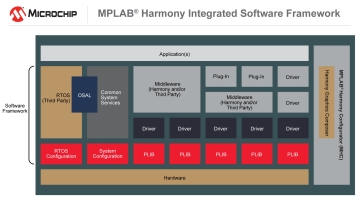
Microchip Technology announced the MPLAB® Harmony ecosystem program for embedded middleware and operating system developers exploring new business opportunities with Microchip's 32-bit PIC32 MCU customers.
2015.12.15by 명세환 기자

Intel Unveils Next-Generation 'Core Ultra Series 3' and vPro Platform for Enterprise PCs
Intel has officially unveiled the "Intel Core Ultra Series 3" for next-generation enterprise PCs and the latest vPro platform, addressing a wide range of demands from enterprise notebooks to high-performance workstations.
2026.03.26by 배종인 기자

ROHM Launches ESD Protection Diode Compatible with High-Speed Interfaces of 10Gbps or Higher
Semiconductor specialist ROHM has developed the 'RESDxVx series' of ESD (electrostatic discharge) protection diodes capable of responding to next-generation high-speed data communication environments exceeding 10Gbps, simultaneously enhancing both signal quality maintenance required in high-speed interfaces and IC protection performance.
2026.03.26by 배종인 기자











