



[Planning] MCU Company ⑤ STMicroelectronics: "Highly integrated, low-power MCUs are perfect for IoT products, and we plan to expand into the low-end market in the future."
 Published2016.01.11 14:15
Since the launch of STM32 in 2007, mass production has continued up to STM32 F7 based on Coretex-M7.
E4ds News visits leading semiconductor companies specializing in MCUs (Micro Controller Units), often called the brains of various electronic devices. MCUs are expanding their applications beyond simple electronic devices to include automobiles and robots in the IoT era, and their high performance and low power consumption are becoming increasingly important. We will focus on the features and characteristics of various MCU products and, through interviews with key MCU companies, examine the technologies and trends they prioritize, helping readers make informed product choices.
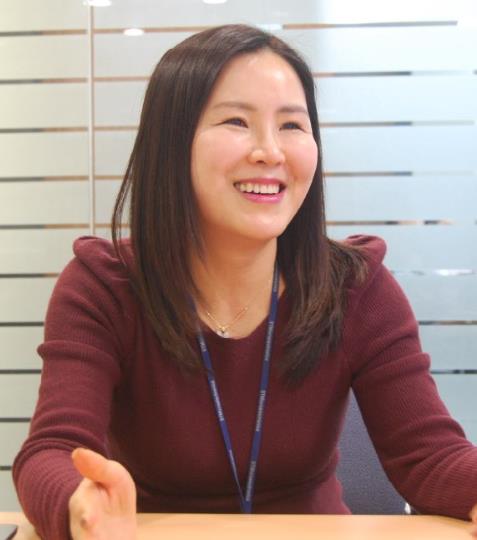
[Interview / Reporters Shin Yun-oh and Kim Su-jin] This time, "Going to the MCU Company" visited ST Microelectronics (hereafter referred to as ST), renowned for its wide range of MCUs. Fitting for the IoT era, ST boasts over 600 products suitable for a wide range of applications. Since the launch of the STM32 in 2007, ST has been in mass production up to the STM32 F7, based on the Coretex-M7. ST also plans to provide a free development environment and training for developers. We met with Choi Kyung-hwa (pictured), head of ST Korea's MCU division, to learn about the secrets to their competitiveness.
 Satisfies various applications based on Coretex-M
■ When you think of ST's MCU, STM32 is so famous that it comes to mind.
What products are in the MCU product line and what do you think are the most notable features of the STM32?
Since the launch of the STM32 based on the Cortex-M in 2007, various product families have been developed to meet both high-performance and ultra-low-power needs. Currently, the STM32 based on the Cortex-M7 has been released in the F0 to F7 series, and the ultra-low-power product family includes the STM32 L0, L1, and L4.
The STM32 family's greatest strength lies in its performance. While performance can certainly be boosted by utilizing ARM cores, this alone doesn't guarantee superior performance. For example, a 200MHz clock speed is achieved not by the core itself, but through the application of technological expertise. ST was able to maximize performance by incorporating an accelerator function called ART (Adaptive Real-Time).
■ Please provide a detailed explanation of the role of ART (Adaptive Real-Time).
In the STM series, the ART Accelerator was introduced starting with the STM32 F4 product. While the company's products prior to the M4 boasted excellent performance, the implementation of this accelerator further enhanced their performance. When a product claims to operate at 100MHz, that 100MHz simply refers to the clock speed. It's unclear whether the full 100MHz will be achieved when software runs on flash memory.
This is because flash memory has its own inherent speed. The memory's native speed is around 48MHz. Even when the clock speed increases, speed doesn't increase simultaneously, but rather, a bottleneck occurs where it suddenly stops at certain points. This problem stems from a failure to improve flash speed. However, ST's ART Accelerator dramatically improves performance by increasing flash speed.
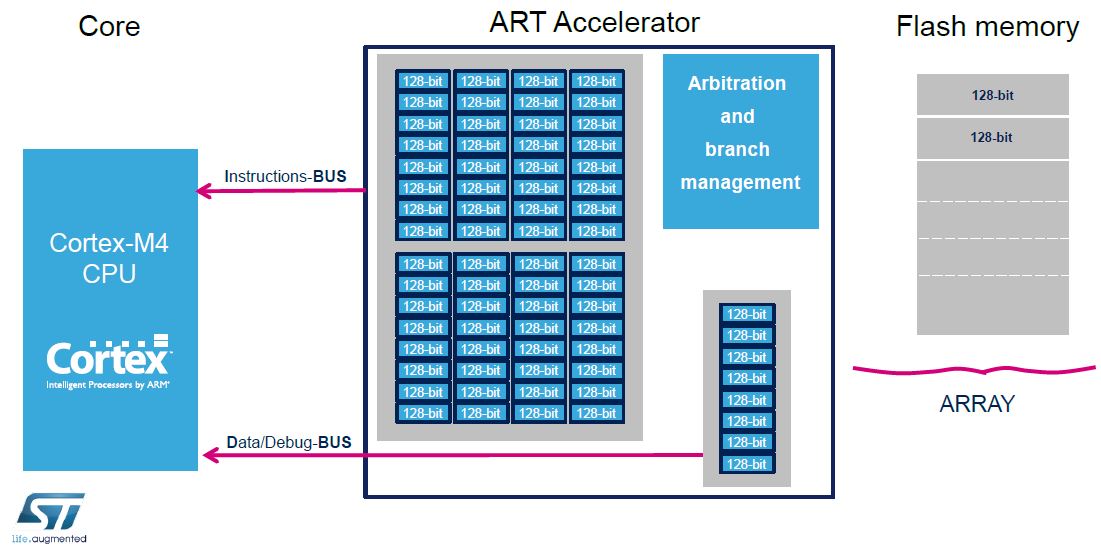
▲ ART Accelerator structure diagram
With ART (Adaptive Real-Time) accelerator
Resolving bottlenecks caused by flash to achieve maximum performance
■ So, how is it different from the accelerators used by other companies?
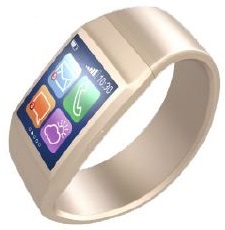
What we call ART, I understand, is sometimes referred to by other companies as accelerators. Some companies are developing products that don't increase clock speeds, while others are developing MPUs to achieve even higher performance. With graphics now increasingly used in even small wearable devices, we've developed "Chrom-ART," a graphics accelerator specifically designed for graphics implementation. This accelerator leverages CPU and flash memory performance while simultaneously enabling smooth graphics operation, and is now being used in bands and smartwatches on the market.
■ Why is the STM32 F7 based on the Cortex M7 said to be the highest performing ST product?
The STM32 F7, based on the Cortex M7, features dual DSPs. Dual DSPs operate independently and simultaneously, boosting performance. Because each DSP performs a different function rather than waiting for the next operation, speed is high. However, the downside is higher power consumption.
STM32 L4, suitable for miniaturized devices such as wearables
Low-power design down to the peripherals for various functions
In the IoT era, low power consumption is crucial for long-term use, not just high performance. ST is also emphasizing this point.
Of course. Low-power products include the STM32 L0, L1, and L4. L0 is based on the Cortex M0 Plus core (M0+), also known as ultra-low-power DNA. While this also uses a low-power core, ST provides peripherals that can operate at low power for practical implementation. The ADC operates at 1.65V and the timer UART built into the MCU operates at low power.
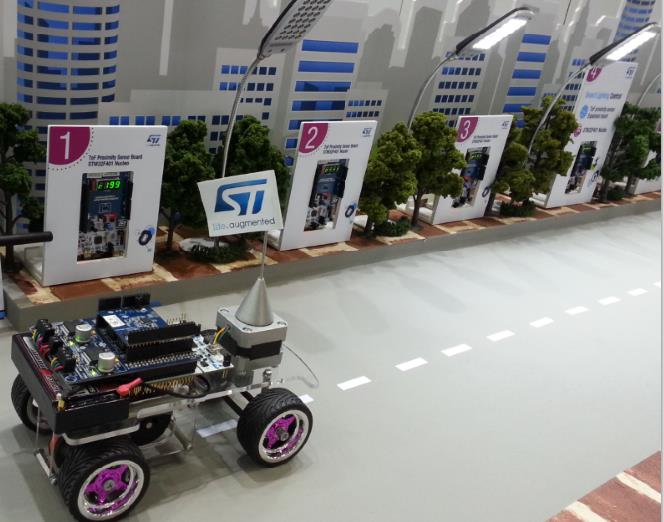
While each company's low-power MCU design uses slightly different terms, such as "Run mode" and "Sleep mode," ST differentiates sleep modes in detail. This allows users to configure the mode based on their application, reducing power consumption to as low as 4 μA (nanoampere) when using VBAT. In particular, low power consumption is also important in terms of how quickly the device can wake from Power mode to Run mode. ST boasts the advantage of being able to return to Flash from Stop mode in less than 5 μs (microseconds).
 ■ As mentioned earlier, ST's low-power implementation technology is said to be different from that of other companies. Could you please explain a few more specific low-power technologies?
Third-party products typically report performance at room temperature. While there's no difference in power consumption compared to other products at room temperature, ST's MCUs offer stable power consumption even at elevated temperatures. Operating temperatures up to 125°C may vary depending on the application. When designing low-power products, a low-power supply is often used. Typically, operating at 1.8V has a performance limit, leading to inevitably low performance. However, ST achieves maximum performance even at 1.8V.
■ Among low-power products, wearables, a recent trend, cannot be left out. How is ST responding?
The STM32 L4 can be applied to fitness trackers. Equipped with specialized peripherals, it enables the creation of fitness products that perform multiple functions while remaining active for extended periods. This MCU's suitability for wearables lies in its Batch Acquisition Mode (BAM). Fitness products equipped with multiple sensors constantly collect data in run mode, which leads to high power consumption. However, BAM mode enables sensing even in low-power slow mode, extending the lifespan on a single charge.
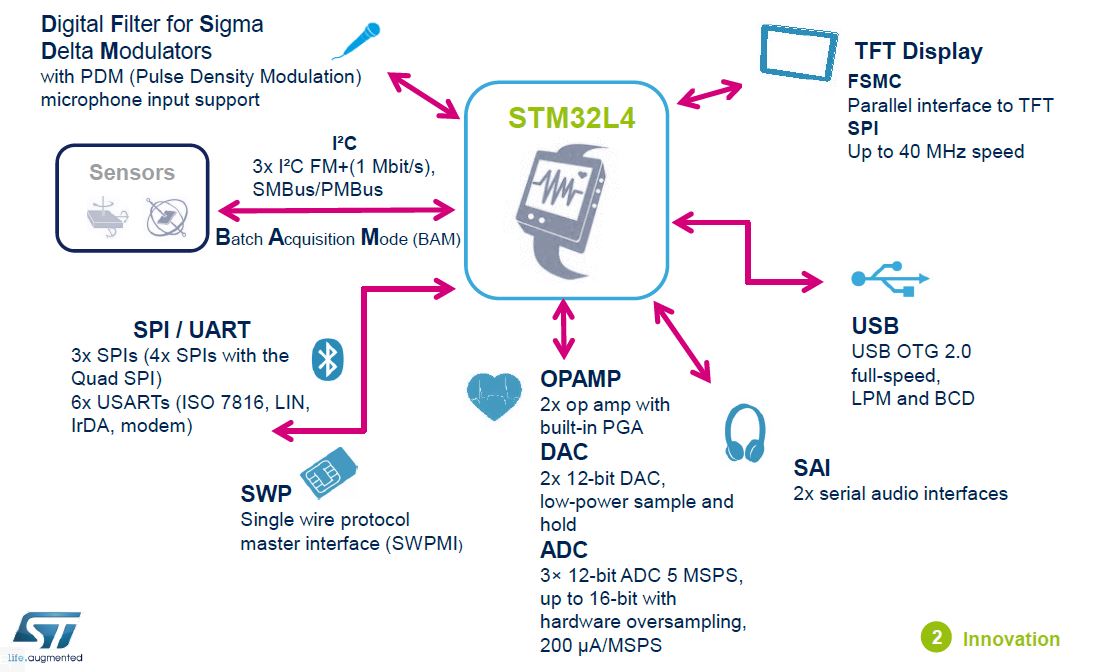
▲STM32 L4 features specialized for wearable products
■ Let's talk about specialized peripherals. What functions do these devices perform?
Its advantages include built-in 2MB of flash and support for MIPI (MIPI Display Interface). Industrial LCD displays support the MIPI interface because their interface sizes are larger than those for consumer displays. This MIPI interface can reduce both price and dimensions. Also, since many audio applications are used these days, the audio-related interface Quad SPI has been added to increase speed.
"ST is improving performance by replacing the core, but it is also improving existing weaknesses and areas needed for future products through various pre-processing features."
Miniaturization by integrating multiple functions
High-integration technology has already been proven in mobile products.
■ Integration technology is essential for integrating peripheral devices with multiple functions. There also seems to be the challenge of making them compact while still incorporating a wealth of functionality.
Mobile and wearable devices are small, so they face significant pressure on volume. To address this, ST is miniaturizing them using integration technology while incorporating multiple functions into actual products. CSP (Chip Scale Package), which does not require packaging, is primarily used in mobile and wearable devices. CSP is available for almost all series and also provides wafers for all products.

When asked about the product size, Vice President Choi Kyung-hwa stated, "It's not the best." He pointed out that while a 45nm product will be released in 2016, simply reducing the size doesn't mean it will be competitive. He also expressed pride, saying, "The fact that tens of millions of ST products have already been used in mobile devices proves their reliability."
■ In line with the Internet of Things trend, sensor hub MCUs are also becoming another competitive advantage.
ST has a sensor hub for mobile devices. Sensor hubs are being widely adopted because they can significantly reduce power consumption. While currently used in wearable devices, the market for these devices is expected to expand significantly as the number of IoT devices increases.
■ Recently, how to provide a development environment has also become an important issue. How is ST responding?
ST offers solutions not only for its own use but also for its partners. While third-party partners must purchase their own software, ST offers open-source solutions for its partners. One such product is Cube, a software tool. Compilers are crucial for MCU development, and most developers require them to purchase them. However, ST has partnered with ARM's KEIL, which allows for unlimited code generation for products like the Cortex M series. We have also worked closely with free-to-use Embed-based tools such as CooCox and Ac6 to prepare a development environment that can be provided free of charge.
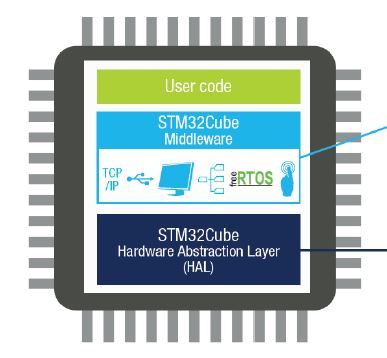
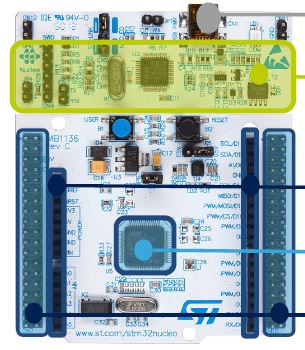
▲ Software tool CUBE and hardware tool Nucleo Board
With just a few clicks through our software tools /> MCU development is possible, providing the advantage of rapid market entry.
■ What are the advantages of the software tool Cube during development?
Using the free Cube solution can shorten development time. For example, it provides methods for generating code without extensive datasheet reading, and software solutions are available for everything from selecting an MCU to determining the MHz clock speed and OS to use. Nucleo Board, a hardware tool, is also available. Both hardware and tools can be purchased at low cost or distributed free of charge. Nucleo kits are currently being prepared for each product series.
Next year, we will advance to low-performance.
You can find more expanded and diverse products
■ I heard that there are currently over 600 product lines. Could you explain your future roadmap?
We're aiming to enhance the performance aspect, a key strength of the STM32. We anticipate launching new products in the second half of 2016. Furthermore, low-cost STM32 products will be released in 2016. This will likely serve as an opportunity to expand the low-cost STM32 8-bit market. While our focus has been on high-performance so far, we're currently developing a roadmap to broaden our offerings to include low-performance, so expect to see a more diverse range of products this year.
Comments
Related news
[Planning] The Brain of Electronic Devices, Visiting MCU Companies ① Freescale, Automotive MCU Security ‘We Take Responsibility’
As the first company in 'Visiting MCU Enterprises,' we introduce Freescale Semiconductor, renowned for its automotive MCUs. We present Freescale products that feature MCUs with particular emphasis on automotive security, which is directly linked to human safety. The interview was conducted with Director Lee Jin-woo, who oversees automotive MCUs at Freescale Semiconductor.
2015.11.30by 신윤오 기자
[Planning] MCU Company Tour ② Infineon: Will it Power Self-Driving Cars with High-Performance MCUs?
E4ds News seeks out major semiconductor companies specializing in MCUs (Micro Controller Units), known as the brains of various electronic products. As the scope of MCU applications expands from simple electronic devices to automobiles and robots in the IoT era, high-performance and low-power capabilities are increasingly being strengthened. Accordingly, we aim to intensively introduce the functions and features of various MCU products and, through coverage of major MCU manufacturers, examine the technologies and trends each company prioritizes to assist readers in their product selection. <Editor's Note>
2015.12.07by 신윤오 기자
[Planning] Visiting MCU Companies ③ TI, If you need an MCU that is strong in low power and real-time operations…
The third company in 'Visiting MCU Enterprises' is Texas Instruments, or TI, which has begun to distinguish itself in the automotive sector. Above all, readers must have been curious about what synergy effects TI, known as a powerhouse in DSP chips, creates with MCUs. Through Director Ryu Seung-yun (photo), who oversees MCU technical support at TI, this will be an opportunity to learn everything about TI MCUs and the development kits available for developers.
2015.12.14by 신윤오 기자

[Planning] Going to MCU Companies ④ Renesas (1), “The Secret to Being No. 1 in the World MCU Market is Low-Power, High-Performance Proprietary Technology”
[Planning Special Feature] 'Visiting MCU Companies' introduces Renesas, the absolute leader with the number one position in the global MCU market (based on 2014 Gartner statistics). Renesas, which holds nearly 40% of the global automotive MCU market, supplies application-specialized MCU products to the extent that it divides its business divisions by sector.
2015.12.21by 신윤오 기자
[Planning] Going to MCU Companies ④ Renesas (2), “Providing ‘A to Z’ of Automotive MCUs with Reliability Built Up Over a Long Time”
"Visiting MCU Companies" introduces automotive MCUs from Renesas, the absolute leader holding the number one position in the global MCU market (based on 2014 Gartner statistics). Renesas, commanding nearly 40% of the global automotive MCU market, supplies application-specialized MCU products to the extent that it has organized its business divisions by field. We met with Kim Se-yong, Director at Renesas Korea (photo), who is pursuing Renesas's vision of a high-performance, safety-oriented automotive single-chip solution.
2015.12.28by 신윤오 기자











