



[Contribution] How to Easily Implement Connectivity for IoT Applications
 Published2016.01.15 17:08
Written by Joe Folkens
Product Marketing Engineer / Texas Instruments
Connectivity can add significant value to many embedded applications. For example, in industrial systems, end products can communicate with remote sensors, other end products, and central management consoles to improve reliability and productivity. Extending connectivity beyond the LAN to the WAN is sometimes called the Internet of Things (IoT) or the Internet of Everything. In most applications, attaching devices to the IoT cloud benefits the entire ecosystem, including end customers, service providers, and equipment OEMs.
The IoT will run outside the IoT cloud, including both new devices designed for IoT compatibility and systems already in place. However, creating a ubiquitous cloud of interconnected devices requires a means to allow non-IP-based devices to connect without the expense of a full Ethernet or Wi-Fi interface and the protocol stacks that go with them. In real-world applications, this can be accomplished using gateways that connect devices to the Internet. Adding intelligent embedded control to the gateway also simplifies the design of IoT devices by allowing them to take advantage of shared processing resources.
This article covers the design of applications that require embedded Internet connectivity, focusing on implementing connectivity for IoT applications. Key topics covered here include implementation of IP connectivity, security, heterogeneous node integration, power, and cost.
 Connectivity issues
The advancements in IoT technology in industrial applications are due to the value gained from the connectivity of end-to-end automation equipment, system reliability, and central management. While these advancements were developed for industrial applications, they are applicable to almost any type of embedded system, including wearables, medical monitors, security devices, residential and commercial HVAC, and many other consumer applications.
For most engineers, the biggest challenge when designing for the Internet of Things (IoT) is connectivity. Implementing robust and secure access to the Internet or wide area networks (WANs) is beyond their experience. To make the design even more difficult, developers must support access to multiple devices with limited processing power. They must also add connectivity in a way that does not adversely affect overall system cost or power efficiency.
The variety of endpoints that a gateway must support also increases design challenges. Connecting even a simple node, such as a pressure sensor, directly to the Internet can be complex and expensive if the node does not have its own processes. Also, different types of finished products support different interfaces. Collecting and aggregating data from heterogeneous nodes requires a means to connect devices with diverse processing capabilities and interfaces in a consistent and reliable manner.
Gateways are a sophisticated means of simplifying the networking of “things.” They do this by supporting node connectivity in a variety of ways. It could be a variable voltage from a raw sensor, a data stream from an encoder over I2C, or regular updates from a device via Bluetooth®. Gateways effectively reduce the vast variety and diversity of devices by consolidating data from disparate sources and interfaces and connecting them to the Internet. As a result, individual nodes are freed from the expense or complexity of a high-speed Internet interface for connectivity.
Simple gateway and embedded control gateway
There are several ways to implement an IoT gateway, depending on the application. Two common methods are simple gateways and embedded control gateways. Both collect data from multiple endpoints and provide integrated access. Simple gateways typically clean and packetize the data for Internet travel. They also distribute the data back to the endpoints in applications where bidirectional communication is beneficial or required.
Note that a gateway is different from a router. A router manages similar traffic and connects devices that share a common interface. For example, all devices that connect to a home router use IP. A gateway, on the other hand, acts as a bridge, so it must be able to route different types of traffic, collect data from multiple communication interfaces, and convert these streams into a common protocol that can be accessed from the WAN. Some devices may use IP from the start, while others may use PAN-based protocols such as Bluetooth, Zigbee, or 6LoWPAN. A node that is a simple sensor may need to connect to an ADC to convert the raw analog voltage to a digital value before moving.
Embedded control gateways extend the functionality of simple gateways by providing processing resources and intelligence for local application processing. This can take the form of shared processing resources, where the gateway performs tasks that would otherwise occur on a node.
For example, an embedded control gateway can evaluate and filter sensor data and implement high-level management tasks. After evaluating and filtering sensor data, the gateway can determine whether a critical threshold has been passed. If so, it can trigger a missed opportunity alarm across the network to alert the appropriate administrator.
An intelligent embedded control IoT gateway can reduce the complexity and cost of endpoints. This can result in significant system savings, depending on the application. Consider a security system with a series of sensors connected. By integrating processing in the gateway, such as filtering sensor data, nodes can utilize shared resources, making each node simpler and less expensive.
The same is true for the connectivity available. IP is a complex protocol that allows for simpler IoT nodes with relatively high overhead. Instead, simple nodes can connect to the PAN using wired connections such as I2C or wireless interfaces such as Bluetooth. Gateways also connect to the PAN and bridge each connection to an IP-based WAN interface such as Wi-Fi or Ethernet. In both cases, processing requirements, memory, and power requirements are reduced. Therefore, nodes can become more efficient while their cost becomes cheaper.
As these savings are spread across the network, the sum total increases rapidly. Endpoints that must have their own intelligence and WAN connectivity require more complex architectures. Using a unified or shared architecture can significantly reduce the cost of each endpoint, more than compensating for the increased gateway costs in volume savings. In addition, if nodes have limited battery life or are powered by energy harvesting sources, reducing node complexity reduces overall power consumption.
Distributed intelligence also accelerates the implementation of new applications. Consider a smart appliance that uses the visual information of a utility meter to reduce energy costs by running during downtime. To implement this intelligence at the node level, the washer, dryer, and dishwasher must be able to communicate with the utility meter. When the appliances are manufactured by different companies, the interfaces to access this functionality are likely to be different, which can lead to interoperability issues. It may also require the consumer to purchase a new appliance to take advantage of this functionality.
The gateway's enabling intelligence minimizes the changes required to connect devices while solving local-level interoperability problems. Since not every device requires full intelligence, the gateway can provide basic intelligence to all devices. This also has the advantage of integrating management of new features for consumers. Instead of having to identify and integrate new devices every time they come into the home, consumers only need to know how to manage the gateway. Intelligent gateways are also better at handling issues that arise when connecting heterogeneous nodes compared to when users manually connect each device or appliance to the Internet.
For many applications, an intelligent gateway can eliminate the need for a dedicated field management or control endpoint. For example, in the case of an integrated LCD monitor, the gateway can support a user interface, allowing users to interact directly with the node. An intelligent gateway can also provide a web-based user interface, allowing users to easily access additional built-in applications via a PC, tablet, or smartphone. This allows the gateway to act as a flexible, dynamic, programmable field control point. This reduces the cost of installing new systems and allows third parties to introduce new technologies and devices at a significantly lower cost of entry.
Finally, the gateway can act as a fabric between co-located nodes when Internet access is down or temporarily interrupted. This provides robust local connectivity without the need for a cloud, increasing the reliability of the local network to maintain desired functionality.
How to connect to the gateway
Figure 1 shows several ways to extend the connectivity of IoT gateways to nodes. In Figure 1a, nodes are connected to IoT through gateways. Since these nodes themselves are not IP-based, they cannot directly connect to the Internet/WAN. Rather, they connect to the gateway using wired or wireless PAN technology, which is less expensive and less complex in terms of connection mode. The gateway maintains an IoT agent in each node and manages the data flowing between all nodes. In such cases, application intelligence can also be located at the gateway.
In Figure 1b, the node is directly connected to the Internet using a WAN connection, such as Wi-Fi or Ethernet. This gateway primarily acts as a router. In fact, it can simply be a router if the node has its own IoT agent and manages itself autonomously. Figure 1c is similar to Figure 1b, except that the node is directly connected to the Internet using a PAN connection, such as 6LoWPAN. In this case, the gateway acts as a transition point between the PAN and the WAN.
While IoT-based systems can be built on other types of nodes and architectures, these three types best represent how IoT connectivity is currently implemented in industrial and residential applications. Depending on the end product being used, different levels of sophistication and performance may be required. However, these types provide a good representation of what is needed for higher volume and lower cost applications.
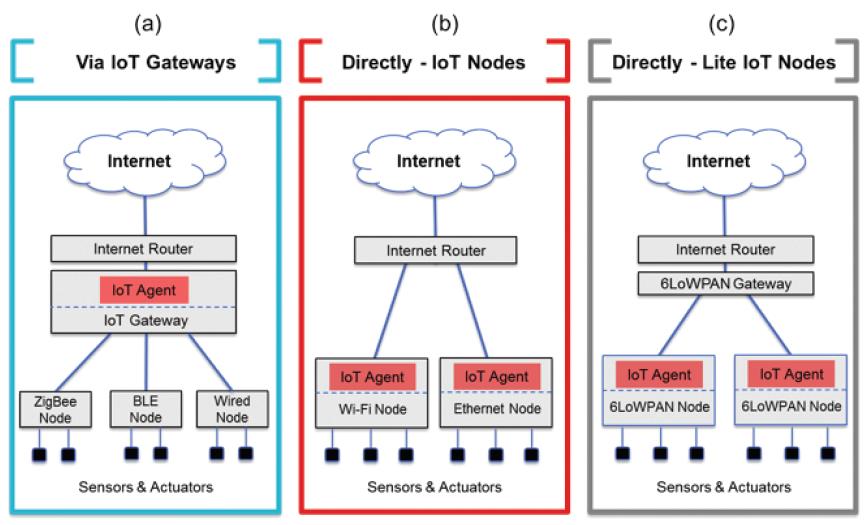
Figure 1: There are several ways to extend the connectivity of an IoT gateway to nodes.
(a) Nodes connect to the IoT via gateways using less expensive and less complex wired and wireless PAN technologies.
(b) The node is directly connected to the Internet using a WAN connection such as Wi-Fi or Ethernet.
(c) The node is indirectly connected to the Internet using a PAN connection such as 6LoWPAN.
The most powerful aspect of IoT is what we cannot yet see. The value of device management for visualization or for simplifying security nodes is clear, because these applications are similar to those we already know. What is not yet clear is how IoT technology will enable completely new applications that we have not yet imagined.
For example, when cell phones became smartphones, few could have predicted that they would become open platforms for everything from tracking calories with apps to connecting with each other quickly and intimately via Twitter or Instagram.
The most notable IoT applications today are industrial, medical, and security applications. It is clear that as technology advances, our lifestyles and all industrial activities will change completely.
TM4C129x IoT Gateway MCU
In theory, OEMs should be able to introduce connectivity to both new and existing designs in a straightforward manner. To help speed up the design of simple gateways and embedded control gateways, TI is offering the TM4C129x family of IoT MCUs.
This TM4C129x MCU is based on a 120MHz ARM® Cortex®-M4 core and has floating-point capabilities as shown in Figure 2. This allows processors to handle fewer processes than many, offloading the processing burden from individual nodes, and gives OEMs unprecedented freedom to develop any system and connect it to the IoT.
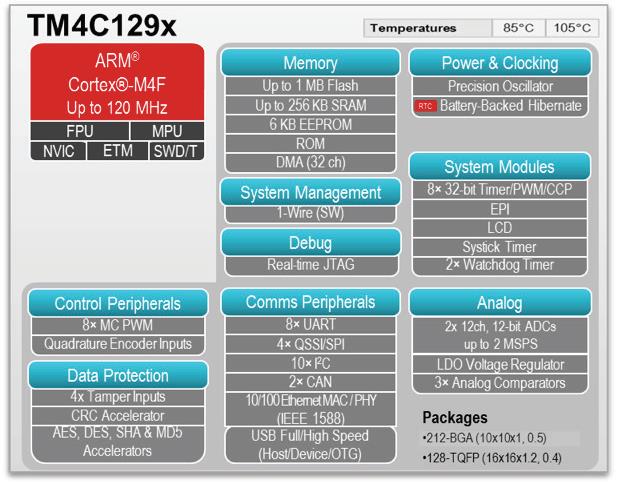
Figure 2 : The TM4C129x MCU is the industry’s first ARM® Cortex®-M4 MCU to integrate 10/100 MAC+PHY. Its extensive feature set makes it ideal for implementing both simple gateways and embedded control IoT gateways .
The TM4C129x MCUs integrate several key technologies to simplify IP connectivity in gateways:
On-Chip MAC and PHY: The TM4C129x MCUs are the first ARM Cortex-M4-based family to integrate both a 10/100 Ethernet MAC and PHY. Using an on-chip PHY, as shown in Figure 3, offers many advantages. Reducing the number of components, including passives, simplifies design complexity, simplifies assembly, reduces external signal noise, and lowers cost. The design requires less PCB space, and enables error-free communication over cable lengths exceeding the 100m standard. All of these are significant advantages over traditional designs that use an external PHY.
Security: Most IoT applications process potentially sensitive data. For example, billing data needs to be protected from hacking. Similarly, medical devices need to maintain personal privacy. With hardware-based cryptographic acceleration and a TLS/SSL stack, the TM4C129x MCUs enable OEMs to implement robust security mechanisms with low overhead to minimize threats and maximize data protection. It efficiently offloads security processing from the node to the gateway, ensuring proper authentication, protecting data exchanges, and protecting intellectual property. This enables IoT to implement more security than can be economically implemented on individual endpoints.
Tamper Protection: For applications that require another level of security, such as industrial or medical applications where valuable personal or personal lives are at stake, the TM4C129x MCUs provide built-in mechanisms to prevent hacking and theft of the gateway. These protection features include execute-only program/code protection, read-only protection to prevent modification of individual memory blocks, debug port locking, EEPROM protection for data/password/key security, and tamper detection. These systems can secure or mass-delete sensitive data if the system case is opened or broken.
Massive memory resources: Because it integrates data from multiple nodes, the gateway must be able to process parallel streams. With 256 KB SRAM and a total of 1 MB of 100,000-cycle flash, the TM4C129x MCU has enough memory to support multiple complex communication stacks, and enough buffering to maintain system robustness. 6 KB of EEPROM can also be used to store valuable application-critical data that needs to be protected, such as keys, passwords, configurations, monetary values, or critical thresholds.
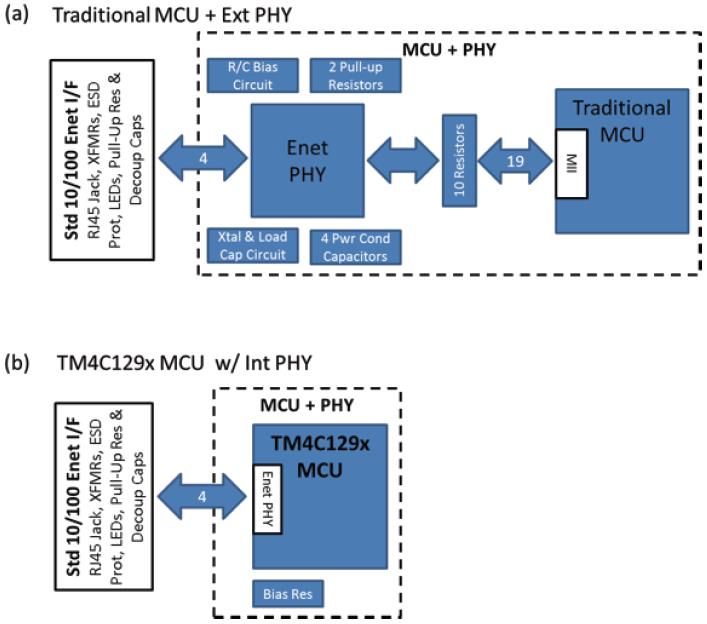
Figure 3 : A traditional Ethernet link (a) requires an external PHY and several passive and other components. The TM4C129x MCU (b) with integrated PHY reduces the board space, energy consumption, and cost required for the system.
Extensive connectivity features:
The TM4C129x MCUs support a variety of peripherals and interfaces. For example, the TM4C129x MCUs, which have 10 I2C ports, can directly connect to multiple nodes or sensors without the cost of a multiplexer.
• 2 CANs
• 10 I2C
• USB 2.0 OTG and high-speed UPLI
• 8 UARTs
• 4 Quad SSI
• 2 MSPS > 20 channels, 12-bit ADCs
• QEI (Quadrature Encoder Interface)/QEP)
• 8 x 16-bit advanced PWM (Pulse Width Modulation) outputs
• Up to 140 GPIO
Energy Efficiency: The processing power of the TM4C129x MCUs enables OEMs to improve overall energy consumption. This allows power-constrained nodes to offload processing loads to the gateway and spend more time in low-power operation modes.
Temperature range: TM4C129x MCUs are available in industrial (-40 to +85°C) and higher temperature grades (-40 to +105°C), supporting a wide range of operating environments.
Flexible Integration: The TM4C129x MCU family offers a variety of memory and integration options in a variety of packages to meet processing and connectivity requirements in a variety of applications (see Table 1). Peripherals include optional LCD control.
The high level of integration of the TM4C129x MCUs reduces PCB requirements, reduces board complexity, simplifies device interconnects, and reduces manufacturing byproducts.
Key Features
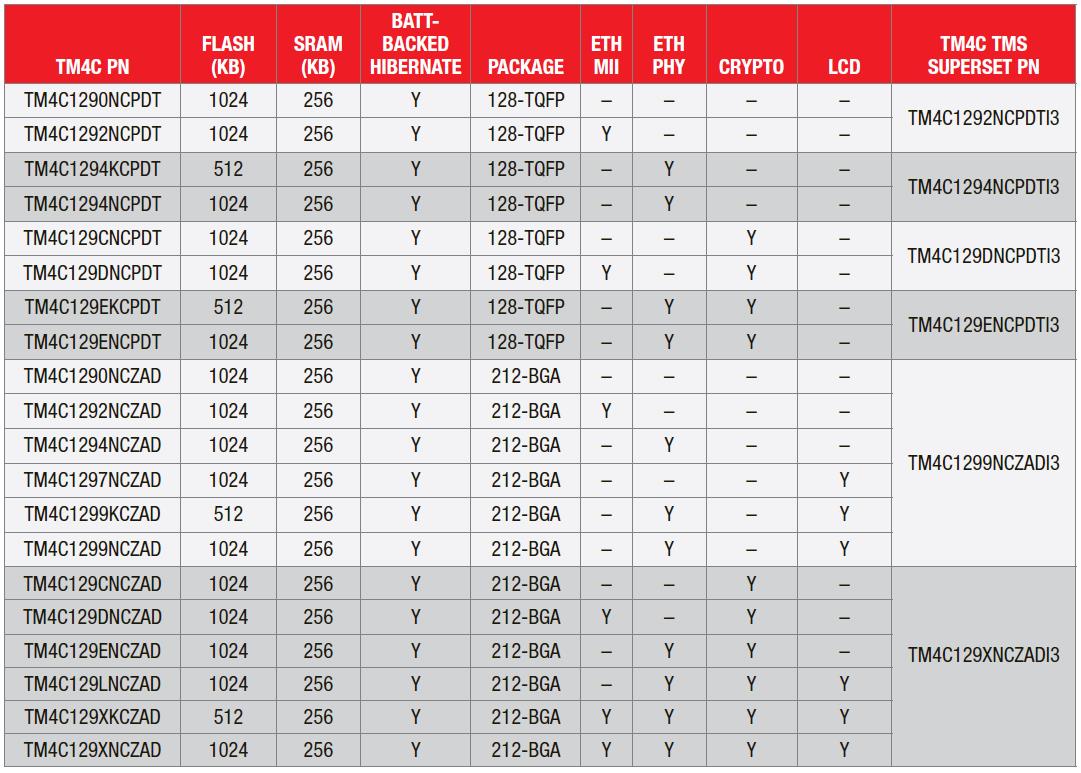
Table 1 : The TM4C129x MCU family offers a variety of configurations, allowing OEMs to choose the ideal feature mix for their IoT gateway.
Ease of design
One of the value propositions of the TM4C129x MCUs is their ease of integration into TI’s extensive software portfolio and hardware portfolio. TI’s goal is to make IoT device and gateway design as easy as possible. Production-enabling software is also available, from TivaWare™, TI-RTOS (see Figure 4) to application-level code. TI's diverse resources support both hardware and software design.
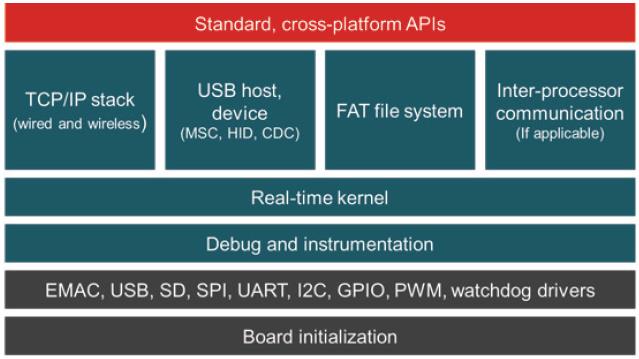
Figure 4 : TI-RTOS accelerates gateway development by providing a comprehensive real-time foundation for IoT applications.
ROM-based device drivers, extensive software libraries, RTOS support, network stacks, and sample applications enable OEMs to rapidly design their own gateways and introduce IoT connectivity to a wide range of devices and applications.
Connectivity is simplified by software APIs that allow developers new to wireless technology to implement protocols such as Bluetooth and Wi-Fi without developing low-level drivers. TI also provides software building blocks for developing custom IoT agents. These blocks are available through TI TivaWare software, TI-RTOS, and several partners within the TI IoT Cloud ecosystem, as shown in Figure 5. For third-party support, visit www.ti.com/designnetwork.
Developers can quickly integrate TM4C129x MCUs with TI's wireless connectivity radio transceivers and other components to connect gateways to the Internet and nodes across multiple wireless technologies. TI also has a diverse portfolio of other related products required for IoT applications, including analog components and power management ICs.
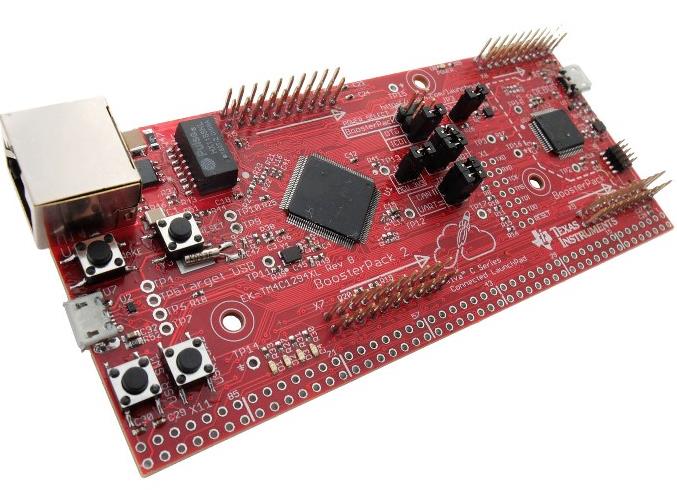
Developers can evaluate the TM4C129x MCUs directly using the TM4C129x Evaluation Kit (EK-TM4C1294XL). Priced at $19.99, the kit, supported by TI third-party Energia, provides entry-level expertise in IoT connectivity design. To accelerate product design, TI also offers the TM4C129x Connected Development Kit (DKTM4C129X). Priced at $199.00, it includes full chip I/O access and design features, providing a low-cost entry point into IoT design.
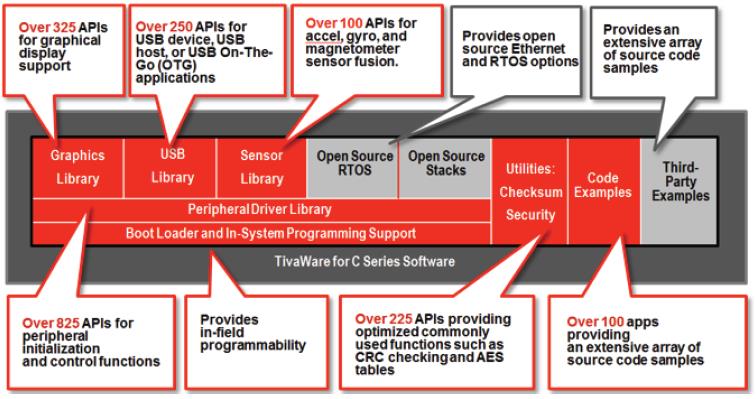
Figure 5 : TI TivaWare™ software greatly simplifies development of core product features with a variety of APIs.
Both kits support Keil, IAR, Mentor Embedded, and Code Composer Studio™ integrated development environments (IDEs), giving developers a choice of design environment.
TI offers a variety of solutions to meet a variety of IoT gateway requirements. In addition to the TM4C129x MCU family for low- to mid-level gateway applications, TI offers the Sitara™ AM335x processor for mid- to high-level applications. TM4C129x MCUs and Sitara
A comparison table of AM335x processes is shown in Table 2.
The TI ecosystem provides comprehensive levels of development support across multiple channels, including TI field application engineers, authorized distributors, and the TI E2E™ Community.
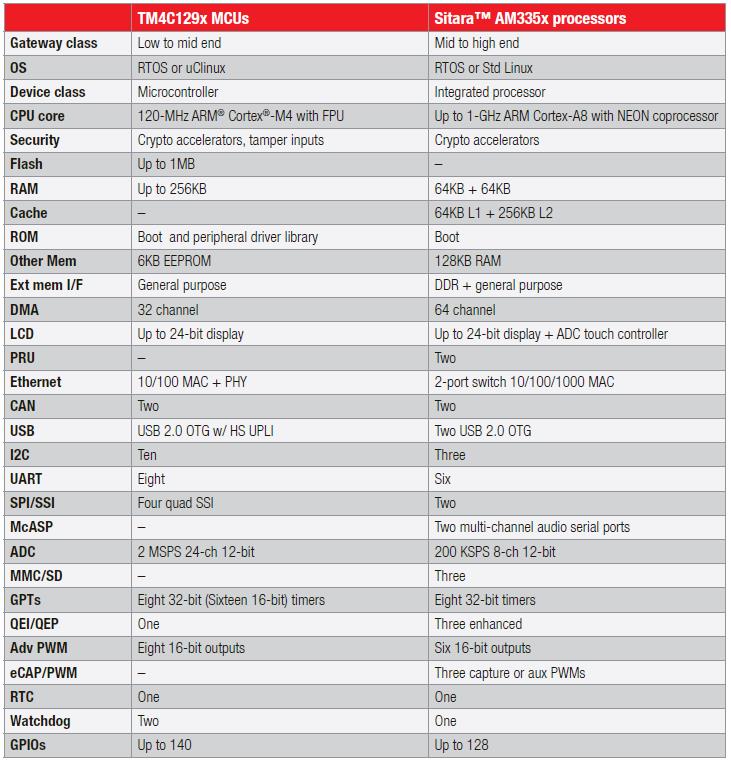
Table 2 TI offers a variety of solutions to address IoT gateway needs. In addition to the TM4C129x MCU family for mid- to low-end gateway applications, TI also offers the Sitara™ AM335x processor for mid- to high-end applications.
Introducing IoT to new applications
Embedded Internet access is more than a fad. The IoT is rapidly expanding beyond niche industries and medical applications to all markets that use electronic devices. Today’s connectivity solution environment allows developers to introduce Internet access to almost any application through an IoT gateway with minimal development effort.
TI’s TM4C129x MCUs enable the design of intelligent gateways with embedded control. By offloading the burden of data processing and IoT management from node to gateway, it can reduce node complexity, improve power efficiency, and significantly reduce system costs. Additionally, intelligent gateways can extend the scope as well as the capabilities by virtually increasing the processing power of nodes and their applications.
The TM4C129x MCUs are a complete solution for easily building gateways that connect devices to the IoT. OEMs can design gateways with confidence, ensuring complete security and supporting a variety of endpoints and interfaces. The TM4C129x MCU family is designed to maximize the capabilities of energy-sensitive systems while reducing energy consumption and lowering system costs.
The hardware and software integration provided by the TM4C129x MCUs enables developers to connect heterogeneous devices more simply and easily than ever before without having to redesign the entire design.
A full range of production software and wireless communication components support the TM4C129x MCU family.
TI's TM4C129x MCUs enable OEMs to create simple and advanced gateways to connect virtually any device to the IoT.
Additional Resources:
• TM4C129x MCU: www.ti.com/tm4c129x
• Datasheet: www.ti.com/tm4c-products
• TM4C129x Connected Development Kit (DK-TM4C129X): http://www.ti.com/tool/dk-tm4c129x
• TM4C129x Training: www.ti.com/tm4c-training
• TM4C1294 Connected LaunchPad Evaluation Kit (EK-TM4C1294XL):
http://www.ti.com/tool/ek-tm4c1294xl
• TM4C1294 Connected LaunchPad Training: www.ti.com/clp-training
• TI E2E™ Forum: www.ti.com/tm4c-forum
• Order samples or parts: www.ti.com/tm4c-samples
• AM3352 product folder: http://www.ti.com/product/am3352

Comments
Related news
.png)
TI Develops 32-Bit MCU That Captures Both Low Power and High Performance
2015.05.18by 명세환 기자

TI Launches MCU with Multitouch Technology
TI has announced the launch of the MSP430™ FRAM microcontroller (MCU), the lowest power capacitive touch MCU featuring CapTIvate™ technology.
2015.11.17by
[Planning] Visiting MCU Companies ③ TI, If you need an MCU that is strong in low power and real-time operations…
The third company in 'Visiting MCU Enterprises' is Texas Instruments, or TI, which has begun to distinguish itself in the automotive sector. Above all, readers must have been curious about what synergy effects TI, known as a powerhouse in DSP chips, creates with MCUs. Through Director Ryu Seung-yun (photo), who oversees MCU technical support at TI, this will be an opportunity to learn everything about TI MCUs and the development kits available for developers.
2015.12.14by 신윤오 기자
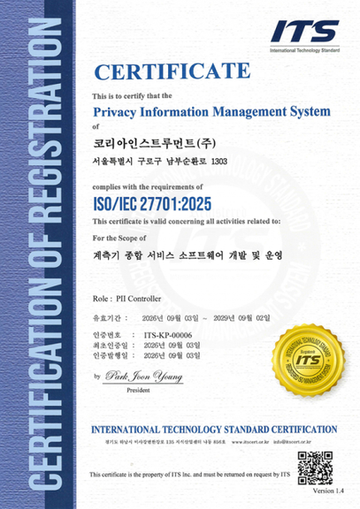
Korea Instrument, KOLAS Accredited Calibration Agency First to Simultaneously Acquire ISO/IEC 27,001·27,701
Korea Instrument has become the first among KOLAS accredited calibration agencies to simultaneously acquire ISO/IEC 27,001 and ISO/IEC 27,701 certifications. Through its proprietary platforms CWIZ Enterprise and CWIZ Partners, the company has embedded information security and personal data protection requirements across all business processes including customer information, equipment data, and calibration reports, with plans to continuously advance its management system through regular audits and security inspections.
2026.10.12by 배종인 기자

TeamViewer One, IT Incident Automation Workflow and Resolution Center Enhanced
TeamViewer has added IT incident automation capabilities and an advanced Resolution Center to its integrated digital workplace management platform 'TeamViewer ONE'. Recurrent service disruptions, configuration errors, and capacity shortages are automatically handled according to preset policies, and device status verification through script deployment can be managed in a unified interface, significantly reducing repetitive tasks for IT teams.
2026.10.12by 배종인 기자











