


[Planning] Going to the MCU Company ⑧ Cypress: "Our memory technology and MCUs are complementary and distinctive."
 Published2016.03.07 10:57
E4ds News visits leading semiconductor companies specializing in MCUs (Micro Controller Units), often called the brains of various electronic devices. MCUs are expanding their applications beyond simple electronic devices to include automobiles and robots in the IoT era, and their high performance and low power consumption are becoming increasingly important. We will focus on the features and characteristics of various MCU products and, through interviews with key MCU companies, examine the technologies and trends they prioritize, helping readers make informed product choices. [Reporting by Shin Yun-oh and Kim Su-jin]
Cypress, renowned for its SRAM and PSoC processor product lines, merged with Spansion, also known for its strengths in memory and automotive MCUs, in early 2015. The two companies, with their non-overlapping product lines and complementary offerings, saw their performance double after the merger. For example, Cypress's Auto MCU products focus on the main SOC market for cluster and body products, while its PSoC products are focused on the touchscreen and cap-touch markets for wearables and automotive CIDs. This allows Cypress to expand its reach to develop touch displays, infotainment, and even body applications. We met with Cypress Semiconductor Korea's Vice Presidents Hyungjun Kim and Hwanguk Cho to get a glimpse into the future of Cypress MCUs.
Programmable PSoC
Unlike existing MCUs, developers can add desired features.
■ What are Cypress MCU's main products?
Kim Hyung-jun, Vice President (hereafter Kim): MCUs are available for automotive, industrial, and general home appliances, but in terms of applications, we are primarily focusing on automotive.
The first thing we'd like to introduce is the programmable PSoC. This product's defining characteristic is its ability to integrate desired functions. While other companies' peripherals are fixed, PSoC allows users to customize functions using its tools, much like Lego blocks.
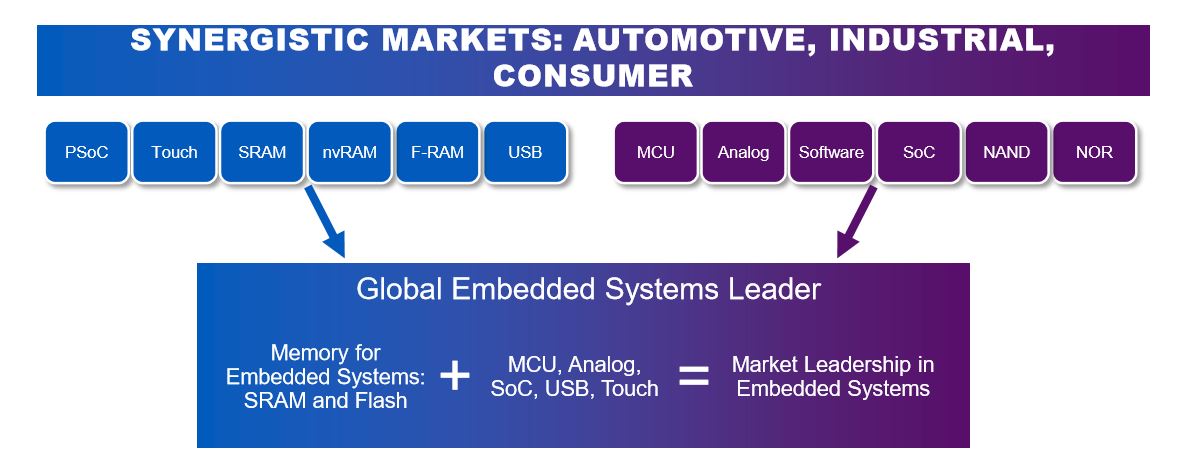
▲ Synergy effects from the merger of Cypress and Spansion.
For example, if a block uses 10 channels as UART, users can freely develop according to performance. This can be said to be a major difference from the existing MCU.
“Cypress is focusing on automotive clusters and bodies with its Auto MCU products, and Automotive True Touch, Capsense, and BLE with its PSoC Base products.” - Kim Hyeong-jun, Vice President
■ Even though you can design freely, you may still feel difficulties when designing.
Kim) The PSoC Creator tool provides a visual representation, allowing engineers to easily configure the necessary functions. Currently, we also offer MCU products with fixed, selectable features, including the most common ones. Existing MCUs based on Spension and Fujitsu's Cortex-M processors, like those from other companies, feature fixed functionality.
■ It seems that the field that utilizes PSoC is mainly the touch field.
Kim) PSoC also has a lineup of touch-type product groups that include the Cortex M series. Cypress is focusing on TrueTouch and Capsense for automotive input devices and Touch for HMI in home appliances.
■ Could you please explain your automotive MCUs? Are your main areas of focus clusters?
Vice President Cho Kuk-hwan (hereafter Cho) : Yes. We're also expanding into automotive dashboards, camera displays, gesture/character recognition, and body areas. Cypress's automotive MCUs have been adopting the Cortex R5 since Fujitsu. Going forward, we plan to expand our automotive market share based on ARM cores.
While the company previously had a large product line based on its own cores, the early development of an ARM core-based roadmap, initiated by Fujitsu, allows for a broader product range. Furthermore, the new products do not overlap with existing Spension and Cypress product lines, resulting in a comprehensive portfolio.
One-stop mapping with a comprehensive portfolio
Application expansion development in automobiles
■ How does building a comprehensive portfolio help developers?
Kim) There is no overlap in memory, PMIC, or PSoC. At first glance, you may think that PSoC and MCU overlap, but in actual development, you will be able to see a roadmap that allows for a comprehensive one-stop mapping.
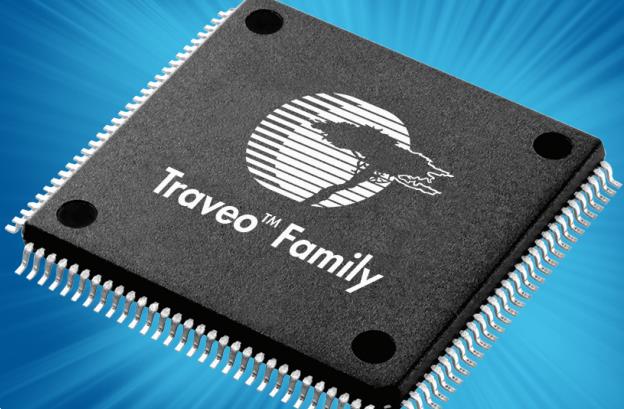
A) In the automotive field, development is not limited to one application, but can be expanded to cluster-body-electric vehicle-powertrain-motor, etc. The automotive MCU is specifically called Traveo. It is based on Cortex R5 and provides convenient functions such as human interface. For example, the cluster system is integrated, so it can be developed as a one-chip solution. These days, CAN-FD, an automotive communication protocol, is in the spotlight, so the roadmap for it is also the widest and fastest to respond.
The cost of investing in software for each core is increasing.
A common core reduces costs and stabilizes product prices.
■ Are you planning to release all new products based on ARM cores? If so, why?
Car OEMs are increasingly investing in software. However, if each semiconductor company invests in each core individually, duplication of investment is inevitable. However, investing within ARM-based cores can lead to cost savings. Overall, there's a trend toward common cores.
Of course, other companies are also releasing ARM-based products. However, because they haven't prepared for as long as we have, they've created a gap in their portfolio.
Additionally, if you use your own core, your dependence on a specific core increases, and even after using it for 2-3 years, the infrastructure and knowledge about the core become fixed, preventing other companies from entering the market. While this preemptive and monopolistic effect is welcomed by certain semiconductor companies, it means that car OEMs will no longer be able to control prices regardless of the product's performance.
It's precisely to address this issue that we've launched ARM-based products. Furthermore, because ARM cores are open to everyone, simply setting up a development environment and training engineers allows you to expand your resources to the next or even other projects.
This means there's no need to configure it from scratch. Since the ARM Cortex roadmap itself supports lockstep and security features, it's expected that competitors will have no choice but to create ARM Cortex-based products. The initial Cortex M series had difficulties in applying to automotive platforms due to limitations such as dual core/lockstep, so Cypress was able to enter the market by launching the R series, but now the scalability of the Cortex M core has also been secured.
“Automotive will continue to develop a product lineup that meets the current trend of high-resolution and touchscreen display demands by combining the Traveo series and True Touch Auto PSoC products,” said Hwan-Guk Cho, Vice President.
Built-in separate graphics engine (GDC)
Scalable product development possible with a single MCU
■ Let's talk about the automotive MCU, 'Traveo'. What are its key features?
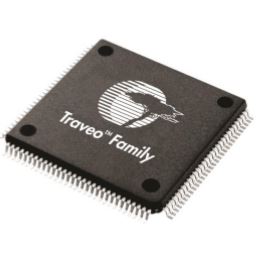
Let's use an application called a cluster as an example. For an MCU to support a cluster, it must offer "scalability" across platforms from the low end to the high end. Non-integrated solutions typically require changes to the product core or product family to implement the application's functionality. In contrast, Cypress has integrated a high-performance graphics engine into its Traveo product as a single-chip solution. There is no need for a separate graphics chip called a GDC (graphic display controller) for external displays.
If not a single-chip solution, it consists of a general MCU and a GDC two-chip solution. Other companies integrate a single MCU with a GDC, from low-end to high-end, performing basic functions. In contrast, Cypress offers an integrated single-chip solution. This solution embeds a 2D graphics engine, a 3D graphics engine, video display control, single-chip memory, memory control, and VRAM. The advantage is that it eliminates the need for external memory.
■ Infotainment is one of the fields that requires a lot of data, so wouldn’t external memory be necessary?
That's true. Therefore, Cypress offers a HyperBus solution that allows access to external flash and RAM memory with a low pin count and high bandwidth when external memory is required. The memory utilizing HyperBus is external, and the HyperBus is embedded within Traveo for communication. The advantage of our solution lies in its ability to increase communication speed with a small number of pins.
▶ Cypress's Traveo products
The trend in infotainment is increasingly toward high-capacity data transmission.
HyperBus can increase external memory communication speed.
■ Does Hyperbus have any special features compared to other platforms besides increasing communication speed?
Cypress supplies HyperFlash and HyperRAM as products for HyperBus, which allows flash and DRAM to be implemented on a single bus instead of using a different bus, and is a bus standard that can innovatively reduce the number of external pins of the main MCU.
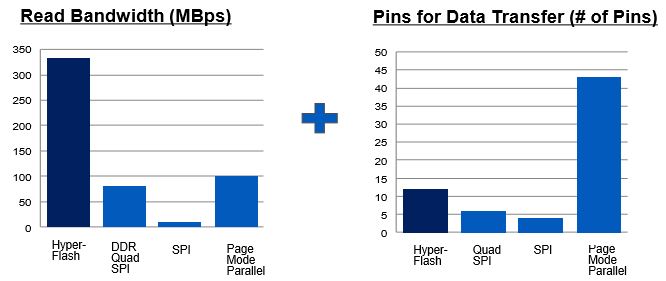
▲HyperBus features a small number of pins and wide bandwidth.
■>Increased memory means increased cluster resolution. What are the technical countermeasures for this?
This is why the roadmap for Traveo products is expanding from the 55nm to the 40nm process. Performance and resolution must be simultaneously improved, along with increased memory capacity. Previously, 7-inch full TFD clusters were primarily found in high-end vehicles, but now LCDs with the same specifications are being applied to mid- to low-priced vehicles.
Looking at current concept cars, the display and touchscreen requirements are rapidly increasing. These include LCDs for the entire cluster, LCDs for the passenger seat, and rear entertainment LCDs.
In more special cases, the rear mirror is treated with an LCD and the camera is mounted on the outside.
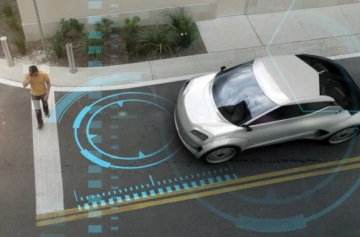
Additionally, although conceptual, the pillars supporting the car's roof could also be replaced with LCDs. These pillars can obscure pedestrians passing by. Installing LCDs on these pillars and attaching external cameras would allow pedestrians to pass by through the LCDs, ensuring their safety.
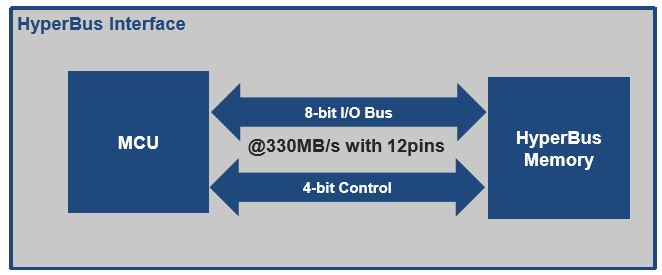
▲HyperBus interface
■ What kind of synergy effects is Cypress achieving in terms of memory and MCU products through its merger with Spansion?
Kim) Currently, Cypress NOR flash memory is based on a 40nm process. 40nm is the most advanced process in NOR memory. Since NAND memory can be developed with fewer nanometers and has a different structure, it can be designed with a more complex structure, so with the current NOR flash memory technology, 40 nanometers can be considered cutting edge technology.
Automotive is also a very fast technology at 40nm. When producing wafers, the memory size takes up the largest portion of the space, and reducing this space is a key technology for cost reduction. While cores used to be 128KB or 256KB, these days, larger capacities of 4MB or more are required, inevitably increasing memory size. However, Cypress possesses memory technology, allowing for smaller die sizes, giving it a competitive edge.
Cypress's memory technology and
The competitiveness of the MCU will rise simultaneously.
■ How much does memory size contribute to increasing the competitiveness of MCUs?
Memory occupies a larger area of an MCU than you might think. Depending on the core size, the area is reduced by two-thirds, increasing yield per wafer. While this might not seem like a significant difference, it's generally known to vary by 20-30%. Smaller chip sizes lead to higher yields, clearly resulting in a competitive advantage.
Currently, it's primarily applied to the company's own MCUs, but competitors are also adopting it. When a cluster displays images on a screen, the image sources must reside in NOR flash memory. Because the built-in flash memory is not enough.
■ What is the future roadmap for Cypress MCUs?
Automotive will continue to evolve its product lineup to meet the current trend of high-resolution and touchscreen display requirements by combining the Traveo series with True Touch Auto PSoC products.
Comments
Related news
[Planning] The Brain of Electronic Devices, Visiting MCU Companies ① Freescale, Automotive MCU Security ‘We Take Responsibility’
As the first company in 'Visiting MCU Enterprises,' we introduce Freescale Semiconductor, renowned for its automotive MCUs. We present Freescale products that feature MCUs with particular emphasis on automotive security, which is directly linked to human safety. The interview was conducted with Director Lee Jin-woo, who oversees automotive MCUs at Freescale Semiconductor.
2015.11.30by 신윤오 기자
[Planning] MCU Company Tour ② Infineon: Will it Power Self-Driving Cars with High-Performance MCUs?
E4ds News seeks out major semiconductor companies specializing in MCUs (Micro Controller Units), known as the brains of various electronic products. As the scope of MCU applications expands from simple electronic devices to automobiles and robots in the IoT era, high-performance and low-power capabilities are increasingly being strengthened. Accordingly, we aim to intensively introduce the functions and features of various MCU products and, through coverage of major MCU manufacturers, examine the technologies and trends each company prioritizes to assist readers in their product selection. <Editor's Note>
2015.12.07by 신윤오 기자
[Planning] Visiting MCU Companies ③ TI, If you need an MCU that is strong in low power and real-time operations…
The third company in 'Visiting MCU Enterprises' is Texas Instruments, or TI, which has begun to distinguish itself in the automotive sector. Above all, readers must have been curious about what synergy effects TI, known as a powerhouse in DSP chips, creates with MCUs. Through Director Ryu Seung-yun (photo), who oversees MCU technical support at TI, this will be an opportunity to learn everything about TI MCUs and the development kits available for developers.
2015.12.14by 신윤오 기자
[Planning] Going to MCU Companies ④ Renesas (2), “Providing ‘A to Z’ of Automotive MCUs with Reliability Built Up Over a Long Time”
"Visiting MCU Companies" introduces automotive MCUs from Renesas, the absolute leader holding the number one position in the global MCU market (based on 2014 Gartner statistics). Renesas, commanding nearly 40% of the global automotive MCU market, supplies application-specialized MCU products to the extent that it has organized its business divisions by field. We met with Kim Se-yong, Director at Renesas Korea (photo), who is pursuing Renesas's vision of a high-performance, safety-oriented automotive single-chip solution.
2015.12.28by 신윤오 기자
[Planning] MCU Company ⑤ STMicroelectronics: "Highly integrated, low-power MCUs are perfect for IoT products, and we plan to expand into the low-end market in the future."
"Visiting MCU Companies" has this time sought out ST Microelectronics (hereinafter ST), renowned for its broad range of MCU offerings. ST possesses over 600 products that can be applied to diverse applications suited to the IoT era. Since the launch of STM32 in 2007, the company has currently moved into mass production of the STM32 F7 based on Cortex-M7. Additionally, ST plans to provide development environments free of charge to developers and hold training sessions. We meet with Manager Choi Kyung-hwa (photo), who oversees MCU operations at ST Korea, to hear about the secrets to competitiveness.
2016.01.11by 신윤오 기자











