



[Survey Results Announcement] Smart Cars Take Second Place in the IoT Field with the Brightest Prospects. So What's First?
 Published2016.03.21 19:26
Products that implement the Internet of Things respond based on IoT device standards, etc.
We are truly entering the era of the Internet of Things (IoT). While definitions may differ slightly, the ultimate goal remains the same: connecting IoT devices, communicating, and analyzing information to improve the efficiency of daily life and production.
So, what do people consider the "standard" for an IoT device? What defines an IoT device? Also, what is your outlook on the IoT business and what challenges are you facing?
E4ds News conducted a survey on the ‘Current Status of IoT Business’ targeting 120 participants who participated in the online live broadcast ‘Director Kim Hak-yong’s IoT Business Talk Talk’ held on February 25.

▲ IoT business survey respondents ranked smartwatches as the second best implementation of IoT.
<Photo is Samsung Electronics Gear>
Participants who responded to the survey gave honest answers about products that well implement IoT technology, standards for IoT devices, difficulties in IoT business, conditions for IoT business success, expansion period, and outlook.
First, when asked which product best implements IoT technology among the IoT devices currently on the market, 27.9% of respondents answered smart bands, followed by smart watches (20.2%), smart boilers (9.5%), remote power control devices (9.5%), smart lighting (8.7%), drones (7.7%), smart glasses (4.8%), and facial recognition cameras (4.8%).
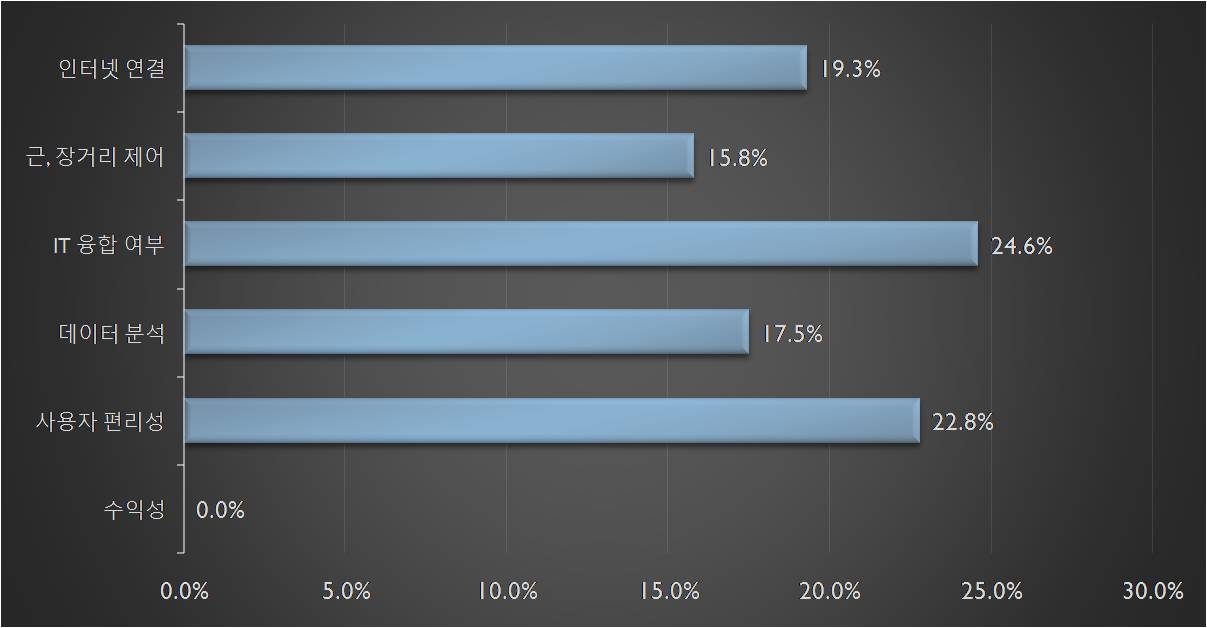
▲ What is the ‘standard’ for considering an Internet of Things device?
If so, these products are called Internet of Things devices. What are the criteria you're considering? 24.6% of respondents cited IT integration as the top criterion, followed by user convenience (22.8%), internet connectivity (19.3%), data analysis (17.5%), and near-field control (15.8%).
What makes it difficult for IoT businesses to actually generate profits ? The most common reason cited by survey respondents was the market's untapped market (30.8%). High device prices (16.8%) and a lack of related technology (14.0%) were also cited as challenges. Other challenges included lack of consumer awareness (12.2%), inconvenient user experience (11.2%), and service pricing (9.4%). A lack of technical expertise and government support was also cited.
Next, we asked about when the IoT business will truly expand. 49.1% of respondents believed the market would fully open within two to three years. Even if this isn't the case, many expressed high hopes for within four to five years (43.8%) and seven to eight years (5.3%).
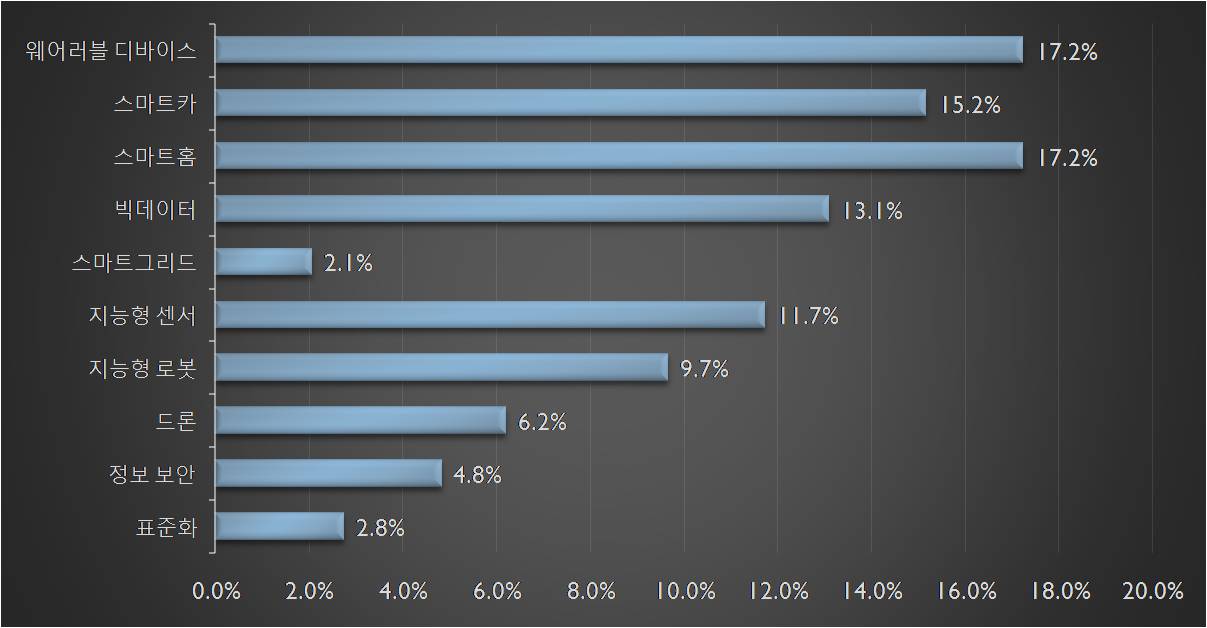
▲ In relation to recent IoT trends, what field do you think has the brightest future prospects?
Finally, regarding recent IoT trends, which sectors do you think have the brightest future prospects? Respondents identified wearable devices (17.2%) and smart homes (17.2%) as promising, while smart cars (15.2%), big data (13.1%), and intelligent sensors (11.7%) were also considered promising. This was followed by intelligent robots (9.7%) and drones (6.2%).
Meanwhile, detailed survey results will be provided to participants in the online live broadcast survey, and the survey results will also be shared during the live broadcast of 'Director Kim Hak-yong's IoT Business Talk Talk 2' to be held in May.
Comments
Related news
Can Samsung's IoT platform, 'ARTIK,' succeed?
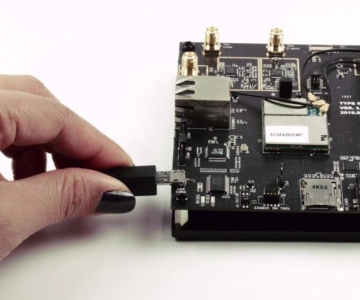
Samsung Electronics' ARTIK is a ultra-compact IoT module composed of a processor (AP), memory, communication, and sensor. As evidenced by the company's emphasis that it is a platform with software/drivers, storage, security solutions, development boards, and cloud functionality integrated into a single module, Samsung expressed confidence that developers can quickly and easily commercialize IoT devices utilizing ARTIK.
2016.03.07by 신윤오 기자
Telecom companies' "living room war" ignites as they seek to capture the home IoT market.
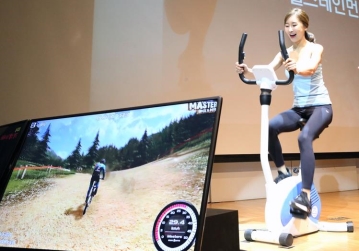
Following SK Telecom and LG U+, KT is making a full-fledged entry into the IoT home market, and fierce competition is expected to unfold among Korea's leading telecom operators in the "living room war" for IoT homes. As smart home devices are expected to lead the IoT market, the proportion of smart home-related devices is projected to rise from 26.6% in 2015 to 34.4% in 2016 and 39.9% in 2017. The domestic smart home market is expected to grow at an average annual rate of 22.2% from 2014 to 2019, reaching 23.4 trillion won by 2019. Telecom operators, home appliance manufacturers, and IT platform companies are providing smart convergence appliances, smart healthcare, smart TV, and home entertainment services.
2016.03.14by 신윤오 기자
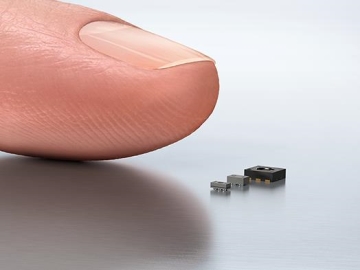
Environmental sensors that meet IoT are expanding in all directions, including “indoor car environments, mobile, and smart homes”
As Internet of Things (IoT) technology spreads, demand for environmental sensors such as temperature/humidity sensors, gas sensors, and pressure sensors is rapidly increasing. This is because demand for sensors that meet requirements such as ultra-miniaturization and low power consumption is surging in order to collect object information across various IoT application fields. In particular, smart environmental sensors are high-functionality, high-precision, high-convenience, and high-value-added sensors that combine sensing elements with intelligent signal processing to perform data processing, automatic calibration, self-diagnosis, and decision-making functions. Environmental sensors include temperature/humidity sensors, gas/pressure sensors, as well as dust sensors, ultraviolet sensors, and water quality sensors, and these sensors support real-time environmental monitoring regarding the effects of environmental pollutants in environmental media such as water and atmosphere, humans, and ecosystems.
2016.03.21by 신윤오 기자
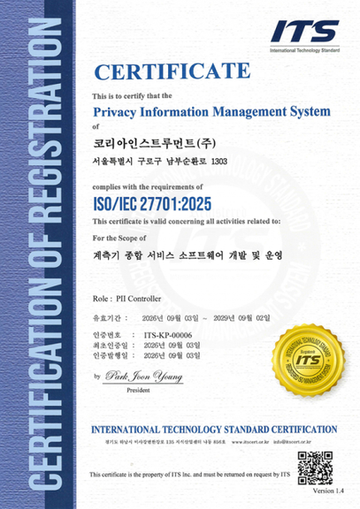
Korea Instrument, KOLAS Accredited Calibration Agency First to Simultaneously Acquire ISO/IEC 27,001·27,701
Korea Instrument has become the first among KOLAS accredited calibration agencies to simultaneously acquire ISO/IEC 27,001 and ISO/IEC 27,701 certifications. Through its proprietary platforms CWIZ Enterprise and CWIZ Partners, the company has embedded information security and personal data protection requirements across all business processes including customer information, equipment data, and calibration reports, with plans to continuously advance its management system through regular audits and security inspections.
2026.10.12by 배종인 기자

TeamViewer One, IT Incident Automation Workflow and Resolution Center Enhanced
TeamViewer has added IT incident automation capabilities and an advanced Resolution Center to its integrated digital workplace management platform 'TeamViewer ONE'. Recurrent service disruptions, configuration errors, and capacity shortages are automatically handled according to preset policies, and device status verification through script deployment can be managed in a unified interface, significantly reducing repetitive tasks for IT teams.
2026.10.12by 배종인 기자











