



The future of autonomous vehicles is all in Google's 'AI-powered autonomous vehicle' patents.
 Published2016.04.11 17:49
Cha Won-yong, Director of the ASPAC Future Technology Management Institute and a leading futurist in Korea, has published the 'Google's AI-powered Autonomous Vehicle - Patent Analysis Report'.
Director Cha currently serves as a specialist committee member on ICT convergence at the National Science and Technology Council, Chairman of the Science and Technology Committee at the International Futures Society, and a director at the Creative Economy Research Institute. He also serves as an adjunct professor of future technology at KAIST’s IP Gifted Entrepreneurship Training Center and as a lecturer on future convergence technology at Yonsei University’s Graduate School of Engineering. Furthermore, he delivers approximately 150 lectures annually to contribute to the future and development of Korea’s industries, including at Samsung Electronics, LG Electronics, Hyundai-Kia Motors, SKT, KT, POSCO, the Korea Venture Business Association, the Korea Institute of Industrial Technology, and Technoparks.
The subject of the report recently published by Director Cha is autonomous vehicles, which have recently been attracting increasing attention. This study identifies 250 patents registered by Google with the U.S. Patent and Trademark Office from 2009 to December 31, 2015, regarding Google’s Self-Driving Car (SDC) project, specifically Self-Autonomous Cars and Autonomous Cars, and provides implications by organizing them into various categories through an analysis of 110 important patents among them.
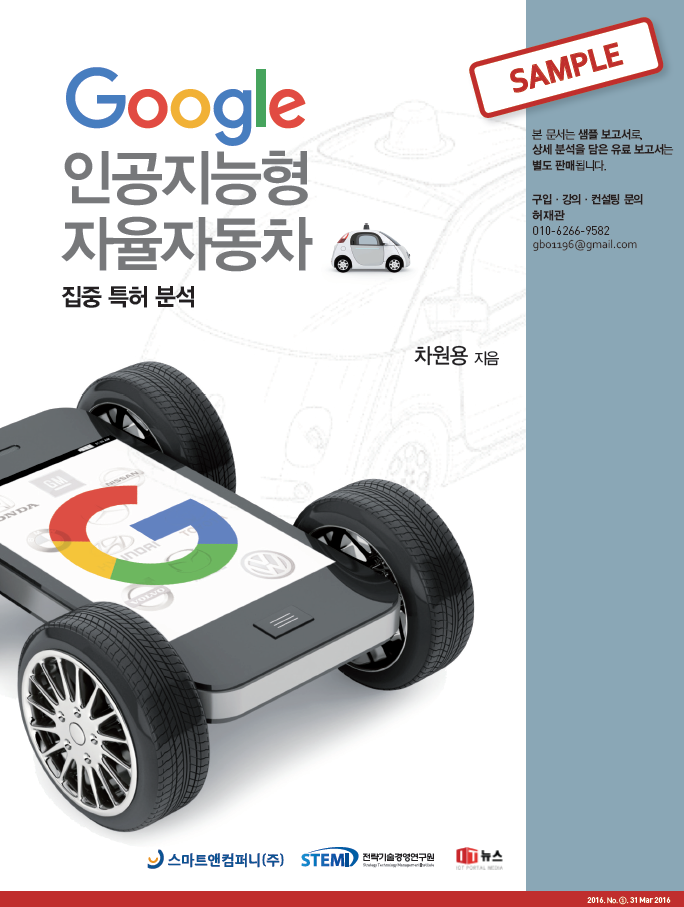
Most of Google's patents consist of sensor systems, which are the core of autonomous vehicles, as well as Autonomous Driving Computer Systems and authentication systems between users and autonomous vehicles upon commercialization. Additionally, they cover software design capabilities related to Artificial Intelligence (AI), Machine Learning (ML), and Deep Learning (DL)—the key elements of autonomous vehicles—and relate to situations encountered during actual road driving tests, as well as the learning processes involved.
"I hope that through this report, our country will also become a powerhouse in autonomous vehicles," said Director Cha Won-yong, the author. "Furthermore, I believe there is a chance of success if we integrate not only the automotive industry but also the ICT industry, cooperate with one another to set a vision and goals, organize our R&D well, and build an ecosystem that encompasses small and medium-sized enterprises and venture companies."
Book Introduction
Google's AI-powered Autonomous Vehicle - Patent Analysis Report
Author: Cha Won-yong
Publication Date: 2016-03-31
Page: Page 382
Price: 6,000,000 won (VAT excluded)
★ Table of Contents
1. Executive Summary
2. U.S. Autonomous Vehicle Policy and Recent Changes (Recognition of Autonomous Vehicles)
3. Current Status of Google's Autonomous Driving Tests and the Significance of the Autonomous Mode Deactivation Report
4. Background/History of Google's Autonomous Vehicle Development and Development of Core Technologies
5. In-depth Analysis of Google's Patents
5-1. Sensing System
5-2. Autonomous Driving Computer System
5-3. Authentication System Between User and Autonomous Vehicle
5-4. Vehicle or obstacle collision avoidance system
5-5. Other Services
5-6. Design Patent
6. Implications
7. Future Autonomous Vehicles Seen Through 2030 Trends
★ Introduction to the Author 'Cha Won-yong'
- Representative of ASPAC Future Technology Management Research Institute
- Expert Member of the ICT Convergence Expert Committee of the National Science and Technology Council
- Chairman of the Science and Technology Committee, International Futures Society
- Adjunct Professor of Future Society and Convergence Technology at Yonsei University Graduate School of Engineering
★ Inquiries regarding purchase, lectures, and consulting
Heo Jae-gwan : 010-6266-9582
Email: gbo1196@gmail.com
Comments
Related news
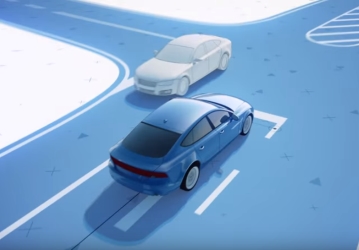
Can self-driving cars operate without precise maps, V2X, or road infrastructure?
As autonomous vehicle development accelerates both domestically and internationally, interest in vehicle-to-infrastructure wireless communication linking roads and vehicles—that is, V2X (vehicle-to-x)—and high-precision maps for autonomous driving is rising. Autonomous vehicles, as commonly understood, refer to human-friendly automobiles capable of safe autonomous operation by minimizing driver intervention through self-recognition of surrounding environments, risk assessment, and route planning. Accordingly, when autonomous vehicles are classified in stages, they are divided from Level 0 (driver perceives, controls, and is responsible) to Level 4 (vehicle perceives and controls, driver availability not required). True autonomous vehicles are those of Level 2 (driver perceives, vehicle controls) or higher.
2016.03.28by 신윤오 기자

[Reporter's Notebook] The Autonomous Vehicle Industry: How to Avoid Going Backwards
For autonomous vehicles to be realized, core enabling technologies must be supported. Advanced technologies are required, including LIDAR systems, GPS technology, IMU (inertial measurement unit technology for measuring speed and direction), HVI (optimal UI for drivers), smart actuator technology, V2X communication technology, and LDM (digital map technology). In other words, all technologies must be mobilized—from core components to road infrastructure and mapping technologies.
2016.04.04by 신윤오 기자

Everything about automotive electrical components as seen in smart car and autonomous car applications
A venue is being prepared where one can learn everything about automotive electrical components, which are receiving intense interest from the automotive, IT, and semiconductor industries. The Korea Industrial Technology Association (www.kitanet.or.kr), which has been providing professional technical information from industrial sites, will hold a conference at its conference center on the 15th to provide essential automotive electrical component information, ranging from automotive electrical PCB, electrical component reliability, and electrical component EMC technology to technological development trends in smart cars and autonomous vehicles.
2016.04.06by 신윤오 기자
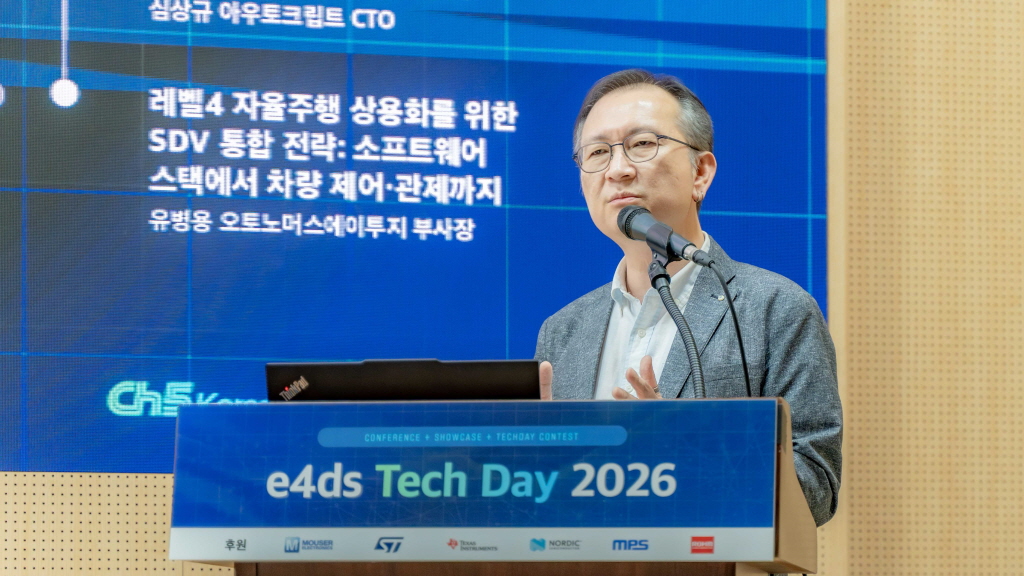
[e4ds Tech Day 2026 ⑨] Sim Sang-gyu, Autocrypt CTO: "In the Physical AI Era, Automotive Security Must Extend Beyond the Vehicle"
At e4ds Tech Day 2026, Sim Sang-gyu, CTO of Autocrypt, explained automotive cybersecurity strategies in the era of Physical AI and SDV (Software-Defined Vehicle). Automobiles are evolving as part of an ecosystem connected to AI, cloud, chargers, IoT, and robots, and he emphasized that the scope of security must expand beyond the vehicle interior to the entire connected environment. In particular, AI model tampering, adversarial attacks, OTA updates, and EV charger hacking were identified as major threats. He explained that response measures require zero trust, AI model integrity protection, intrusion detection, Security by Design and Default, and full lifecycle security management, and that proactive security system establishment beyond regulatory compliance is critical for securing future mobility competitiveness.
2026.10.12by 배종인 기자

Practical HIL Construction Strategy for Automotive and Off-Highway Controller Validation
As vehicle E/E architecture transitions to zonal structures and shifts to software-defined vehicles (SDV), the number of controllers (ECUs) requiring validation and software complexity are surging dramatically. Meanwhile, real vehicle testing cannot provide repeated verification under identical conditions and entails lead time and safety concerns. This white paper explains the principles of HIL (Hardware-in-the-Loop) validation and the structure of the NI platform composed of PXI, SLSC, and VeriStand, and through two actual implementation cases—Camera Record & Replay HIL for In-Cabin Monitoring Controller (ICMU) and Forklift Controller (VCU) HILS—describes how controller-level regression testing becomes possible. Additionally, it explicitly states application boundaries and limitations, such as lack of A2B support.
2026.10.12by 편집부











