



[Reporter's Notebook] Intelligent Robot Industry, Step Up to Build an Ecosystem
 Published2016.05.02 15:13
Sure enough, the Ministry of Trade, Industry and Energy held a meeting with artificial intelligence experts from industry, academia, and research institutes after the Go event concluded. A press release stated that the event reviewed the current status of AI development, which was highlighted by the 'Lee Sedol vs. AlphaGo' match, and discussed policy directions to promote applied industrialization.
Attendees of the meeting reportedly emphasized that "other countries are also still in the early stages of industrializing AI applications," stating that "necessary R&D, workforce training, and infrastructure must be established to promote the use of AI in the industry." Given that the issue of establishing R&D, workforce training, and infrastructure is a recurring topic not only in the field of AI but in any sector, it appears the meeting did not yield significant results.
Artificial intelligence was not left out of the discussion at the recent seminar on intelligent robots as a future growth engine. This is because robotics is the most representative industrial sector of artificial intelligence, integrating technologies such as big data and software with high-performance sensor and actuation technologies, and intelligent technology plays a crucial role in the core functions of robots, such as perception and judgment.
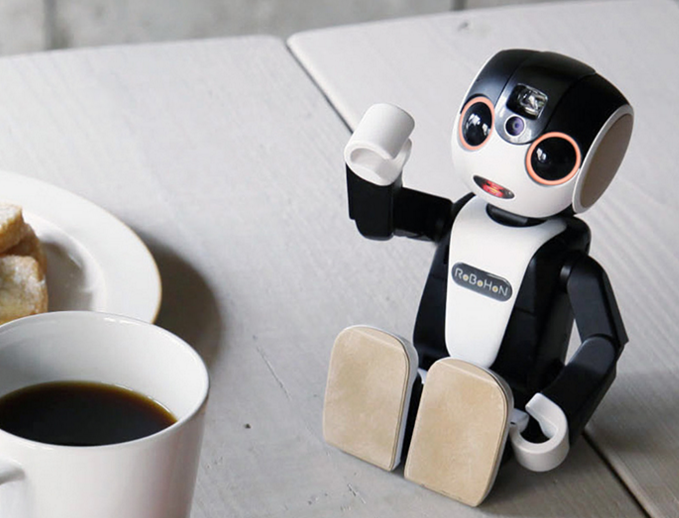
▲ RoboHon, a social robot manufactured by Japan's Sharp . It incorporates smartphone functions, allowing it to make phone calls and dance, and also features a beam projector. It is scheduled for release in May. While it cannot be described as a high-performance intelligent robot, it is attracting attention as a commercialized case among various social robots.
On this day, a government official "reaffirmed" the blueprint and roadmap to achieve 6 trillion won in robot production by 2020 through the creation of robot demand and market expansion. While it was announced that support for the development and testing of AI-based pilot products would be increased from the current level of 13 billion won to over 20 billion won annually, and that excellent university research teams would be selected to receive 500 million won in annual funding for R&D of source technologies for industrialization, questions were raised regarding the effectiveness of these measures.
Prior to this, the government announced an 'ambitious' plan to invest 1 trillion won over five years, allocating 200 billion won annually, and to attract more than 2.5 trillion won in private investment, but we have not heard any news about how things have progressed since then.
In the field of intelligent robots, key service sectors for 2020 include medical, safety, next-generation manufacturing, HRI robots that communicate with humans, and defense robots. Among these, the manufacturing robot market accounts for 64% of the total robot market, followed by the professional service (23%) and personal service (13%) robot markets.
Medical and safety service robots are expected to grow rapidly as national income rises.
In particular, as national income rises from $20,000 to $30,000, robot markets in fields such as healthcare, safety, and national defense are emerging as important sectors, and the market for AI personal services that communicate with humans is expected to expand. In other words, while robots have primarily been discussed in terms of manufacturing robots until now, the future will see development centered on platform-based service robots.
Korea ranks fourth in global robot technology competitiveness, and the technology gap with leading nations is estimated to be an average of 1.8 years. However, core technologies remain lacking, and 93.4% of domestic robot companies are small and medium-sized enterprises, resulting in a shortage of specialized mid-sized companies and a small scale of business operations.
Yeo Jun-gu, Director of the Robot Media Research Institute at KIST, stated that half of a robot is artificial intelligence, adding, “The field of artificial intelligence, in which we began investing in 2001, has focused on investing in human resources.” "We need policies that allow us to be more ambitious, investing in source technologies in bottleneck fields rather than R&D that merely imitates others," he said.
Regarding social robots, which are emotion-centered robots that converse and interact with humans, SK Telecom’s Hwang Eun-dong emphasized the importance of building an ecosystem just as much as hardware, stating, “Robots are initially hardware-centric, but like smartphones, apps and services will eventually dominate.”
SoftBank Chairman Masayoshi Son stated, “A life coexisting with intelligent robots will surely come.” Additionally, the Boston Consulting Group predicted that “robots will become the center that fundamentally transforms the competitive landscape of the global economy.”
Experts say it is urgent to build an ecosystem piece by piece for the future intelligent robot market in professional and personal services. This is because the technology to implement integrated intelligence is still an unexplored field for other countries as well. For instance, the government's role may be to establish a foundation for convergence technology by connecting networks among companies possessing various AI technologies. This would be better than a policy of blindly committing tens or hundreds of billions of won without careful consideration.
Comments
Related news
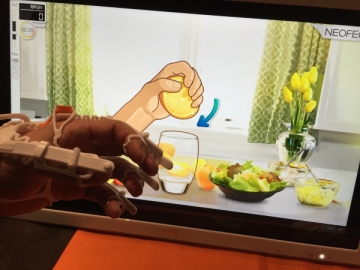
Domestic Rehabilitation Robot Market Expands to 40%, Will It Be a New Opportunity for SMEs?
The National Rehabilitation Center held a Symposium on Rehabilitation Robot and Business on the 19th at the Sheraton Seoul D Cube City Hotel to share information necessary for the commercialization of medical rehabilitation robots and the outcomes of the rehabilitation robot distribution project. A total of three sessions were conducted. The first session covered "Support Systems for Commercializing Medical Rehabilitation Robots," the second session addressed "Domestic and International Market Entry Strategies for Medical Rehabilitation Robots," and the third session focused on "Sharing Outcomes of Rehabilitation Robot Distribution Projects," where presentations on the utilization outcomes of rehabilitation robots and related matters were delivered.
2016.02.22by
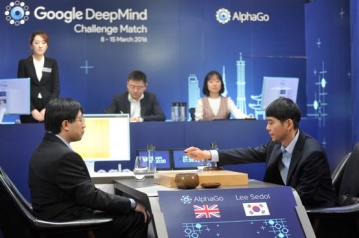
Following the rise of AlphaGo, a decision has been made to invest 1 trillion won in Korean-style 'artificial intelligence'.
Following the recent match between Lee Sedol, 9-dan professional, and AlphaGo, which has become a national point of interest, President Park Geun-hye held a 'Public-Private Joint Discussion on Intelligent Information Society' on the afternoon of the 17th at the Blue House, inviting approximately 20 executives and experts from companies related to artificial intelligence (AI) and software (SW) technology. The discussion was attended by Choi Yang-hee, Minister of the Ministry of Science, ICT and Future Planning, Yoo Il-ho, Deputy Prime Minister and Minister of Strategy and Finance, Kim Jin-hyung, Director of the SW Policy Research Institute, and Kim Dae-sik, Professor at the Korea Advanced Institute of Science and Technology (KAIST), among others.
2016.03.18by 신윤오 기자
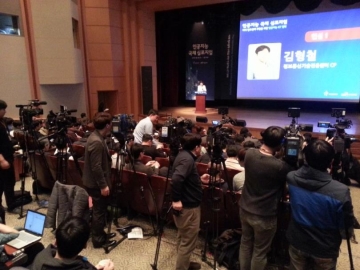
[Reporter's Notebook] Have We Ever Been This Thirsty for 'Artificial Intelligence'!
People and media outlets eager for artificial intelligence focused intently, hanging on every word of the seminar speakers. At this symposium, artificial intelligence experts from IBM's Watson—famous for defeating humans at chess—as well as Microsoft, Samsung Electronics, and MIT presented their views on the current state of artificial intelligence technology and its potential impact on humanity.
2016.03.28by 신윤오 기자
.jpg)
SalePoint Signs Multi-Year Partnership Agreement with AWS… Promoting Identity Security that Integrates Even AI Agents
Sailpoint has entered into a multi-year strategic partnership agreement with AWS and is moving forward with establishing an integrated governance system that manages both human and non-human identities together. The plan is to consistently manage access permissions in an environment where AI agents are increasing as work execution entities, while applying the principle of least privilege and automated policy enforcement. The two companies plan to jointly expand capabilities to manage the identities of various entities, including AI agents, within a single layer in the AWS environment. This collaboration is interpreted as a move to design security and governance together in corporate environments where AI adoption is expanding.
2026.03.26by 배종인 기자
.png)
Databricks Unveils Open AI Security Monitoring 'Lakewatch'
Databricks entered the security market on March 24 by unveiling LakeWatch, an open-source agentic SIEM. The core functionality of this product is to integrate and analyze security, IT, and business data in a single environment to support AI-based threat detection and investigation. The company explained that it reduces the limitations of existing security operations centers, which have had to forgo some data due to high cost structures, and enables large-scale data analysis and automation based on open formats and ecosystems. LakeWatch is currently offered as a private preview, with Adobe and Dropbox mentioned as early customers. Databricks also announced an expanded partnership with Anthropic as well as the acquisition of Antimatter and SiftD.ai.
2026.03.26by 배종인 기자











