



Lattice Announces Programmable Bridging Device Suitable for VR Drones and More
 Published2016.05.27 10:27
Low-cost video interface bridge with maximum bandwidth, lowest power consumption, and smallest footprint characteristics
Lattice Semiconductor (Country Manager Jonghwa Lee) announced the industry's first Lattice CrossLink programmable bridge device that supports the latest major protocols related to mobile image sensors and displays.
Systems equipped with embedded cameras and displays often do not support suitable interfaces, or even if they do, the number of supported interfaces is insufficient. A bridge interface is a device used to solve this problem.
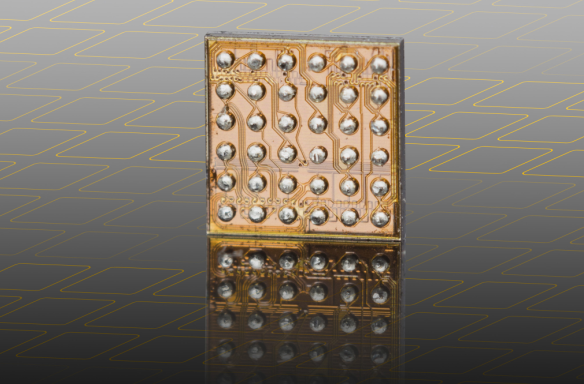
Lattice’s newly introduced CrossLink device has opened a new genre called pASSP by combining the flexibility and fast time-to-market characteristics of FPGAs with the low-power and feature-optimized characteristics of ASSPs. As the first product in the pASSP field, the CrossLink device is a low-cost video interface bridge featuring the highest bandwidth, lowest power consumption, and smallest footprint. The new product is the optimal solution for virtual reality (VR) headsets, drones, smartphones, tablets, cameras, wearable devices, and human-machine interface (HMI) applications.
Carl Hibbert, Associate Director of Entertainment Content and Distribution at Futuresource Consulting, said, “The latest trends in image capture and display technology, including drones and VR, have taken the industry by storm.” "When these latest technologies are combined in the mobile phone and tablet sector, which is expected to grow by more than 30% by 2020 from the current 3.7 billion units worldwide, various interfaces will inevitably be used to ensure compatibility," they pointed out, and analyzed that "the ability to manage these interfaces through low-cost, low-power, and small-footprint bridging solutions will be very important."
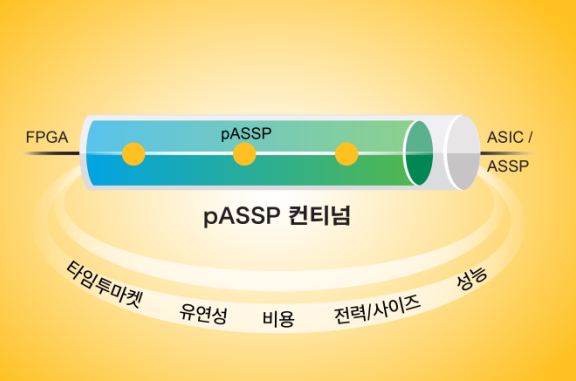
Lattice's CrossLink bridge provides multiplexing, integration, and coordination capabilities over a single input among multiple image sensors. It also enables interfacing between high-end industrial image sensors and popular A/V image sensors that support mobile application processors. Thanks to these features, it is ideal for a wide range of applications, including drones, 360-degree cameras, action cams, surveillance cameras, DSLR cameras, and augmented reality (AR) products.
By utilizing CrossLink devices, video data can be received from a single MIPI DSI interface and then transmitted through two MIPI DSI interfaces by splitting the bandwidth in half. Because the same video stream can be split across two interfaces, it is ideal for VR headsets and mobile set-top boxes. Additionally, customers can integrate consumer and industrial panels supporting RGB or LVDS interfaces with mobile application processors. For display applications such as HMI, smart displays, and smart homes, CrossLink bridges can convert MIPI DSI to multi-lane CMOS or LVDS interfaces such as MIPI DPI and OpenLDI, as well as proprietary interface formats.
CH Chee, Senior Director of Consumer Product Marketing at Lattice Semiconductor, explained, “The CrossLink bridge combines the flexibility of FPGAs with the performance of ASSPs for video technology. This product can be applied to a diverse range of large-scale application markets that require rapid and flexible innovation, and it enables the solution of the difficult challenge of supporting many interfaces that are hard to fit together in a single device.”

Comments
Related news
Lattice Semiconductor Announces Processor for Wireless Access and Backhaul Applications
Lattice Semiconductor announced today the launch of a new baseband processor. The SB6541 is designed to be used in fixed wireless access and wireless backhaul for urban broadband infrastructure such as LTE small cells and metro Wi-Fi access points, in combination with Lattice's Sil6340 and Sil6342 RF transceivers.
2016.02.18by 명세환 기자
Lattice Semiconductor Expands Connectivity and Acceleration Products
Lattice Semiconductor, a leading provider of customized smart connectivity solutions, has announced an expansion of its ECP5™ connectivity and acceleration FPGA product family, which is characterized by low power consumption and small form factor. These new products are pin-compatible with ECP5 FPGAs, enabling OEMs to seamlessly update existing designs to meet continuously evolving interface requirements in industrial, communications, and consumer markets.
2016.02.25by
Lattice Semiconductor - MediaTek, USB Type-C 4K Video Solution Supply
Lattice Semiconductor and MediaTek jointly announced today the launch of a high power-efficient reference design capable of driving 4K UHD through USB Type-C connectors. Lattice's USB Type-C port controller and MHL® transceiver can be easily used together with MediaTek's Helio™ X20, the world's first mobile processor featuring a Tri-Cluster™ CPU and 10 processing cores (deca-core). Lattice and MediaTek have been collaborating to develop next-generation low-power video reference designs for the rapidly growing 4K UHD market, resulting in the launch of this solution.
2016.03.15by 명세환 기자
Intel Unveils Next-Generation 'Core Ultra Series 3' and vPro Platform for Enterprise PCs
Intel has officially unveiled the "Intel Core Ultra Series 3" for next-generation enterprise PCs and the latest vPro platform, addressing a wide range of demands from enterprise notebooks to high-performance workstations.
2026.03.26by 배종인 기자
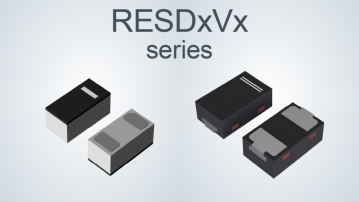
ROHM Launches ESD Protection Diode Compatible with High-Speed Interfaces of 10Gbps or Higher
Semiconductor specialist ROHM has developed the 'RESDxVx series' of ESD (electrostatic discharge) protection diodes capable of responding to next-generation high-speed data communication environments exceeding 10Gbps, simultaneously enhancing both signal quality maintenance required in high-speed interfaces and IC protection performance.
2026.03.26by 배종인 기자











